


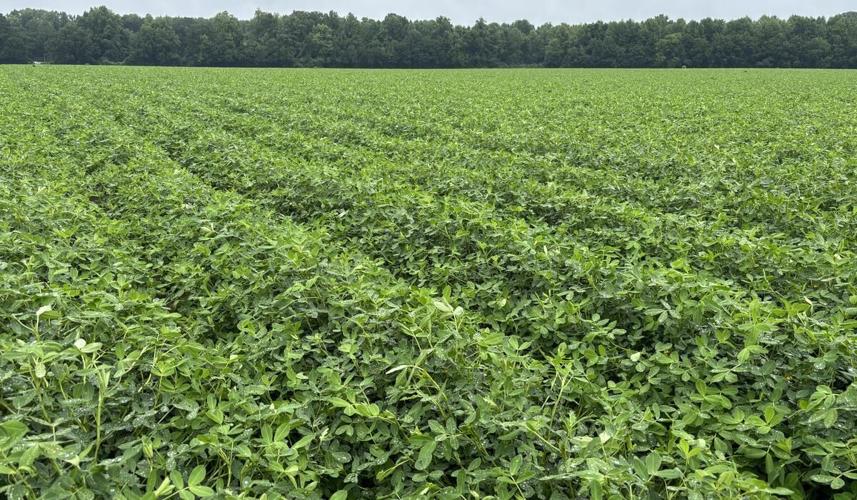
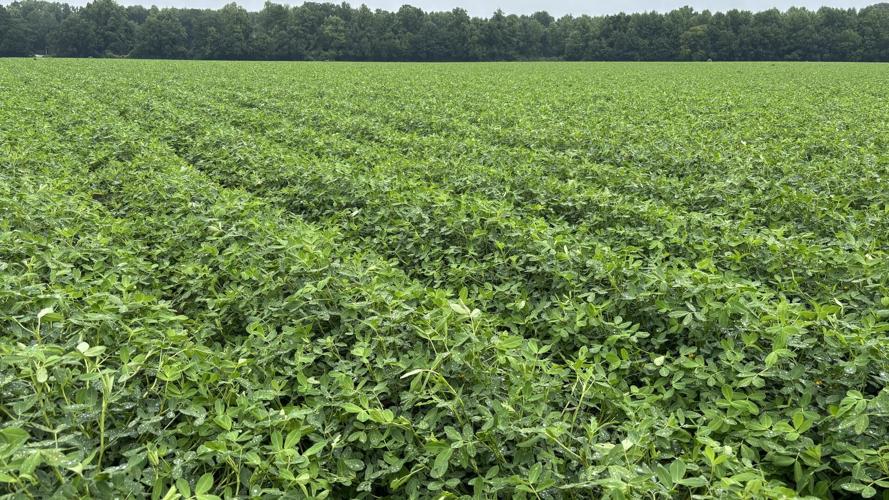
Peanuts in the V-C region have improved over the past two weeks due in large part to increased rainfall across much of the region. There are some areas with dry pockets, but in general rain has been adequate if not excessive. During the month of July, rainfall exceeded 6.3 inches (160 mm) at five of the eight locations presented in the table. At two locations, 4.30 inches (109 mm) to 4.51 inches (115 mm) of rain was recorded in July. At Kinston, 1.84 inches (47 mm) of rain was noted during this month. More recently, from August 1-4, rainfall across the locations in the table ranged from 0.27 inches (7 mm) to 1.15 inches (29 mm). Generally, if peanuts receive approximately 1 inch of rain per week (25 mm), growth and development often proceed at optimum rates based on temperature and subsequent heat unit accumulation.
Risk from leaf spot disease, southern stem rot, and in the upper V-C region Sclerotinia blight has increased. The pathogens causing these are active in the months of July, August, and early to mid-September. Practitioners have reported higher-than-normal levels of tomato spotted wilt. This could reflect a general trend to earlier planting, which creates greater risk from this virus. Growers are moving to their third or fourth fungicide spray depending on location and risk of disease.
People are also reading…
Damage from insects has been sporadic, although light traps have shown increases in corn worm and tobacco budworm. Growers are encouraged to scout fields for insects and their damage to determine if action thresholds have been met to trigger insecticide applications. In early July, field conditions were beginning to be favorable for spider mite outbreaks. Recently, however, rainfall and cooler temperatures have reduced risk from this pest.
The first application of the plant growth regulator prohexadione calcium has been made in most fields where it will be used. Repeat applications will be made based on rainfall patterns and subsequent regrowth.
Manganese and boron, two essential micronutrients, are being applied along with fungicides to correct deficiencies. The primary herbicides applied at this time of the season are clethodim to control escaped annual grasses and 2,4-DB to suppress weed escapes. Some growers are rouging fields to keep weeds from producing seed that will enter the soil seed bank and to facilitate efficient digging and vine inversion.
The Virginia-Carolina region has received adequate rain in most areas to move the crop forward. While there are at least two months remaining during the cropping cycle, yield potential has stabilized across the region and remains 4,200 pounds/acre (4,704 kg/ha).


