


The peanut crop in the Virginia-Carolina region experienced considerable variation in weather patterns and subsequent stress on the crop in 2026. April, May, and June were relatively dry across much of the region. For example, when averaged across multiple locations in North Carolina and South Carolina, only 1.47 inches (37 mm) of rain was received in April. In May, rainfall in northeastern North Carolina was 1.40 inches (36 mm) to 1.80 inches (46 mm) at 2 of 8 locations. In June, 2.86 inches (73 mm) or less rain was received at 5 of 8 locations. In contrast, except for one location in July, rainfall was abundant across the region. In August, 3.08 inches (78 mm) to 4.27 inches (109 mm) of rain were noted at 3 of 8 locations. During September, no more than 0.36 inches (9 mm) to 2.52 inches (64 mm) of rain was observed across all locations. October was also dry, with 1.59 inches (40 mm) to 3.16 inches (80 mm) of rain recorded. From April through October, 17.22 inches (440 mm) to 29.06 inches (738 mm) of rain were received when comparing across locations.
People are also reading…
Despite dry conditions in April, May, and June, farmers were able to establish adequate stands of peanuts in most fields. Thrips (a small insect that feeds on terminals of young plants) were controlled relatively well with in-furrow applications of systemic insecticide, often followed by a postemergence application of insecticide in some fields. This insect vectors tomato spotted wilt virus. Weed control in May and June was considered good, although preemergence herbicides were not activated well in many cases. The dry weather created a false sense of security because weeds did not have adequate soil water for widespread emergence. However, when rains increased, weeds began to emerge in part because of adequate soil moisture for germination but also because the residual control from herbicides applied at planting was not activated. Growers in many of their fields were forced to make multiple applications of herbicides to emerged weeds. Growers often supplemented contact herbicides with residual herbicides to extend weed control further into the season.
Growers were able to apply gypsum to promote adequate kernel development in a timely manner across much of the region. High levels of soil calcium are required for large-seeded virginia market types because pod demand is high and mobility of calcium in plants is low.
Leaf spot and stem rot diseases were the primary issues later in the season. Growers were able to maintain a schedule of fungicide sprays that offered adequate protection in most cases. However, excessive rain in July and August occurred in some areas of the region, and this delayed applications of fungicides. Drier conditions in late August and September minimized challenges created by delayed applications of fungicides earlier in the season. Sclerotinia blight was not a major issue because of relatively high temperatures and dry soil conditions across the region. The pathogen causing this disease is most active under cooler conditions when adequate soil moisture is present.
Depending on areas of the region, rainfall patterns, and growth of peanuts at mid-season, a significant number of growers applied the plant growth regulator prohexadione calcium to minimize excessive vine growth to facilitate efficient digging and vine inversion later in the season. This plant growth regulator is applied when 50% of vines from adjacent rows are touching. In some cases, a repeat application is made 2-3 weeks later.
Injury from foliar-feeding insects (e.g., corn earworm, tobacco budworm, fall armyworm) tended to be lower in 2026 compared to other years. When needed, growers were able to make timely applications of insecticide to suppress populations to a reasonable level.
Maturity of the crop was generally a week earlier than in previous years. This is a very broad statement, as some planting dates and regions, depending on rainfall, matured at a more typical pace. Growers experiencing optimum maturity sooner were able to dig pods and invert vines earlier in the fall. This, combined with field conditions that allowed growers to complete tasks in a timely manner, resulted in complete harvest of the peanut crop by November 1. Warm temperatures through the harvest season eliminated the threat of freeze damage, and cool nights that could stop or slow the peanut maturation process did not occur until well into October.
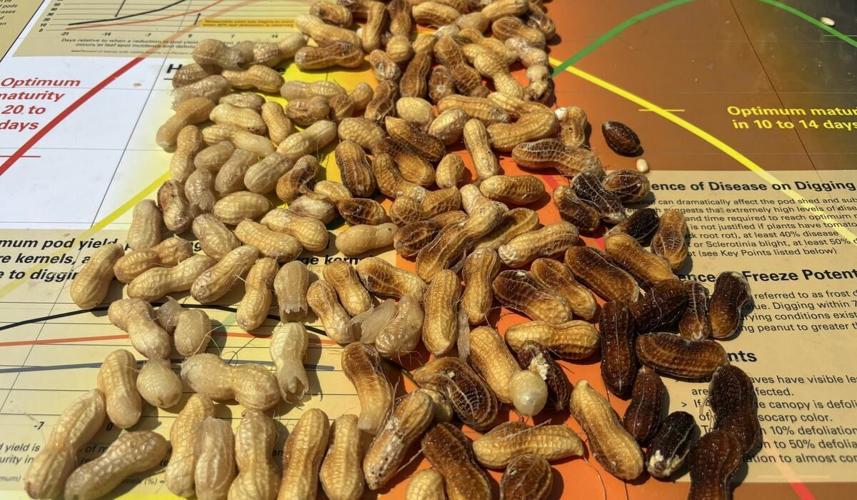
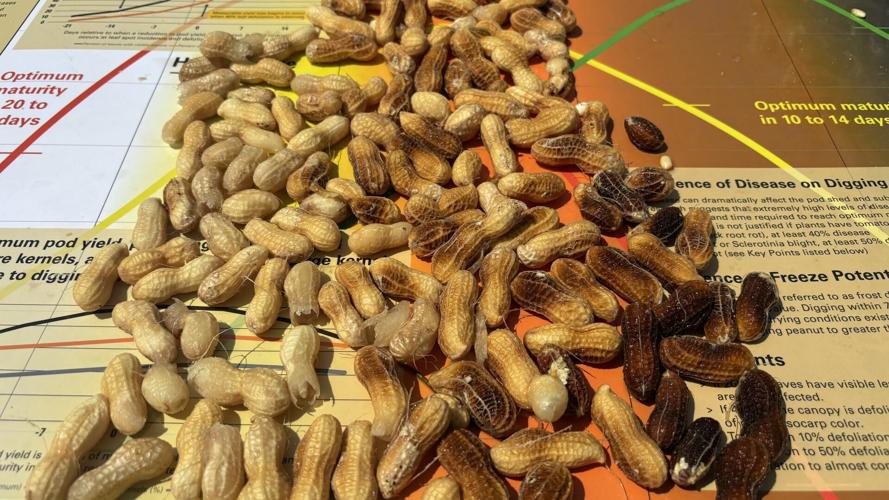
There were some concerns about overall quality and damaged peanut kernels because of rapid field drying and delays in threshing. Several rainfall events in the fall caused discoloration of pods targeted for the in-shell trade. However, these rainfall events were beneficial for some growers, especially those with reduced tillage production, by softening soil to allow peanut digging to take place with minimal pod loss.
As results from market grades became available, burrower bug damage, resulting in movement from Segregation 1 to Segregation 2 status, was noticeably higher in 2026 than in previous years. Some growers were able to clean peanuts and remove damaged kernels, but this was not the case for all loads. The value of Segregation 2 peanuts is approximately 35% of Segregation 1 peanuts. This is caused by the substantially lower market value for extracted peanut oil compared with other uses (e.g., snack foods, peanut butter, gourmet peanuts, and the in-shell trade). While some Aspergillus flavus was observed, contamination was not widespread across the region.
Dry weather during May and June and late August through September resulted in lower peanut yields than the traditional average for the region. Elevated temperatures during June and July when pollination was occurring also impacted kernel development. Dry conditions also decreased calcium movement from soil into developing pods in the pegging zone. Limited calcium affects both pod yield and market grade characteristics, including sound mature kernels, extra large kernels, and subsequently financial returns.
Levels of tomato spotted wilt virus symptoms were higher in 2026 than in recent memory. In a limited survey across the coastal plain of North Carolina in August and September (80 fields), the percentage of plants expressing visible symptoms of virus was 8%. This level, if present throughout much of the region, may have reduced yield by 200 pounds/acre (220 kg/ha) or more. This level of infestation is similar to survey data by the Extension Service in Georgia.
Yield is estimated at 3,975 pounds/acre (4,452 kg/ha) across the region. This lower average reflects dry and hot conditions during flowering and pegging, limited rainfall for pod fill, and possibly greater incidence of tomato spotted wilt.


