


NC State Extension Master Gardener℠ volunteers aren’t just growing plants — they’re growing knowledge, too. By participating in research and community science projects, volunteers help scientists answer questions that can lead to more sustainable gardening and pest management practices.
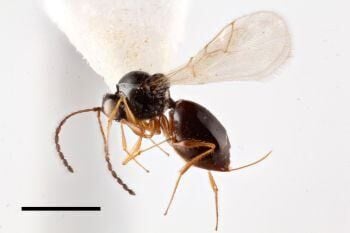
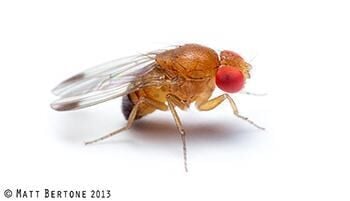
In a statewide research project led by Dr. Hannah Levenson of NC State University, Extension Master Gardener volunteers helped investigate spotted wing drosophila, Drosophila suzukii, or SWD, and a tiny parasitoid wasp, Leptopilina japonica, that may help control it.
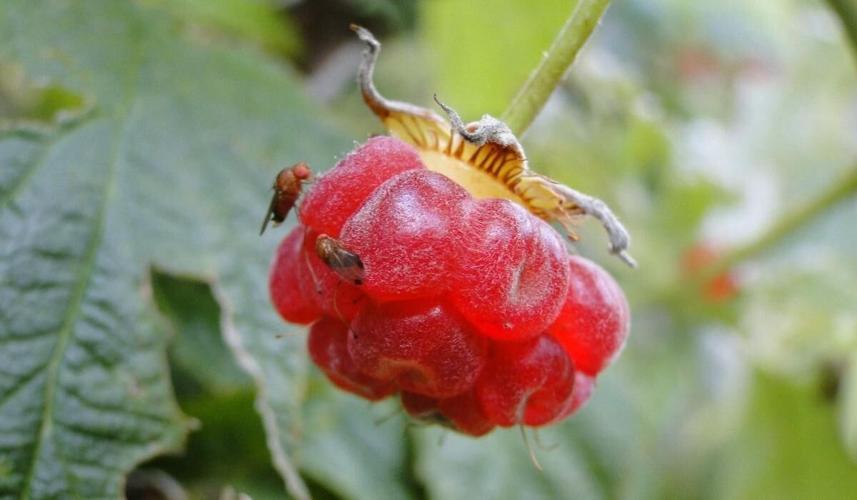
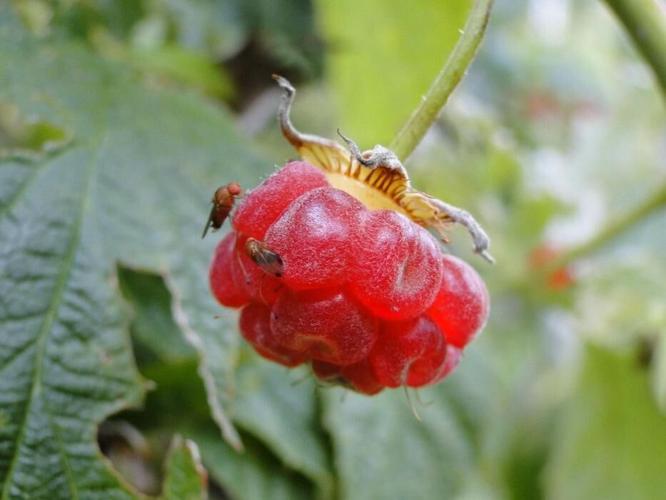
SWD is an invasive fruit fly that damages ripening fruit. It has disrupted blackberry, blueberry, raspberry and strawberry production across the country and contributed to increased pesticide use. Unlike most fruit flies, which are attracted primarily to overripe or damaged fruit, SWD can lay its eggs in healthy, ripening fruit.
People are also reading…
Although SWD prefers cultivated fruit crops, it can also survive and reproduce in wild and ornamental fruits. These alternative host plants may support populations that later move into commercial fields. At the same time, the plants may also sustain parasitoid wasps and other natural enemies that help suppress the pest.
Most research on these interactions has focused on commercial farms. Home gardens, community plantings, and urban landscapes have received less attention, even though they may influence how both SWD and its natural enemies survive and spread.
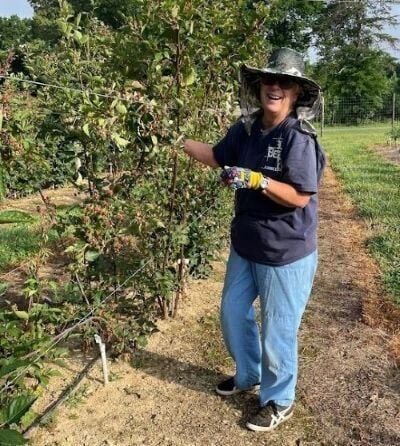
To expand the scope of the research, N.C. Cooperative Extension agents and Master Gardener volunteers collected 293 samples of wild, ornamental, and cultivated fruits from 18 locations in 11 North Carolina counties: Alamance, Bladen, Carteret, Chowan, Columbus, Forsyth, Orange, Rowan, Rutherford, Surry and Wake.
Laboratory analysis detected SWD in 30 samples representing 18 plant species. Researchers documented six plants not previously reported as hosts for SWD: porcelain berry (Ampelopsis glandulosa), black chokeberry (Aronia melanocarpa), American fringe tree (Chionanthus virginicus), strawberry bush (Euonymus americanus), fig (Ficus sp.) and Nandina (Nandina domestica).
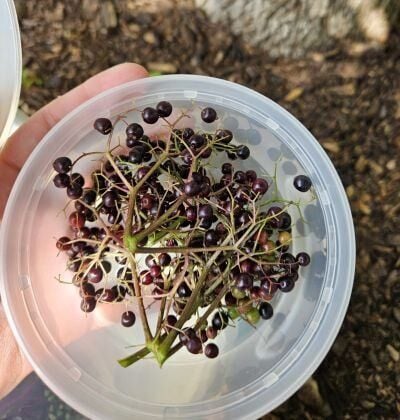
The samples also confirmed that SWD uses many other wild, ornamental, and cultivated plants, including American beautyberry (Callicarpa americana), pokeweed (Phytolacca americana), dogwood species (Cornus spp.), red mulberry (Morus rubra), cherry species (Prunus spp.) and elderberry (Sambucus nigra). These findings demonstrate that plants outside commercial fruit fields can provide important habitat for the invasive pest.
The study also examined Leptopilina japonica, a tiny wasp native to Asia that was first documented in North America in 2016. It is considered beneficial because it attacks fruit fly larvae, including SWD. The female wasp lays an egg inside a fruit fly larva, and the developing wasp eventually kills its host.
Researchers documented the wasp’s association with three plants not previously reported in the scientific literature, including fig (Ficus carica) and red mulberry (Morus rubra). They also confirmed the wasp’s use of three previously reported hosts: blackberry (Rubus spp.), Amur honeysuckle (Lonicera maackii) and elderberry (Sambucus nigra).
These discoveries may help explain why SWD and its parasitoids have spread so quickly across North America — and why SWD remains difficult to manage in fruit crops. Wild and ornamental fruits beyond commercial farms may provide places for both insects to survive and reproduce before moving through the surrounding landscape.
Identifying these alternative host plants is an important step toward improving integrated pest management programs for SWD. A better understanding of where the pest and its natural enemies persist can help researchers develop recommendations that consider the entire landscape, rather than focusing only on plants within commercial fields.
The scale of this study would not have been possible without Master Gardener volunteer participation. Their widespread sampling expanded the geographic reach of the research, contributed new findings to the scientific literature and demonstrated the value of community science for documenting invasive species and their natural enemies.
This collaborative project received funding from NC State Extension through the Consumer and Youth Horticulture Working Group and brought together faculty from NC State’s departments of Horticultural Science and Entomology and Plant Pathology, N.C. Cooperative Extension agents, and Extension Master Gardener volunteers.
We extend our sincere thanks to Dr. Hannah Levenson for leading this research and guiding volunteer participation; former research assistant and current NC State graduate student Kayla Beckwith for contributing to the study and publication of its findings; Leslie Rose, county Extension director in Forsyth County, for coordinating project communications; and the Master Gardener volunteers whose diligent sampling made this work possible.


