


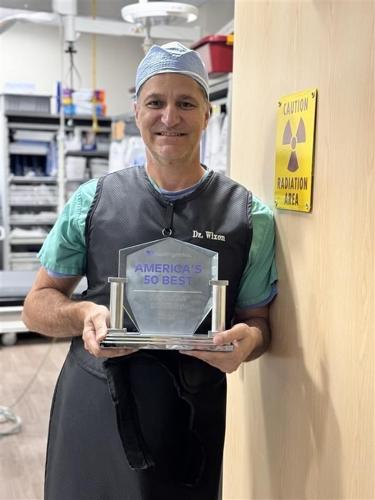
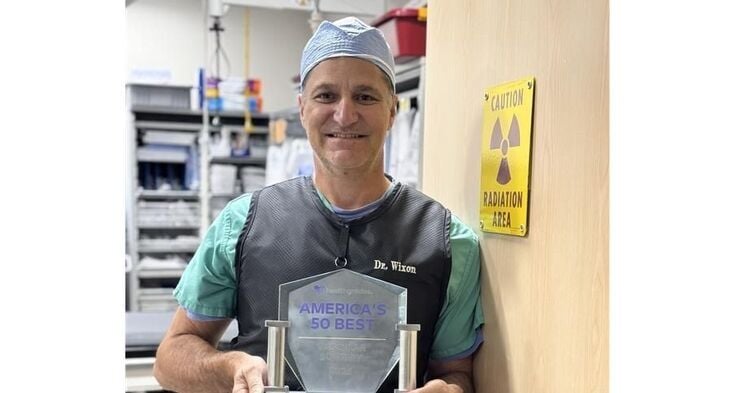
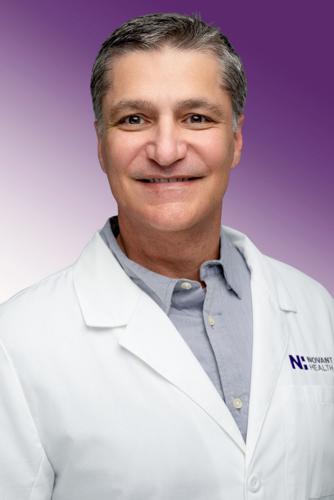
Christopher Wixon, MD, is a board-certified vascular surgeon at Novant Health Heart & Vascular Persimmon. Over the past two decades as a vascular surgeon, he has led multidisciplinary practices, established independent physician associations and contributed to hospital boards. His clinic offers preventive screenings as well as advanced treatments for peripheral artery disease (PAD), carotid disease, aneurysms and vein disorders.
What is the best predictor for good outcomes in vascular surgery?
When it comes to predicting strong outcomes in vascular surgery, experience is the single most important factor. Outcomes improve in environments where teams perform these procedures repeatedly, building not only technical precision but also the judgment and coordination required to manage complex vascular diseases.
People are also reading…
A commitment to experienced, team-based care within our program has led to measurable recognition. Novant Health Hilton Head Medical Center has been named one of the Top 50 Vascular Hospitals in the country by Healthgrades, reinforcing that high-level vascular outcomes can be delivered locally.
The result is a model where national-caliber experience, a stable and collaborative team, and a shared commitment to community come together to produce consistently strong outcomes for our patients.
What are the most common reasons you wish patients were referred to vascular surgery earlier?
The most critical area where I see a need for earlier intervention is the management of lower extremity ulcers.
In many cases, the ulcer is simply the symptom of a larger underlying problem.
“Treating a lower extremity ulcer without first finding its root cause delays healing, risks patient mobility and increases the potential for recurrence.”
Christopher Wixon, MD
Broadly speaking, lower extremity ulcers present based on their underlying pathology:
- Arterial disease: Typically presenting on the toes or distal foot
- Venous disease: Usually located around the medial or lateral ankle
- Neuropathy: Found on the weight-bearing surfaces of the foot
- Inflammatory or malignant: Less common, but critical to rule out
A timely vascular evaluation allows for accurate diagnosis, appropriate diagnostic testing and development of a comprehensive care plan that integrates both medical and interventional therapies.
By partnering with vascular surgery early, we can dramatically reduce healing times, lower overall healthcare costs, restore patients to their active lives faster and ultimately protect their quality of life.
Which symptoms or findings should prompt an urgent referral versus a routine outpatient vascular evaluation?
In vascular surgery, the tempo of a symptom dictates the urgency of the referral. While symptoms like numbness, pain or swelling can point to a variety of conditions, acute onset is the true red flag.
If a patient experiences a sudden onset of any concerning vascular symptoms, immediate, urgent referral or emergency evaluation is required.
These are signs of acute vascular compromise where hours matter.
Conversely, when these same findings develop gradually over months, a routine outpatient vascular consultation is the appropriate pathway. Teaching our clinical community to triage based on chronicity rather than just the symptom itself is the most effective way to optimize patient outcomes.
What would you say to referring clinicians who worry that an urgent vascular referral may be unnecessary or overly alarming?
Referring providers sometimes hesitate to make an urgent vascular referral due to concerns about needlessly alarming a patient or wasting a specialist's time if it turns out to be a false alarm.
I want to reassure my colleagues: You are never wasting my time. When you notice acute changes, a phone call or secure message is always the best approach. Never hesitate to reach out directly.
Open communication removes the guesswork and dramatically accelerates patient care. A quick consultation allows us to immediately collaborate on:
- Prioritizing triage: Getting the patient into the right slot instantly.
- Expediting diagnostics: Ordering the precise advanced imaging studies needed before they even walk through the specialist's door.
- Initiating therapy: Starting immediate medical interventions that can stabilize a limb or condition.
It's always better to overcommunicate than to delay care when tissue and outcomes are on the line.
What does the post-procedure care coordination look like between your practice and the primary care provider?
Continuity of care is really about partnership. When you refer a patient to us, we don't view that as a handoff – we see it as co-management.
After a procedure, our team manages the immediate postoperative period, keeping a close eye on wound healing, graft or stent patency and early recovery. We also follow that vascular problem over time: monitoring for progression, managing surveillance imaging and addressing anything new related to the vascular condition.
At the same time, you remain central to the patient's overall care. Chronic disease management, risk factor modification and the broader longitudinal picture stay anchored in your clinic.
Our goal is to make this seamless. We provide clear operative summaries, straightforward follow-up plans and are always available for a quick call or secure message if something changes.
At the end of the day, it's a shared model: We take ownership of the vascular disease, you continue to lead the whole patient, and together we deliver better, more coordinated care.


