N.C. Cooperative Extension - Iredell County Center
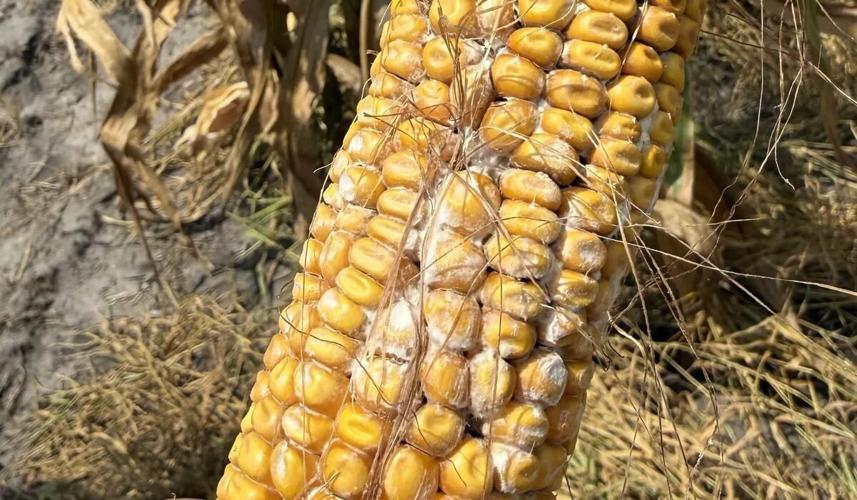
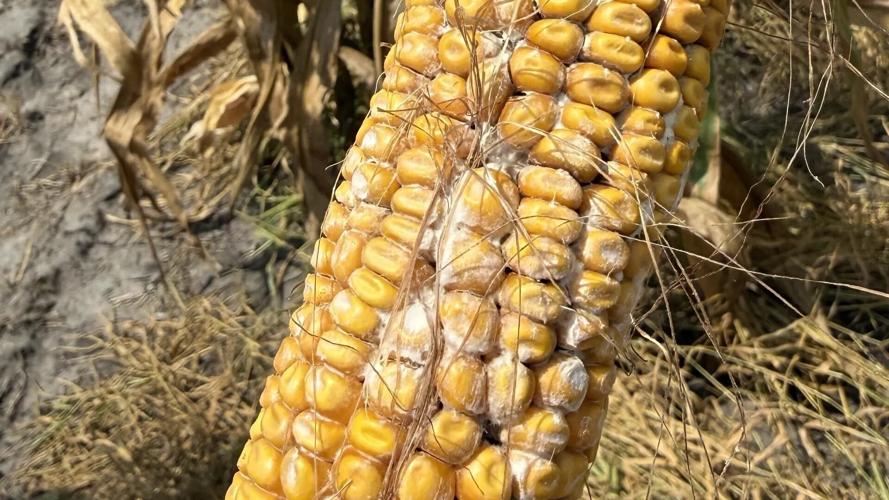
This year’s weather, combining dry conditions during pollination followed by a wet July and a warm and humid end of the season, has created favorable conditions for the development of ear rots in corn. With many areas of the state in full swing with harvest, we receive a lot of questions about what can be done at this point to minimize the issue and avoid mycotoxin problems that could lead to grain being rejected at the elevator.
Management practices that can reduce mycotoxin risk must generally be implemented well before harvest. NC State research has evaluated biological control products, Bt hybrids, and fungicides for reducing aflatoxin and fumonisin contamination. Biological control products applied between V5 and VT reduced aflatoxin contamination, and some Bt hybrids reduced mycotoxin levels by limiting insect injury. Fungicide applications at R1, however, produced inconsistent results. At this point in the season, spray applications will not control existing ear rots or eliminate mycotoxins already present in the grain.
Right now, if ear rots are observed in more than 10% of the ears in the field, growers should try to harvest early to stop the spread of the fungi. Ideally, if a grain dryer is available, growers should plan to dry and store ear rot–infected corn at 13% or less moisture. Storing the kernels in a refrigerated area (below 55°F) will also help prevent the fungi from spreading.
In fields with high infestations, it is recommended to till the crop residue deep into the soil as soon as possible after harvest. Remember to also sanitize and rinse equipment to remove soil and spores, ensuring that the runoff does not enter noninfected fields.
The North Carolina Department of Agriculture will test feed or grain samples for levels of fumonisins for a $75.00 fee. Testing for aflatoxin is free. Samples should be sent to:
NCDA&CS
Consumer Services
Food and Drug Protection Division
4000 Reedy Creek Rd.
Raleigh, NC 27607
At least two companies, Neogen Corporation (1-800-234-5333) and VICAM (1-800-338-4381), market kits for testing for fumonisins. More information on the effects of mycotoxins is available from the North Carolina Cooperative Extension Service through the publication AG-523 - Understanding and Coping with Effects of Mycotoxins in Livestock Feed and Forage.
This content is sourced from
N.C. Cooperative Extension - Iredell County Center
. It reflects the author's views and has not been edited by our newsroom. It may have been generated using AI assistance.