


Summary of regional research in eastern North Carolina
Background and rationale
Stockpiled bermudagrass can help bridge the forage gap between summer production and the availability of fall and winter grazing by allowing late-summer growth to accumulate for later use. This approach can extend the grazing season and potentially reduce reliance on stored hay, although declining forage nutritive value may require supplementation as fall advances into winter. The findings presented here summarize research reported in the article “Late-summer nitrogen fertilization rate effects on herbage mass, nutritive value, and fertilizer recovery efficiency of stockpiled bermudagrass.”
Results
Forage mass
People are also reading…
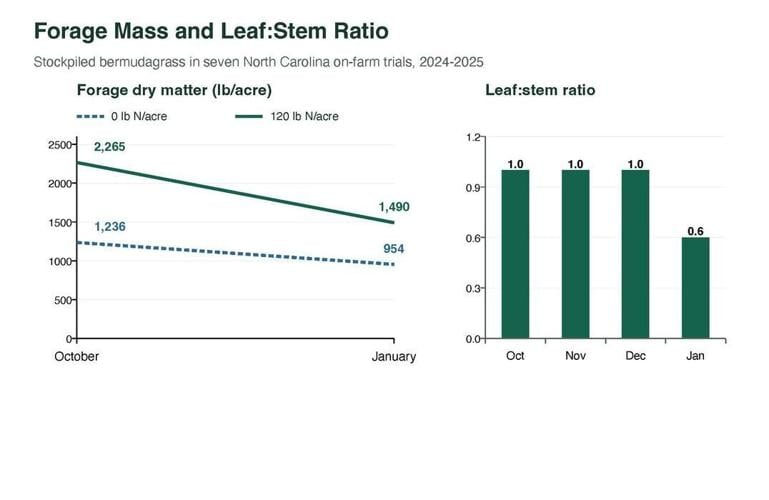
Late-summer nitrogen fertilization increased stockpiled bermudagrass forage mass, but less forage remained available as harvest was delayed into winter. Increasing N from 0 to 120 lb N/acre increased forage mass from 1,236 to 2,265 lb dry matter/acre in October; however, the available forage declined as harvest date was delayed into the winter.
Lower forage mass in January was attributed primarily to leaf losses as bermudagrass entered dormancy following freezing temperatures in late November. Consistent with these leaf losses, the leaf ratio declined from approximately 1.0 during October–December to 0.6 in January, indicating less leaf material relative to stems. These results highlight the value of using stockpiled forage before winter weather reduces the amount of forage available for grazing.
Nutritive value and nitrates
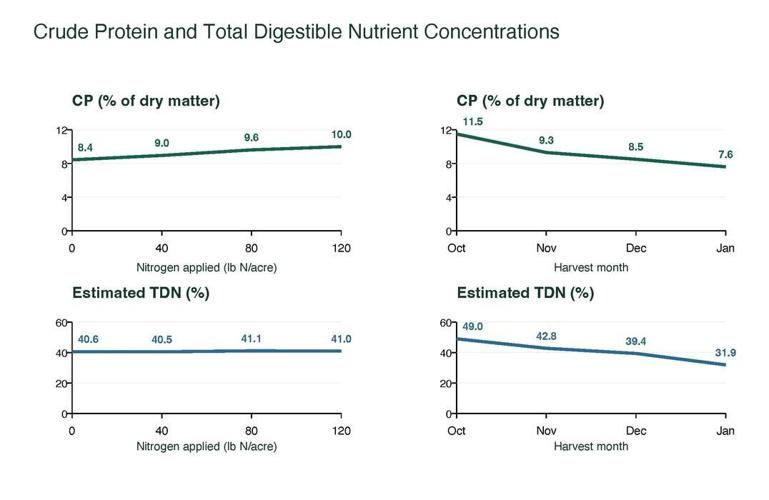
Late-summer nitrogen fertilization increased crude protein (CP) concentration in stockpiled bermudagrass from 8.4% without N to 10.0% at 120 lb N/acre, averaged across harvest dates. However, N fertilization did not affect estimated total digestible nutrients (TDN), which averaged approximately 41%, using in vitro digestibility values as a proxy. Both measures declined as harvest was delayed from October to January: CP decreased from 11.5% to 7.6%, while estimated TDN decreased from 49.0% to 31.9%. Although CP may be sufficient for dry mature cows, energy supplementation will be needed depending on livestock class, production stage, and performance goals, particularly for growing calves and lactating cows.
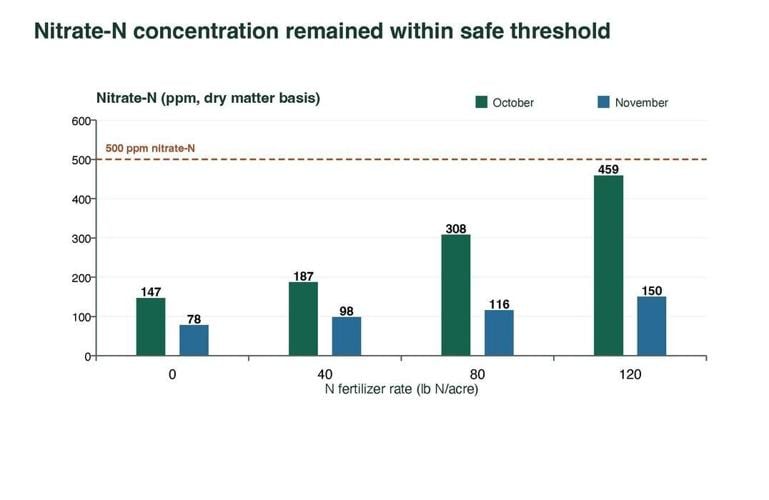
Nitrate-N concentrations increased with N rate in October, ranging from 147 to 459 ppm, but remained below the threshold of 500 ppm nitrate-N in all samples tested in October and November. These findings indicate low nitrate risk under the conditions evaluated, although forage testing remains important when fertilization coincides with drought, freezing, or other conditions that restrict plant growth.
Acknowledgments
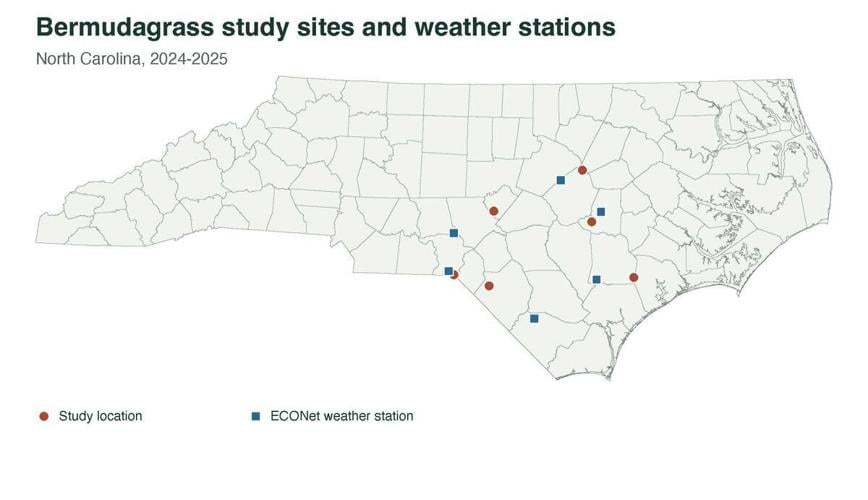
We thank the cooperating producers who hosted the on-farm research and the Bermudagrass Management Extension Team of North Carolina Cooperative Extension, including Extension agents from Johnston, Lee, Onslow, Robeson, Richmond, and Wayne counties, for identifying research locations, connecting with collaborators, and contributing to the project.


