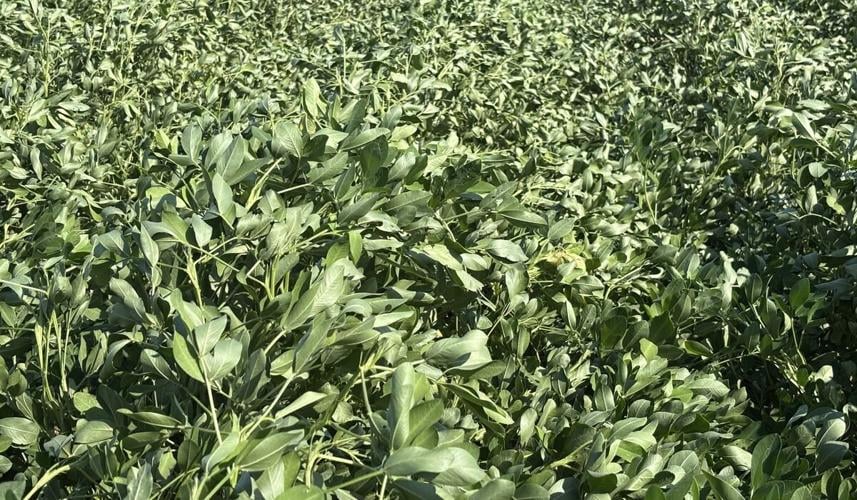
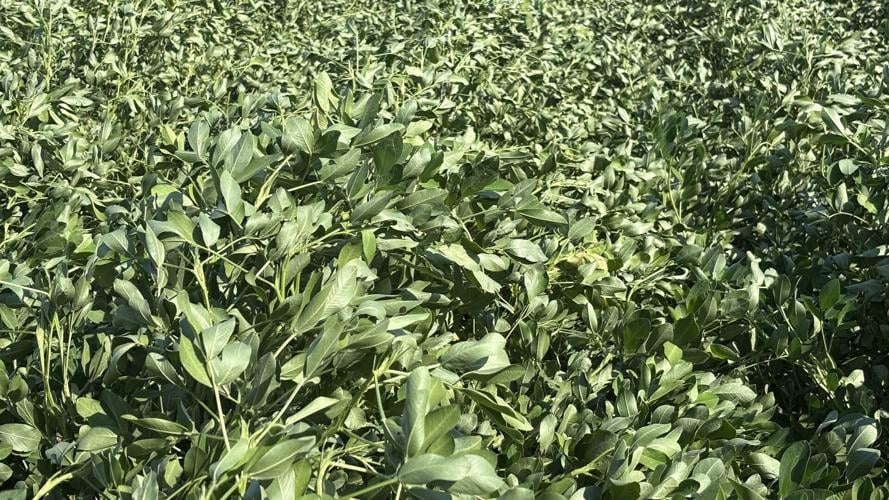
Peanuts in some areas of the region need additional time to reach optimum maturity. However, in most cases, the number of heat units required for peanuts planted in mid-May has been achieved. Growers have started digging pods and inverting vines across the region. The current estimate is that 40% of fields have been dug with 5% threshed. Rainfall during the week of September 21 is expected and could delay field operations. However, dry soil will be able to absorb much of the projected rainfall. There is a possibility of tropical weather within the next 7 to 10 days that could affect digging and threshing.
Late-season pest and disease management
During the week of September 14, some growers applied their final fungicide spray and, in some cases, applied a miticide to suppress two-spotted spider mites. Additional sprays will generally not be needed at this point in the season. Cooler temperatures will minimize spider mite outbreaks and further development of leaf spot disease. However, there could be some cases where peanuts need considerably more time to mature, and if temperatures warm and humid conditions exist, growers may opt for one more inexpensive fungicide spray. Temperatures during the latter portion of the week of September 21 have cooled, and this will decrease the pace of leaf spot disease development.
During a survey of fields from extreme southern North Carolina through northeastern North Carolina during the week of September 14, peanuts in most fields were expressing symptoms of drought and heat stress. Further maturation of pods across the region may be limited due to water status in soil. A considerable amount of tomato spotted wilt and lesions associated with leaf spot disease were noted across many fields. Canopy defoliation was limited, however. Growers are encouraged to dig peanuts when 40% of the canopy is defoliated regardless of pod maturity. Depending on logistics and weather patterns, some fields may approach this threshold within the next week. Digging prior to optimum maturity is not recommended for tomato spotted wilt.
Yield outlook
While there are considerable unknowns over the next month, yield potential has been reduced to 4,075 pounds per acre (4,562 kilograms per hectare) because of dry soils and drought and heat stress experienced by peanuts in many fields.
This content is sourced from
NC Cooperative Extension Cabarrus County Center
. It reflects the author's views and has not been edited by our newsroom. It may have been generated using AI assistance.