


September should be a relatively uneventful month in the apiary. The major workload is done for the season and at this point the bees are just trying to get ready for winter. Monitoring the colonies for problems is the primary concern now. The main goal at this point is to keep colonies alive, strong and healthy in preparation for the winter dearth; otherwise things can go downhill very quickly.
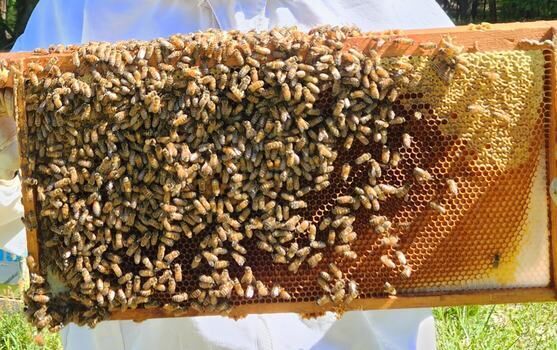
This is a good time to evaluate the populations of all the colonies in an apiary and concentrate on only those that have the most likelihood of overwintering successfully. The old beekeeping adage is to “take your winter losses in the fall.” This means that you should take weaker colonies that may not make it through the winter on their own and combine them together or with stronger colonies (using the newspaper method). When deciding which queen to keep, it is generally agreed that the queen of the stronger colony should stay. Queenless colonies should also be combined instead of trying to requeen since there are not many drones left to ensure proper mating for newly produced queens. By taking the losses now, there will be fewer colonies to care for over the winter months and then splits can be made in the spring to regain your numbers.
People are also reading…
Continue to feed those colonies that are light on honey stores. In North Carolina it is generally believed a colony needs at least 35 to 40 pounds of stored honey to make it through the winter. Get into the practice of hefting the hives by gently picking up the backside of the bottom box to determine its relative weight. If it is light and easy to pick up, then it probably needs to be fed. Sugar water, fondant or sugar blocks are all means of feeding bees.
Importantly, continue to monitor for Varroa mites and take action with any colonies that go above threshold (which is 3%, or 9 mites in an alcohol wash or sugar shake of ½ a cup of bees). It is not uncommon to have the population of mites climb very quickly during the late summer months, even in those that had low mite levels only a few weeks ago. If left unchecked, the population of bees will eventually succumb to the pressure of the mites. If spotty brood is present, and a slow decline in population of the adult bees is noticed, the first step to diagnosing the problem is to do a mite check. Common sampling methods are the sugar shake or an alcohol wash as described in our Beekeeping Note Managing Varroa Mites in Honey Bee Colonies. If mite numbers are higher than 3% in a sample, then control is necessary; otherwise research has shown that the colony has a much higher chance of dying over the winter. If done in time, the colony may recover before going into winter. If treatment is delayed, the colony may not have time to recover. It is also important to remember to do follow-up mite checks after completing any control measures to verify they were effective. To learn more about all the options available and to help decide which is best for your situation, see the Honey Bee Health Coalition website.
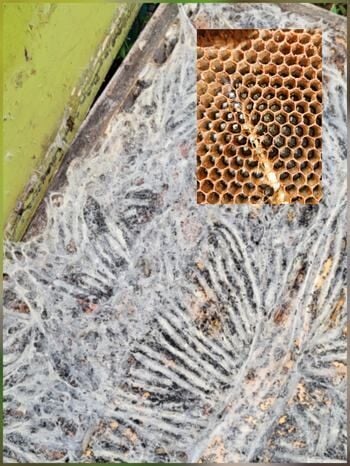
Any remaining honey supers can be extracted and removed at this point. Unused equipment should be carefully stored. Drawn comb is a valuable resource and may be saved until needed in the spring; however, steps need to be taken to ensure it will remain in good condition. Paramoth and Certan B402 are products that prevent wax moth larvae from destroying stored combs. Both are available through local beekeeping supply stores. Paramoth is a crystal form similar to mothballs but does not contain naphthalene, which is harmful to bees. Instead, the active ingredient is paradichlorobenzene. This product is for use only with empty equipment and must be properly aired out before reintroduction. The crystals will evaporate over time and thus should be reapplied periodically as needed. Certan B402 is a one-time treatment also used on frames outside of the colony. The active ingredient is Bacillus thuringiensis or BT, which, when consumed, affects the larvae of the wax moths but is harmless to the bees. This product is a liquid that is to be sprayed on the surface of every frame. Once the frames have been allowed to dry, they can then be stored for the winter until ready to use in the spring.
Keeping the colonies strong and healthy is the key this time of year. If that is accomplished, there should not be much work to do in the bee yard and your time can be spent planning for next year.


