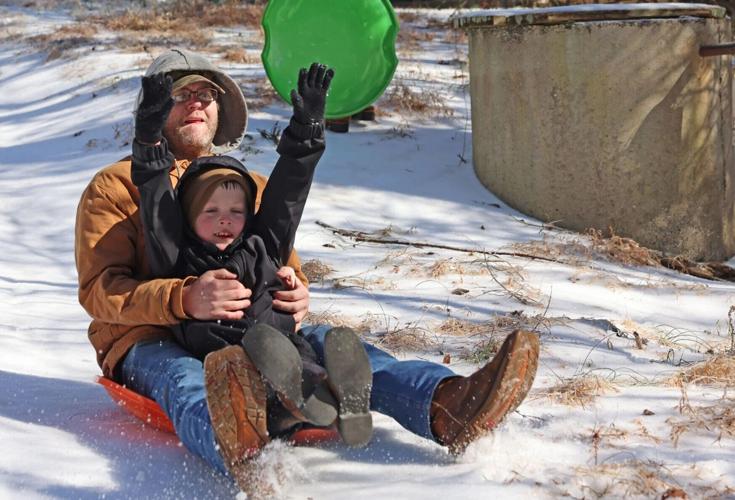
An adult and child slide down a hill on a saucer-shaped sled in Alexander County on Monday. "If you're going to be outside, make sure you limit that time, and take breaks to go indoors and warm back up," says Dr. Michael Fitch, who works in emergency medicine for Atrium Wake Forest Baptist Health, in offering tips to prevent frostbite.
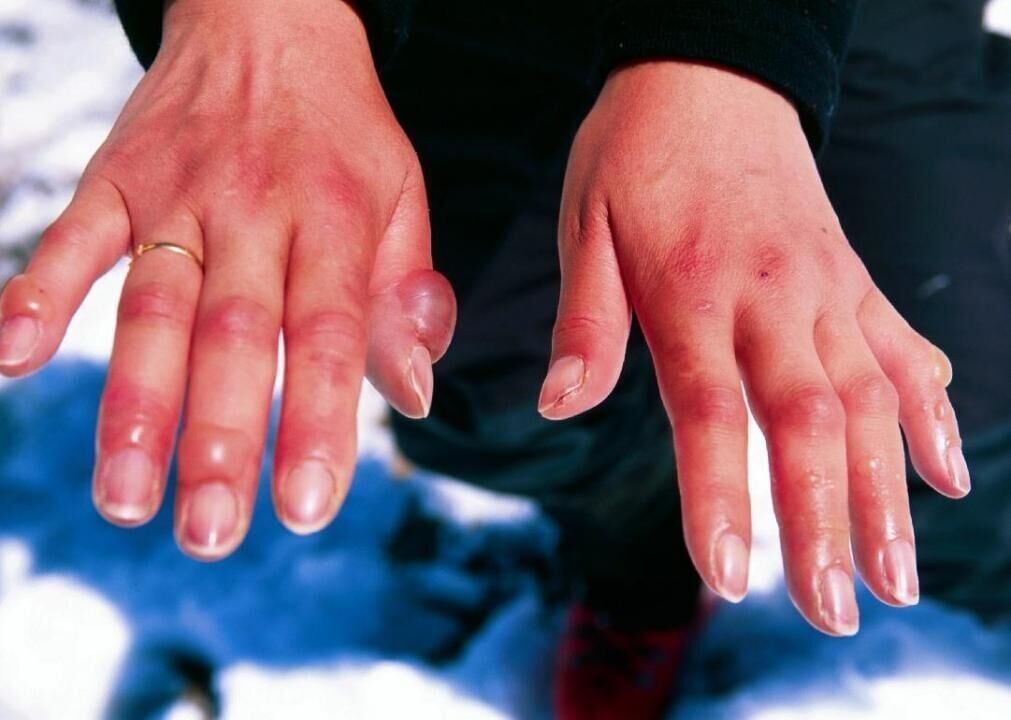
If you spend any time in extremely cold temperatures, you should pay attention to signs of frostbite and hypothermia. Your skin will turn white or gray, feel firm or wavy, and go numb as frostbite sets in. Telltale signs of hypothermia in adults include shivering, exhaustion, confusion, memory loss, slurred speech, and drowsiness. In children, it may present as bright red skin that’s cold to the touch or extreme energy loss.
An adult and child slide down a hill on a saucer-shaped sled in Alexander County on Monday. "If you're going to be outside, make sure you limit that time, and take breaks to go indoors and warm back up," says Dr. Michael Fitch, who works in emergency medicine for Atrium Wake Forest Baptist Health, in offering tips to prevent frostbite.
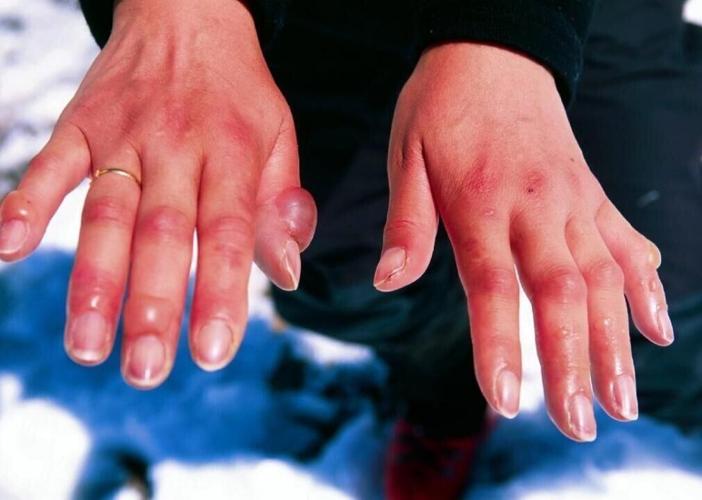
If you spend any time in extremely cold temperatures, you should pay attention to signs of frostbite and hypothermia. Your skin will turn white or gray, feel firm or wavy, and go numb as frostbite sets in. Telltale signs of hypothermia in adults include shivering, exhaustion, confusion, memory loss, slurred speech, and drowsiness. In children, it may present as bright red skin that’s cold to the touch or extreme energy loss.