
PRIDE IN PLACE
Organization ranks best and worst states for LGBTQ+ residents
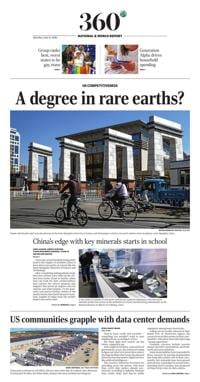
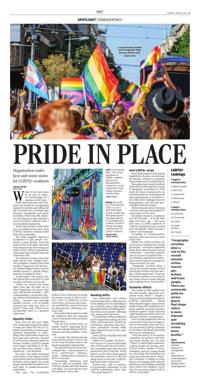
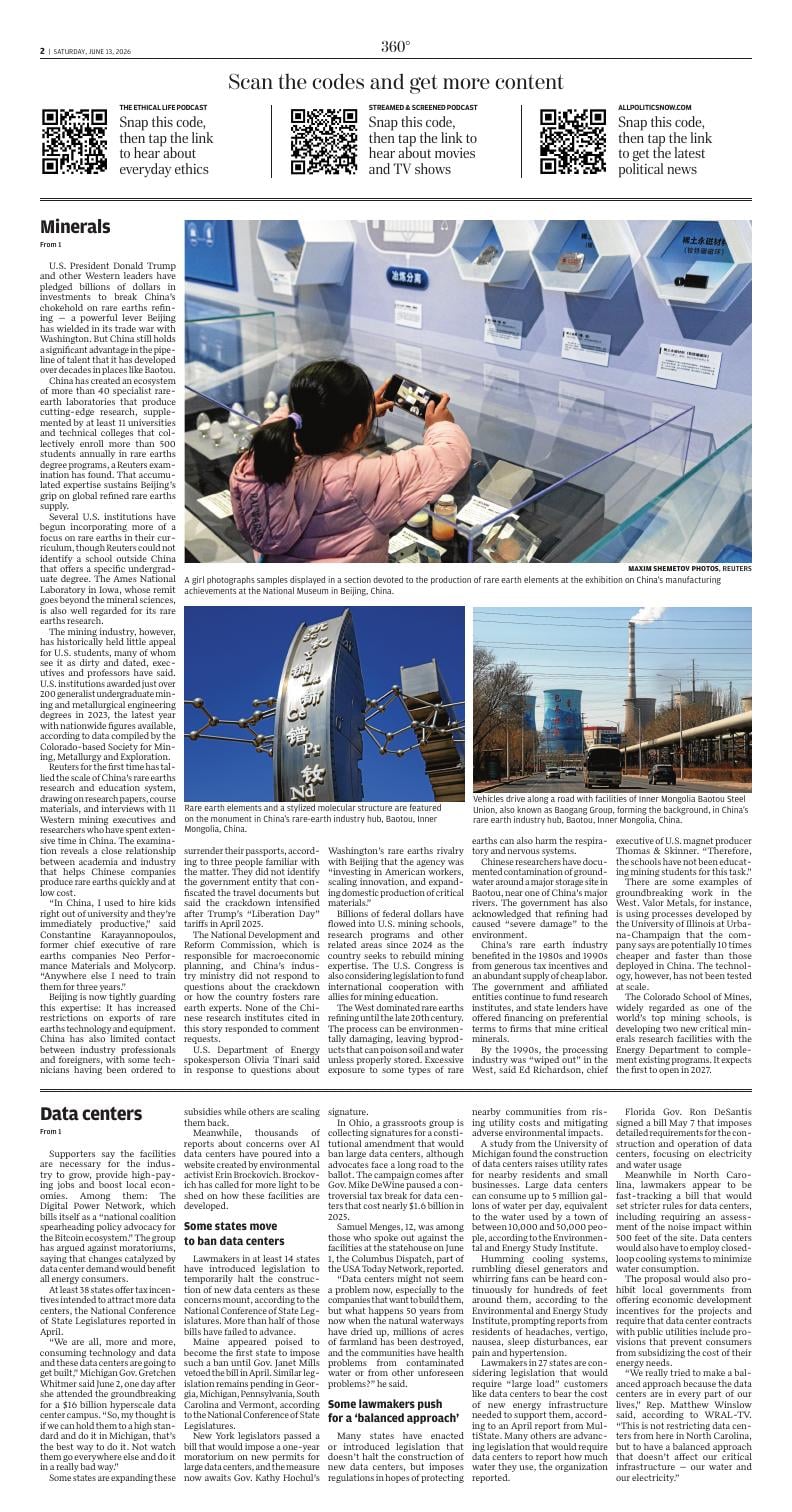
Below: Fans hold up a Pride flag and cheer on June 5, MLB Pride Night, during a Tampa Bay Rays game against the Miami Marlins at LoanDepot Park in Miami. Florida is among the lowestranking states for LGBTQ+ residents.
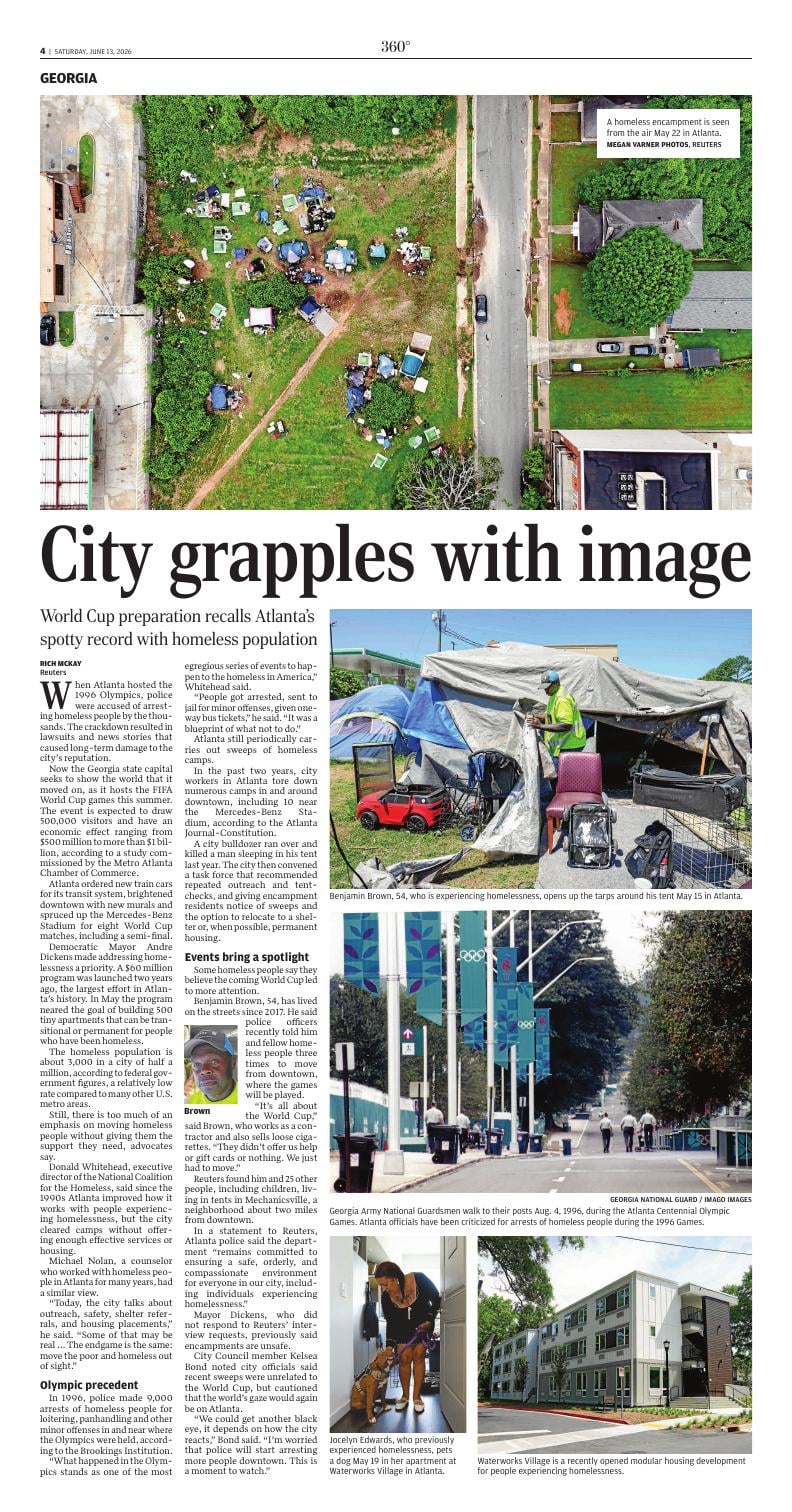
Left: Provincetown, Mass., has a large population of LGBTQ+ residents and tourists. Massachusetts ranked No. 1 in Out Leadership's State LGBTQ+ Business Climate Index.
A crowd waves rainbow and transgender flags during a Pride event.
SPOTLIGHT| DEMOGRAPHICS
Where is the best place to be gay in America? Increasingly, it's a question of ZIP code.
While Massachusetts and California are known for championing supportive policies and rolling out the welcome mat to lesbian, gay, bisexual, transgender and queer residents, other areas like Arkansas and Tennessee that unfurled a wave of LGBTQ+ rollbacks have a less hospitable reputation.
Today, that divide is wider than ever, according to the latest State LGBTQ+ Business Climate Index from Out Leadership.
The index suggests America's acceptance of gay people continued a steep decline, reversing many of the civil rights advances that increased the well-being and safety of the LGBTQ+ population, Out Leadership's founder and CEO Todd Sears said.
The national average score in the index fell for four straight years. The 10 highest-ranked states held steady or improved, but the lowest-ranked dipped more, and the middle ground is quickly disappearing, according to Sears.
On the index's 100-point scale, the typical state scores just 53.1 and 26 states fall below 60, he said.
"When we started this index eight years ago, the goal was to show Americans the issues that were still live but invisible — HIV criminalization, conversion therapy, where state legislators actually stood — because once marriage equality passed, a lot of people assumed the work was done. It wasn't," Sears said. "What we've documented since is a genuine regression."
Equality slides
Each year for the past eight, Out Leadership released the index to map out where the 9% of U.S. adults who identify as lesbian, gay, bisexual, transgender, or something other than heterosexual are least and most welcome. Created as an inclusion reference guide for business leaders, LGBTQ+ people soon began consulting it to figure out where they should — and should not — live and work.
For years, the index measured such factors as the impact of state government policies and prevalent attitudes, from support for young people and families to health access and safety to nondiscrimination protections.
This year, Out Leadership added 12 new indicators to gauge the impact of anti-LGBTQ+ policies such as bathroom access restrictions, pronoun and nameuse prohibitions and restrictions on adult gender-affirming care, Sears said.
Out Leadership decided to make the additions after the Supreme Court struck down state conversion therapy bans.
"For the last several years, we simply weren't capturing forces that were already hitting LGBTQ+ citizens and their families," Sears said.
As a result, the national average score fell five points to 60.87 out of 100. And the index shows even greater geographic polarization.
The gap between the most welcoming state — Massachusetts at 93.23 — and the least — Arkansas, 28.06 — widened from 55 points in 2019 to 65 points.
"Something Americans had come to take for granted, that LGBTQ+ people exist and deserve civil rights, has been thrown back into question," Sears said.
Ranking shifts
Out Leadership's new criteria boosted some states. California rose in the rankings for its leadership in pro-LGBTQ+ policy while Illinois gained ground for providing protections for access to gender-affirming care, among other measures.
Consideration of these additional factors tanked the rankings of some states. Bathroom bans, healthcare restrictions and other state measures pummeled Florida while Texas slipped because of anti-trans legislation.
Even LGBTQ+ friendly states fell in the rankings.
Maine, for example, declined — not because it passed unfriendly laws, but because the new indicators rewarded states that enacted protections that it had not. South Dakota, on the other hand, gained five positions because it did not adopt much of the anti-LGBTQ+ legislation other states have.
Bottom line, half of America is increasingly unfriendly to the LGBTQ+ population, Sears said. "The math shows it."
Anti-LGBTQ+ surge
From Pride parades to the federal legalization of same-sex marriage, for decades, America's acceptance of gay people was on a steady march.
Bias against gay people declined from 2007 to 2020 and was on track to disappear, according to a 2022 study by Tessa Charlesworth, an assistant professor of management and organizations at Northwestern University's Kellogg School of Management, and Harvard psychologist Mahzarin Banaji.
Then in the early 2020s, the trend reversed. Anti-gay bias jumped 10 points from 2021 to 2024.
By Gallup's measure, acceptance of LGBTQ people — at an all-time high four years ago — fell every year since as public approval of LGBTQ+ legal protections receded and transgender rights became a culture-war flashpoint.
According to Charlesworth's research, bias rose in most states since 2020.
Nearly two-thirds of states saw an increase in implicit bias toward gay people — automatic judgments made about others based on sexual orientation — and three-quarters saw an increase in explicit bias — the attitudes, prejudices or stereotypes toward a person or group on a conscious level, she said.
"Geography certainly plays a role in the overall amount of bias toward gay, lesbian and trans people," Charlesworth said. "There are systematic patterns across places that shape where is more tolerant and accepting versus more hostile."
Economic effects
The political shift spilled over into the broadly supportive corporate world, which — despite a track record of backing the nation's LGBTQ+ population — shrank Pride Month budgets, flashed fewer rainbow flags and downplayed solidarity amid the "go woke, go broke" backlash against Target and Bud Light and pressure from activists to roll back LGBTQ+ commitments.
Even socially progressive cities in conservative states are no longer as safe or welcoming, Sears said. Surveys show many LGBTQ+ residents in red states considered uprooting their lives or already fled.
"Over the next 12 to 18 months, companies are going to feel this, and many already are," he said. "There's a talent flight underway. LGBTQ people are leaving antiLGBTQ states; families of trans, nonbinary and gay young people are relocating and employees are going back into the closet. Whatever someone is hiding at work, they're not bringing their full self, and they're not bringing everything they could to the company. That's why the economic impact will be felt for a long time."
LGBTQ+ rankings
5 highest-ranking states
1. Massachusetts
2. New York
3. Connecticut
4. New Jersey
5. Illinois
5 lowest-ranking states
50. Arkansas
49. Tennessee
48. Idaho
47. South Carolina
46. Florida
"Geography certainly plays a role in the overall amount of bias toward gay, lesbian and trans people. There are systematic patterns across places that shape where is more tolerant and accepting versus more hostile."
Tessa Charlesworth, assistant professor of management and organizations at Northwestern University's Kellogg School of Management