
EXPLOSIVE GROWTH
Hickory FC's results highlight national trend
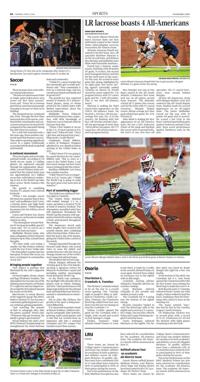
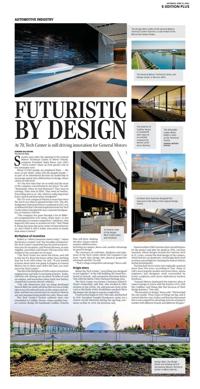
Hickory FC fans show their support during the club's Steinbrecher Cup match against Vermont Green FC on May 30.
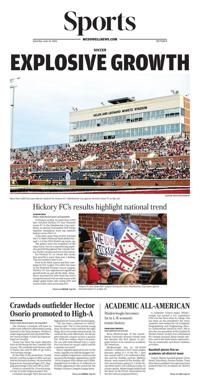
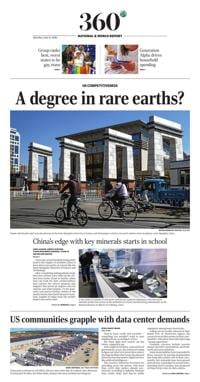
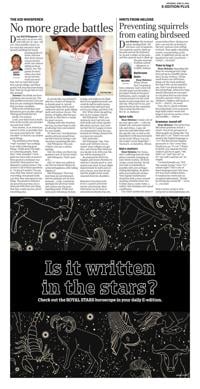
More than 5,000 fans pack Moretz Stadium for Hickory FC's Steinbrecher Cup against Vermont Green FC on May 30.
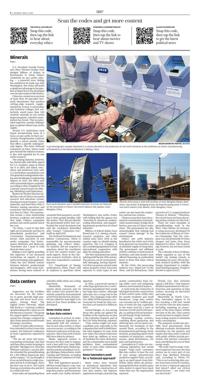
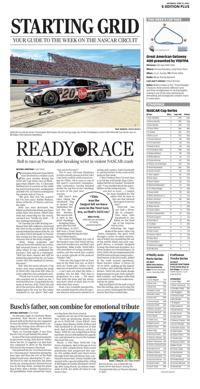
Young Hickory FC fans line up for autographs after Hickory FC's Steinbrecher Cup match against Vermont Green FC on May 30.
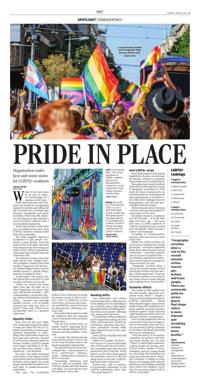
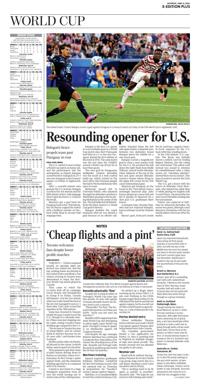
Christian Pulisic scores in the 20th minute to give the U.S Men's National Team a 2-0 lead over Senegal in Charlotte on May 31.
SOCCER
In Hickory on May 30, more than 5,000 fans watched Hickory FC face Vermont Green FC in the Steinbrecher Cup semifinals, an annual tournament that brings together champions from top amateur leagues across the U.S.
A day later, more than 50,000 watched the U.S. Men's National Team defeat Senegal 3-2 at the FIFA World Cup warm-up.
The games were two snapshots of the same trend. Soccer is experiencing explosive growth throughout the Catawba Valley, North Carolina and across the nation.
For Hickory FC co-owner Eric Levin, that growth is more than just a feeling. The raw numbers bear it out.
Now in its third season and first campaign in USL League Two after two years in the National Premier Soccer League, Hickory FC has experienced significant growth both on and off the field. Attendance increased by 68% from the club's inaugural season to its second season with single-game ticket sales rising 20% and season ticket sales increasing 25%.
These increases have come without raising ticket prices.
"We have not raised season ticket or single-game ticket prices once across our first three seasons," Levin said. "Every bit of revenue growth has come from more people choosing to be part of what we're building.
The momentum has continued into 2026. Through the first three home matches of the season, combined ticket, merchandise and concession revenue has increased 54% compared to the same point during the club's first two seasons.
For a club that launched only a few years ago, those numbers represent more than business success. They reflect a growing appetite for soccer in a region traditionally associated with football, basketball and baseball.
A national movement
Those local gains mirror broader national trends. According to US Youth Soccer, nearly 2.5 million players are registered annually through the organization. Meanwhile, a recent Nielsen study estimated that the United States now has approximately 62.5 million soccer fans, with interest continuing to rise as the World Cup takes place across North America this summer.
The growth is something Hickory FC players have noticed firsthand.
"When I was younger, soccer felt much less popular than it does now," said goalkeeper Josh Caron, a Florida native and High Point University player. "I think the game has grown a lot, but still has a lot of potential."
Caron said Hickory has shown what soccer can become in smaller American cities.
"The atmosphere around Hickory FC has been incredibly special," Caron said. "It's so cool to see a whole city back one team."
Midfielder Weston Jonke, who plays collegiately at Elon University and grew up in Ohio, echoed those thoughts.
"It's been really cool seeing a smaller city like Hickory embrace a club the way it has," Jonke said. "The atmosphere on game days has been great. It shows that soccer can have a real impact in communities of any size."
Bringing people together
That impact is perhaps best illustrated by the club's supporter culture.
On match nights, drums, chants and flags fill Moretz Stadium. The atmosphere has become one of the defining characteristics of Hickory FC's rapid rise and has helped create an identity that extends beyond the results on the field.
Max Ferrari, co-music director of the supporter group The 28601, believes Hickory FC has become a community gathering point as soccer continues gaining popularity.
"Just watching the amount of kids in autograph alley after the games, packed," Ferrari said. "Whenever kids get involved, the family's going to get involved."
Ferrari believes the club's 2025 NPSL National Championship run strengthened the bond between team and community. "I think it's a sense of pride that the community gets to really feel," Ferrari said. "Your community is now on a national stage, and you can tell your friends and family and be proud of it."
The growth has also surprised several of Hickory FC's international players, many of whom arrived in the United States with limited expectations about the soccer landscape.
Midfielder Tomas Pollacchi arrived from Buenos Aires, Argentina, with little knowledge of American soccer beyond what he had seen from afar.
"When I first looked at soccer in the U.S., it wasn't grown as it is right now," Pollacchi said. "Once I got here and learned how everything works, I really liked it."
Goalkeeper Daniel Miklosi, a native of Budapest, Hungary, admitted he was skeptical before arriving in the United States in 2023.
"I didn't know if it was going to be a good decision for my career," Miklosi said. "But as soon as I came to the United States, I saw how much change and how much money is being put into the system."
Brazilian midfielder Leo Souza had a similar reaction.
"I didn't know it was as competitive as it is," Souza said. "I think the World Cup is going to make the sport grow even more here in America."
Part of something bigger
That belief was reinforced Sunday night in Charlotte. The United States defeated 14th-ranked Senegal 3-2 in a warm-up before a crowd of 57,741 at Bank of America Stadium. The atmosphere resembled what fans will experience throughout the World Cup this summer, with supporters from both nations creating a lively environment throughout the evening.
The Americans struck early when Sergiño Dest scored in the seventh minute after combining with Christian Pulisic. Pulisic doubled the lead in the 20th minute, giving the United States control of the match.
Senegal responded through star forward Sadio Mané, who scored twice to erase the deficit and remind observers why the Lions of Teranga remain one of the world's most respected national teams.
The deadlock did not last long. Folarin Balogun delivered the winning goal in the 63rd minute, securing a signature victory for Mauricio Pochettino's squad and providing another encouraging result during the World Cup.
As the World Cup continues, the spotlight will naturally fall on players such as Pulisic, Balogun and Dest. Their performances will shape expectations for the national team and help define how the tournament is remembered on American soil.
But in cities like Hickory, the growth of the sport is being measured differently.
It is measured in packed stands at Moretz Stadium, children waiting for autographs after matches, growing youth participation and a club that has evolved from an expansion side into a national champion and USL League Two member in just three seasons.