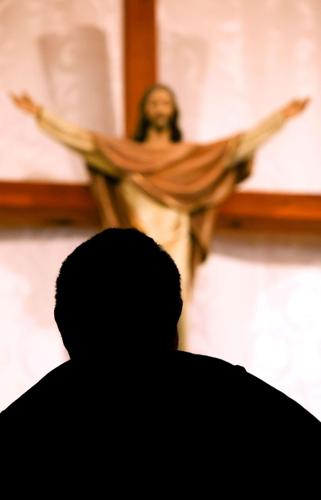
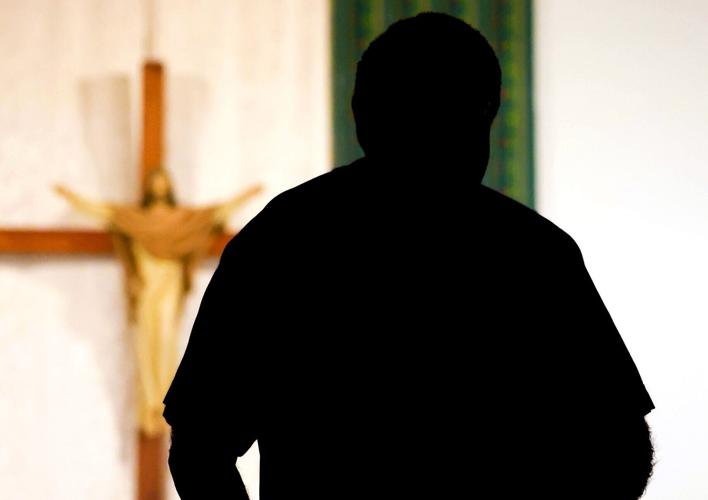
At a Spanish-speaking Lutheran church in Tucson, the pastor said he's asked volunteers with English-speaking sister churches to attend his services to act as witnesses, in case there should ever be an ICE raid at the church. The Trump administration has reversed prior ICE guidance limiting enforcement in "sensitive locations," including hospitals, schools and churches.
For 4-year-old Mateo, the world has become a bit smaller since President Donald Trump took office, according to his father Antonio, a 31-year-old Tucson home painter who is undocumented.
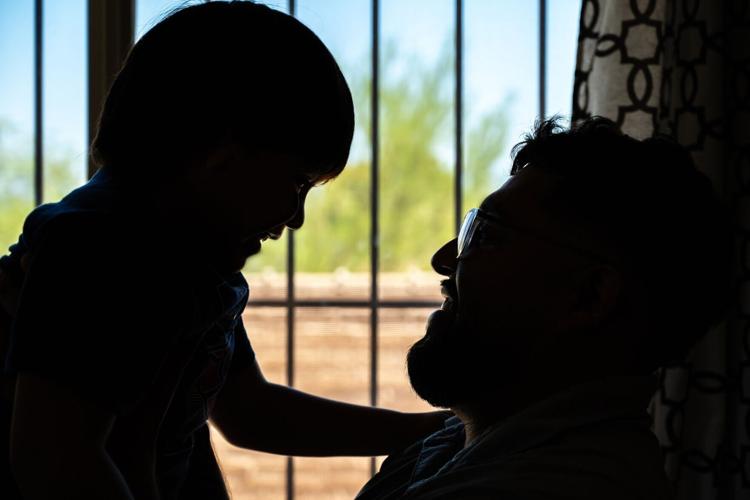
Tucson father Antonio, who is undocumented, says he spends much of his free time playing with his 4-year-old son Mateo, a U.S. citizen. Typically, they’d go to the neighborhood park to play baseball, to the mall for ice cream or to movies. But this year, as the presence of immigration agents has increased in Tucson, they’ve been staying at home. “Nothing’s the same anymore, honestly,” said Antonio, 31, pictured here with Mateo in west Tucson. “For my family and me, we’ve changed our lives because of fear.”
Antonio, pictured with his son Mateo in west Tucson, used to routinely work 60 to 70 hours a week as a home painter. But now he’s working about half that. He’s not sure if it’s due to the economy, and fewer people doing home improvements, or that potential clients are fearful of hiring immigrants, he said. “Things aren’t the same as before. You can’t go to work comfortably anymore. You struggle more, much more for work,” he said.
At a Spanish-speaking Lutheran church in Tucson, the pastor said his congregation has still been attending in large numbers, although he’s offered remote services via Facebook since the pandemic. “Some of them have shared with me that they can’t just be sitting and waiting for the worst to happen,” said the pastor, who asked to be identified only by his first name, Mateo, to protect his congregation. “It’s kind of influenced my preaching in that I really emphasize that we are in God’s hands. The care God gives us is bigger than any of the government’s actions.”
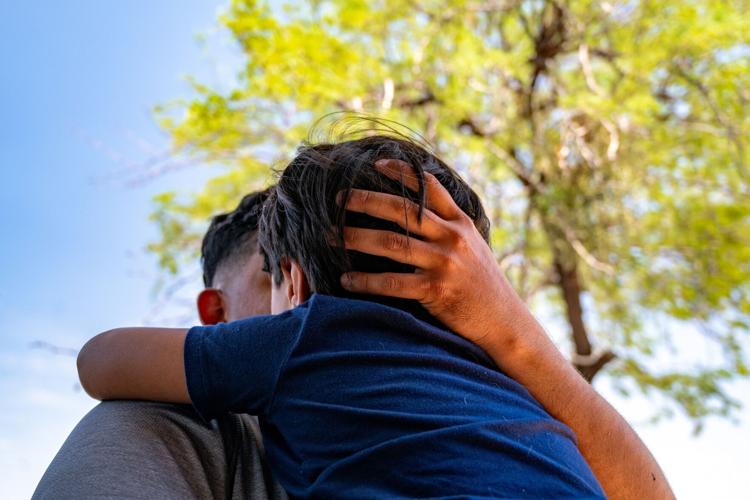
Tucson home painter Antonio, 31, embraces his 4-year-old son Mateo, a U.S. citizen, in west Tucson. Antonio, who was born in Nogales, Sonora and is undocumented, said he’s had to stop taking his son to the park and other public places they used to visit together. Now they stay at home, but have been able to avoid isolation by inviting family and friends to eat with them, he said.
Contact reporter Emily Bregel at ebregel@tucson.com. On X, formerly Twitter: @EmilyBregel
Resources for immigrants
Realiable information is a powerful tool for immigrant communities, said Tucson’s new Mexican consul, Fernando Adrián Sánchez Roldán. The consulate here has an information hotline through its Center for Information and Assistance for Mexicans: 520-623-7874.
The consulate is also a partner in the “Accion Migrante” program of the National Autonomous University of Mexico, which offers virtual mental-health assessments and treatment, free of charge, for migrants of any immigration status in the U.S. or Canada, as well as those recently returned to Mexico, voluntarily or through deportation. Visit accionmigrante.unam.mx for more information.
The consulate’s ventanillas de salud — “health windows” — can also connect you with public health screenings and education, and preventive care. Visit the consulate at 3915 E. Broadway Boulevard.
Tucson father Antonio, who is undocumented, says he spends much of his free time playing with his 4-year-old son Mateo, a U.S. citizen. Typically, they’d go to the neighborhood park to play baseball, to the mall for ice cream or to movies. But this year, as the presence of immigration agents has increased in Tucson, they’ve been staying at home. “Nothing’s the same anymore, honestly,” said Antonio, 31, pictured here with Mateo in west Tucson. “For my family and me, we’ve changed our lives because of fear.”
Antonio, pictured with his son Mateo in west Tucson, used to routinely work 60 to 70 hours a week as a home painter. But now he’s working about half that. He’s not sure if it’s due to the economy, and fewer people doing home improvements, or that potential clients are fearful of hiring immigrants, he said. “Things aren’t the same as before. You can’t go to work comfortably anymore. You struggle more, much more for work,” he said.
At a Spanish-speaking Lutheran church in Tucson, the pastor said his congregation has still been attending in large numbers, although he’s offered remote services via Facebook since the pandemic. “Some of them have shared with me that they can’t just be sitting and waiting for the worst to happen,” said the pastor, who asked to be identified only by his first name, Mateo, to protect his congregation. “It’s kind of influenced my preaching in that I really emphasize that we are in God’s hands. The care God gives us is bigger than any of the government’s actions.”
At a Spanish-speaking Lutheran church in Tucson, the pastor said he's asked volunteers with English-speaking sister churches to attend his services to act as witnesses, in case there should ever be an ICE raid at the church. The Trump administration has reversed prior ICE guidance limiting enforcement in "sensitive locations," including hospitals, schools and churches.
Tucson home painter Antonio, 31, embraces his 4-year-old son Mateo, a U.S. citizen, in west Tucson. Antonio, who was born in Nogales, Sonora and is undocumented, said he’s had to stop taking his son to the park and other public places they used to visit together. Now they stay at home, but have been able to avoid isolation by inviting family and friends to eat with them, he said.