

Revolutionary treatment
How battlefield surgery looked 250 years ago without anesthesia
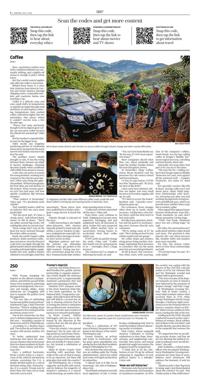
Above: A reproduction of a Revolutionary War-era saw used for amputations is displayed at the Fort Lee Historic Park museum.
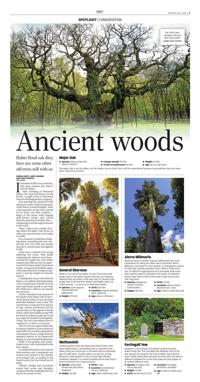
Left: Equipment used to drain blood during the Revolutionary War
AMERICA 250
If ever there was evidence of the sacrifice Continental Army soldiers made during the Revolutionary War, it can be found at the museum at the Fort Lee Historic Park atop the Palisades in Fort Lee, New Jersey.
Laid out in a glass case sit replicas of battlefield surgical tools from the war, including a large hand saw and a curved knife used to amputate limbs damaged by musket balls, bayonets and cannon fire in an era long before infection control — and general anesthesia.
As the United States celebrates the 250th anniversary of the Declaration of Independence on the Fourth of July, many people will observe the advances the nation underwent since then. Nowhere were more changes made than in healthcare.
"It really is the beginning of modern medicine in the United States," said Sarah Naramore, a historian at the University of Edinburgh in Scotland. "But they still have a long way to go and they're going to get a lot of it wrong."
The first efforts to standardize medicine came about a decade before the war, when the Colonies' first medical school opened in Philadelphia at what would become the University of Pennsylvania.
Pretty much anyone could practice medicine a century before licensing boards were established to regulate the industry.
Those who claimed to be doctors may have had some training as apprentices — or none at all, especially in smaller towns. Midwives often acted as obstetricians, pharmacists and even primary care physicians for their families and communities.
"If a lot of your patients were dying, people stopped trusting you," Naramore said. "The medical profession was very market-based for a long time."
Strange remedies
Cleanliness was considered important to health; wounds were washed, instruments were scrubbed. Leeches were commonly used to draw out "impurities" in blood.
Still, many patients developed untreatable infections and died. "They understood hygiene," Naramore said. "They didn't understand germs."
Some remedies were bizarre.
At the Fort Lee museum, there is an image on display of a "tobacco smoke enema" — a device in which a bellow would pump smoke into one's rectum via a tube. This practice was used to promote warmth and better respiration for those who needed it, including drowning victims. It was the basis for the idiom to "blow smoke up your (backside)" as a way to describe an insincere compliment.
At the time, the average lifespan was in the upper 30s but was skewed because the death rate among infants and children from communicable diseases such as smallpox and tuberculosis was very high.
Cancer and heart disease — the leading causes of death among Americans today — were not as common because they were difficult to diagnose and infectious diseases were much more prevalent and deadly.
If a person survived into adulthood, they could live well into their 60s and beyond. Some of America's Founding Fathers lived long lives, including John Adams who died at 90, Benjamin Franklin at 84 and Thomas Jefferson at 83.
War's top killer
Bacteria, viruses and parasites spread easily in Continental Army camps. Diseases such as typhus, dysentery, smallpox and tuberculosis killed about 17,000 soldiers compared to 6,800 who died in combat during the 17751783 war.
Gen. George Washington ordered smallpox vaccinations for his troops, helping to launch the era of mass inoculation.
Those well enough to fight received little help if they were wounded, at least by modern standards. The wounded were often carried or dragged from the front.
Medics — a hodgepodge of doctors and nurses — conducted basic wound treatment. They were able to pull out rounds and saw off limbs. Nothing was disinfected and it was still 150 years before penicillin was discovered.
"Alcohol was sometimes thrown on something to see if that helped," Naramore said. "They're kind of trying, but haven't landed on the things that are safe."
Winter packed wallop
Disease combined with winter weather took their toll on the Continental Army in November 1776 after the British won battles across New York and descended on New Jersey. As the British crossed the Hudson River and marched toward Fort Lee, Washington ordered the retreat across New Jersey to Pennsylvania.
It was a low point. The defeat, the injuries, the deaths and the imprisonment of soldiers in brutal conditions shook morale.
Essayist Thomas Paine chronicled the retreat in his aptly titled series of pamphlets: "The American Crisis." He summed up the misery and exhaustion of the sick and injured soldiers in one of the most famous opening lines in American history: "These are the times that try men's souls."
America at 250: The story still unfolding
This story is part of an ongoing series exploring the 250th anniversary of the United States in 2026. Visit our website to read other stories in the series and share your own.