
How 5 firefighters survived 9/11
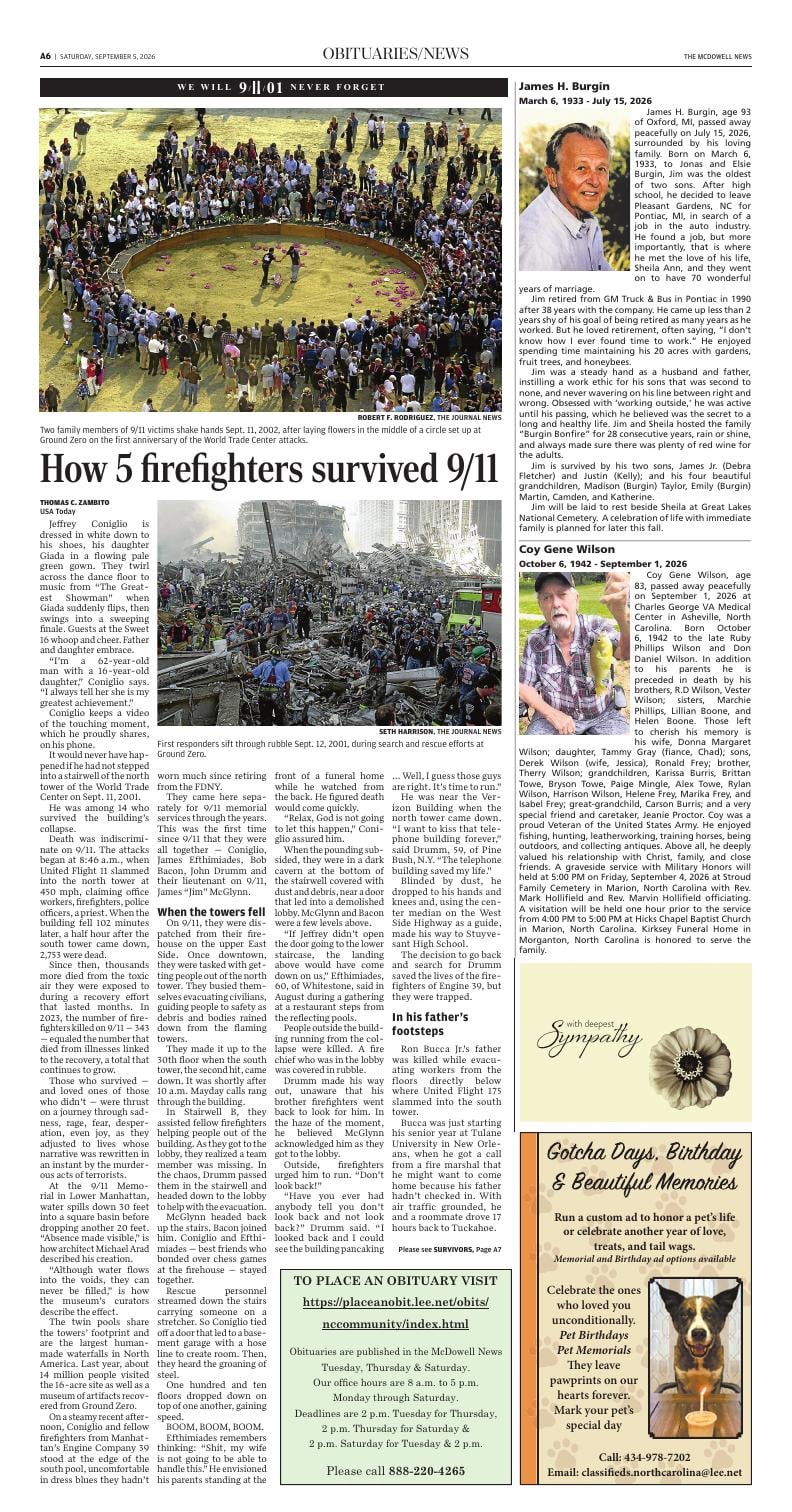
Two family members of 9/11 victims shake hands Sept. 11, 2002, after laying flowers in the middle of a circle set up at Ground Zero on the first anniversary of the World Trade Center attacks.
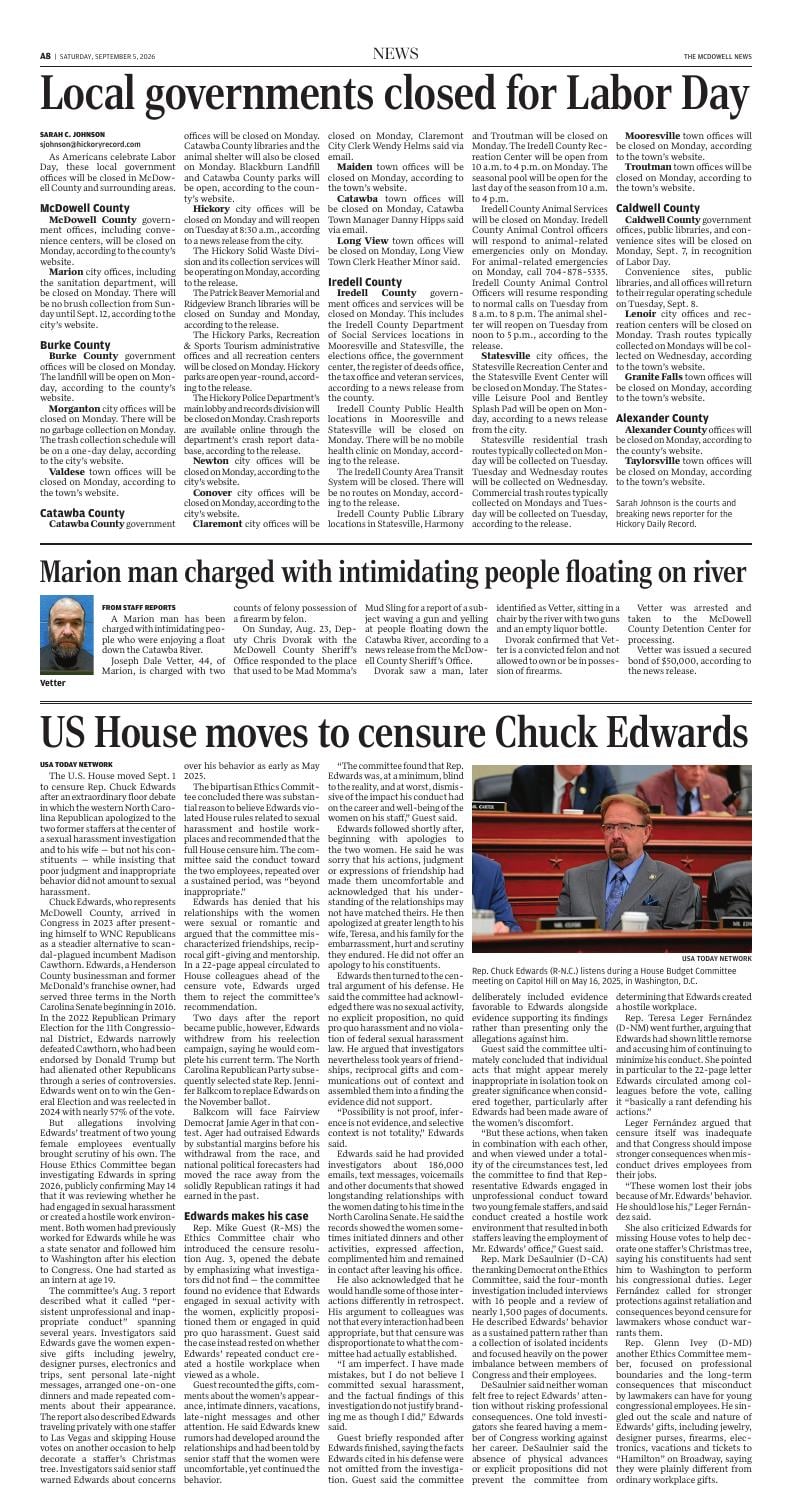
First responders sift through rubble Sept. 12, 2001, during search and rescue efforts at Ground Zero.
Jeffrey Coniglio is dressed in white down to his shoes, his daughter Giada in a flowing pale green gown. They twirl across the dance floor to music from "The Greatest Showman" when Giada suddenly flips, then swings into a sweeping finale. Guests at the Sweet 16 whoop and cheer. Father and daughter embrace.
"I'm a 62-year-old man with a 16-year-old daughter," Coniglio says. "I always tell her she is my greatest achievement."
Coniglio keeps a video of the touching moment, which he proudly shares, on his phone.
It would never have happened if he had not stepped into a stairwell of the north tower of the World Trade Center on Sept. 11, 2001.
He was among 14 who survived the building's collapse.
Death was indiscriminate on 9/11. The attacks began at 8:46 a.m., when United Flight 11 slammed into the north tower at 450 mph, claiming office workers, firefighters, police officers, a priest. When the building fell 102 minutes later, a half hour after the south tower came down, 2,753 were dead.
Since then, thousands more died from the toxic air they were exposed to during a recovery effort that lasted months. In 2023, the number of firefighters killed on 9/11 — 343 — equaled the number that died from illnesses linked to the recovery, a total that continues to grow.
Those who survived — and loved ones of those who didn't — were thrust on a journey through sadness, rage, fear, desperation, even joy, as they adjusted to lives whose narrative was rewritten in an instant by the murderous acts of terrorists.
At the 9/11 Memorial in Lower Manhattan, water spills down 30 feet into a square basin before dropping another 20 feet. "Absence made visible," is how architect Michael Arad described his creation.
"Although water flows into the voids, they can never be filled," is how the museum's curators describe the effect.
The twin pools share the towers' footprint and are the largest humanmade waterfalls in North America. Last year, about 14 million people visited the 16-acre site as well as a museum of artifacts recovered from Ground Zero.
On a steamy recent afternoon, Coniglio and fellow firefighters from Manhattan's Engine Company 39 stood at the edge of the south pool, uncomfortable in dress blues they hadn't worn much since retiring from the FDNY.
They came here separately for 9/11 memorial services through the years. This was the first time since 9/11 that they were all together — Coniglio, James Efthimiades, Bob Bacon, John Drumm and their lieutenant on 9/11, James "Jim" McGlynn.
When the towers fell
On 9/11, they were dispatched from their firehouse on the upper East Side. Once downtown, they were tasked with getting people out of the north tower. They busied themselves evacuating civilians, guiding people to safety as debris and bodies rained down from the flaming towers.
They made it up to the 30th floor when the south tower, the second hit, came down. It was shortly after 10 a.m. Mayday calls rang through the building.
In Stairwell B, they assisted fellow firefighters helping people out of the building. As they got to the lobby, they realized a team member was missing. In the chaos, Drumm passed them in the stairwell and headed down to the lobby to help with the evacuation.
McGlynn headed back up the stairs. Bacon joined him. Coniglio and Efthimiades — best friends who bonded over chess games at the firehouse — stayed together.
Rescue personnel streamed down the stairs carrying someone on a stretcher. So Coniglio tied off a door that led to a basement garage with a hose line to create room. Then, they heard the groaning of steel.
One hundred and ten floors dropped down on top of one another, gaining speed.
BOOM, BOOM, BOOM.
Efthimiades remembers thinking: "Shit, my wife is not going to be able to handle this." He envisioned his parents standing at the front of a funeral home while he watched from the back. He figured death would come quickly.
"Relax, God is not going to let this happen," Coniglio assured him.
When the pounding subsided, they were in a dark cavern at the bottom of the stairwell covered with dust and debris, near a door that led into a demolished lobby. McGlynn and Bacon were a few levels above.
"If Jeffrey didn't open the door going to the lower staircase, the landing above would have come down on us," Efthimiades, 60, of Whitestone, said in August during a gathering at a restaurant steps from the reflecting pools.
People outside the building running from the collapse were killed. A fire chief who was in the lobby was covered in rubble.
Drumm made his way out, unaware that his brother firefighters went back to look for him. In the haze of the moment, he believed McGlynn acknowledged him as they got to the lobby.
Outside, firefighters urged him to run. "Don't look back!"
"Have you ever had anybody tell you don't look back and not look back?" Drumm said. "I looked back and I could see the building pancaking … Well, I guess those guys are right. It's time to run."
He was near the Verizon Building when the north tower came down. "I want to kiss that telephone building forever," said Drumm, 59, of Pine Bush, N.Y. "The telephone building saved my life."
Blinded by dust, he dropped to his hands and knees and, using the center median on the West Side Highway as a guide, made his way to Stuyvesant High School.
The decision to go back and search for Drumm saved the lives of the firefighters of Engine 39, but they were trapped.
In his father's footsteps
Ron Bucca Jr.'s father was killed while evacuating workers from the floors directly below where United Flight 175 slammed into the south tower.
Bucca was just starting his senior year at Tulane University in New Orleans, when he got a call from a fire marshal that he might want to come home because his father hadn't checked in. With air traffic grounded, he and a roommate drove 17 hours back to Tuckahoe.
At night, using one of his father's duplicate badges and a borrowed windbreaker, he'd sneak into the site to help with the recovery effort.
A month passed. "Me and my mom had the discussion," Bucca recalled. "There probably wasn't going to be any survivors, so I went back down to school."
Two weeks later, on Oct. 23, 2001, his father's body was found. Ron Bucca Sr., 47, was the first fire marshal to die in the line of duty in the FDNY, a veteran of 23 years.
Bucca finished the school year and worked in finance for a few months. At the end of 2002, he enlisted in the Army. He became a Special Forces Green Beret like his father.
"I wanted to be able to still kind of connect with him even though he wasn't there and have that shared experience and then, probably deliver a little bit of payback, being at the tip of the spear with special forces," he said.
Between tours in the Middle East and Africa, Bucca got a master's degree in globalization from Dartmouth and an MBA from Columbia. He retired from the National Guard last year. Today, he heads an environmental drilling company.
At 46, he's raising a family and understands the sacrifice his parents made to raise him and his sister, working multiple jobs. In 1986, his father was dubbed "The Flying Fireman" after he plunged five stories while trying to rescue a fellow firefighter with Rescue 1. "With his injuries in '86, waking up and getting after it every day…," Bucca said.
His father investigated the 1993 bombing at the World Trade Center and, according to his family, harbored suspicions that terrorists were not finished targeting the buildings for an attack.
"I'm pretty grateful that I got to spend 21 years with my dad, got to have him involved in my life as a father, going to all the sports games, being able to mentor me and set an example for me," he said. "I try to follow that every day and do the right thing and treat people fairly and make every day a little better for myself and those around me."
The man in the red bandana
Hunting down "the bad guys" wasn't an option for Alison Crowther of Upper Nyack. After her son Welles was killed, she dedicated herself to telling the story of "The man in the red bandana" — her son — who gave his life on 9/11 so others might live. "My weapon would be to bring good into the world somehow," she said.
At 77, she shows few signs of slowing down as she spreads Welles' story.
When the punk band Dropkick Murphys played their tribute to Welles — "A Hero Among Many" — at a March concert in Boston, she donned a band T-shirt and tossed red bandanas to the crowd.
There are stacks of letters in her Upper Nyack home from people who write to share their thoughts about Welles, a 24-year-old equities trader with Sandler O'Neill and Partners with offices on the 104th floor. How, instead of leaving the building when Flight 175 struck the tower, he helped others find their way out.
With her husband, Jefferson, who died in 2019, Crowther established the Welles Remy Crowther Charitable Trust. The Red Bandanna Project helps students from kindergarten through college learn social awareness and responsible decision making.
Books and documentaries tell Welles' story. Teams at his Boston College alma mater, where he played lacrosse, sport the red bandana he carried through the towers on their uniforms. Parents named their children after him.
"It isn't easy," she said of Welles' death, but exposing others to the selfless example he set that day 25 years ago helps. "People have said to me 'how do you do it?' It's because I keep looking forward and I just keep knowing this is how I travel the world with Welles now as my partner. And he's shown me plenty of signs that he's still with me. So, that gives me strength."
'Mayday, Mayday'
When the north tower came down, Efthimiades and Coniglio were thrown near a door that opened onto the north tower lobby. Stairs and steel created a tepee above them.
McGlynn, 72, of Greenburgh, and Bacon, 53, of New City, were two floors above. They shouted Maydays into their radio.
"There was no acknowledgment," McGlynn said.
They had no idea the entire building collapsed until the smoke and dust cleared and light burst through.
"You look around and you started to put the pieces together," said McGlynn, who retired as a battalion chief in 2019 after 34 years with the FDNY. "OK, there is no building above us. This is it. It was a relief of sorts, since in a collapse you always worry about the secondary collapse."
They kept radio contact with Chief Richard Prunty, who was trapped under rubble in the lobby, letting him know help was coming.
McGlynn and Bacon managed to get out first, pushing debris out of the way and making their way above the pile where they stepped into a moonscape.
"When you walk in, there's two trade centers, arguably the most expensive real estate in the country or in the world," McGlynn said. "When you walk out, it's like a scene from postWorld War II Europe. Devastation and rubble."
In their cramped space, Coniglio and Efthimiades stayed put, fearing movement could trigger another collapse.
In his pocket, Efthimiades had a soda an office worker handed him as they made their way up Stairwell B. He never opened it, thinking they could be there for days.
From moonscape to modern marvel
Etched into the bronze parapets ringing the north and south pools are the names of the 2,983 who died in the 9/11 attacks and the Feb. 26, 1993, trade center bombing.
The north pool bears the names of those killed in the north tower, the passengers and crew of Flight 11, as well as the six killed in 1993. The south pool bears the names of those killed in the south tower, first responders, the passengers and crew of Flight 175, as well 184 killed in the attacks on the Pentagon and 40 others on Flight 93 when it crashed near Shanksville, Pa.
More than 1,200 requests from families who wanted their loved ones' names to be near relatives, friends and colleagues were honored as so-called "meaningful adjacencies."
To the north is One World Trade Center, best known as The Freedom Tower. At 1,776 feet, it's the tallest building in the Western Hemisphere.
It opened in 2014, the same year the 9/11 Museum opened to visitors. There, mounted on a wall in the Memorial Hall is artwork titled "Trying to Remember the Color of the Sky on That September Morning," its 2,983 hand-painted tile squares each a shade of blue. Below that is a quote from the Aeneid: "No day shall erase you from the memory of time."
Exhibits chronicle the day as it unfolded — 911 calls to dispatchers as the planes hit, the metal handle of a squeegee used to pry open an elevator door, rusted hulks of firetrucks destroyed when the towers fell. Missing signs posted across the city for loved ones who hadn't returned home. The hand-painted sign a Brooklyn woman put in her front yard, tallying the days from 9/11 that the mastermind of the attacks remained free. "WHERE IS OSAMA BIN LADEN?," it reads. On May 2, 2011, someone affixed a yellow note to the bottom: "DEAD."
There are about 83,000 digital and physical artifacts in the museum's collection. Among them is the black leather helmet worn by Lt. Mickey Kross of Engine Company 16 who, with Coniglio and the firefighters of Engine 39, were among the 14 to survive the collapse of the north tower.
There's a Memorial Card for Ron Bucca. On the front Bucca, dressed in bunker gear, looks down from a fire escape. And on the back a photo of Bucca in his Green Beret uniform provides the backdrop for a list of Army Values, including one for Selfless Service: "Put the welfare of the nation, the Army and your subordinates before your own."
Since its opening, the museum hosted about 25 million visitors and almost 18,000 field trips. In 2024, it tallied $93 million in revenue, $69 million from tickets sales and tours, the rest from government grants and donations.
In June, it kicked off a campaign for its Never Forget fund, timed to the 25th anniversary, with a goal to educate those who didn't live through 9/11.
"Today, 100 million Americans understand 9/11 as a moment in history — not a lived experience," said Beth Hillman, who heads the 9/11 Memorial & Museum. "That's why the work we do to commemorate, educate, and inspire is more important than ever, and why we must continue to reach new visitors, learners, and supporters with our mission."
Help is on the way
Lt. Glenn Rohan and his team from Ladder 43 in East Harlem watched events unfold on TV, figuring they'd get called downtown. Nothing. They were dispatched to free a man stuck in a turnstile at Grand Central Terminal.
They lingered around 41st Street, on their way back uptown to their firehouse, when the south tower came down. Rohan radioed in, letting dispatchers know he could be there in minutes. He was assigned Box 8087, the ticket for the World Trade Center.
They were about four blocks from the site when the north tower came down. They sprinted north up the West Side Highway. "I said to myself if this building is leaning, we're dead," said Rohan, 69, of Cortlandt. "But it came straight down."
Dust snaked through the streets. As it cleared, Rohan and a team from Ladder 43 headed south, where a chief told them there were guys trapped in the north tower, Stairway B.
They scaled I-beams and debris, what was left of the north tower. First, they helped free a team from Ladder 6 that stopped in the stairwell to aid a woman named Josephine Harris who struggled to make it out of the building.
Then Rohan ran into McGlynn, who told him two of his guys were still in the hole.
From the top of the pile, they could slide down a standpipe that led to the first floor. "We could just see this little hole where these guys were talking to us," Rohan said. They tossed down Halligan bars, tools Efthimades and Coniglio used to break away sheetrock, then a rope.
Efthimiades was first, Coniglio next.
"I'm like how are these freakin' guys OK? It really is miraculous," Rohan said. "You expect broken hand, broken arm, broken leg. Anything."
"Like, why just this one stairway offered some kind of refuge? It's something that'll be studied by engineers for 100 decades," he said. "Why this one stairway gave them a little place to survive."
A member of Rohan's team, James Lanza, climbed down to check for Prunty in the rubble in the lobby. "This is a hellhole," Rohan said. "This is a place you're not supposed to put people and they did not hesitate to go down there."
Lanza later died from an illness said to be linked to his work at Ground Zero.
Rohan climbed into the hole to see if Prunty was alive. "I could get my fingers on his neck and I knew he was passed," Rohan said. "He was gone. So I said well, we've got to get him out. We don't leave anybody."
For the next two hours, they tried to clear debris to get to him while chiefs told them they had to leave. Building 7 of the World Trade Center was on fire. It collapsed at 5:20 p.m.
They couldn't move the debris off the chief. "We said a short prayer and we left and we said we'll go back and get him later," Rohan said.
Prunty's last words to McGlynn and the others were: "Tell my wife and kids I love them."
Rohan survived a bout with cancer linked to his work at Ground Zero. A son who shares his name recently joined the fire department and is assigned to the same firehouse in the Bronx where he started.
Finding a way out
For years afterward, Coniglio was overcome with fear whenever he walked into a dark room. "There were times when I visualized where he (Efthimiades) and I were and I see the stairs are not there anymore," he said.
He tried counseling but it never seemed to click. A new therapist urged him to tell him the whole story of that day beginning to end. He talked for two hours.
"I was able to tell the story," he said. "So now when people ask me, I'm not afraid to tell the story. It was truly therapeutic for me to get through the story."
He made some life changes, too. He trimmed down. While a firefighter, he had a busy side gig organizing parties and events. "Doing events, I couldn't deal with the happiness," said Coniglio, of Patchogue. "Music would come on, I'd start crying."
The side hustle helped support what he calls an "opulent" lifestyle, shopping on Madison Avenue, hanging out at the hottest clubs.
Then he got married. "It was more important about my wife and family, not just what I was wearing, what I was eating, where we were going," he said. He and his wife, CarrieAnn, celebrated their 20th wedding anniversary in June. He retired in 2007.
For Giada's Sweet 16, he recorded his own version of "Never Enough," changing the words to make it a love song for the girl who came into his life as he approached 50, into a life that looked different from the one he led before 9/11.
"Truly," he said, "my greatest blessing was getting out."