
Railroad conference focuses on passenger trains, rebuilding

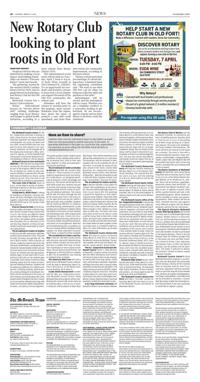
John Dillard, representing CSX, speaks about how the class One railroad had to rebuild the Blue ridge Subdivision that runs from east Tennessee to western North Carolina.

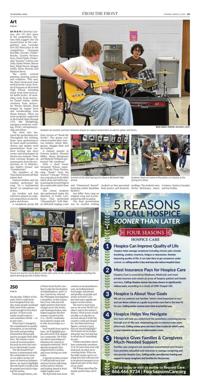
Anna Stokes with Amtrak speaks Wednesday in Morganton.

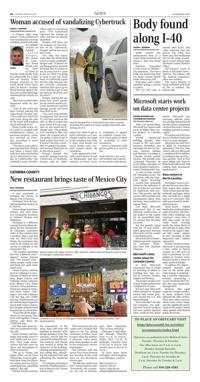
Marion Mayor Steve Little speaks at the railroads and regional Economic development conference.

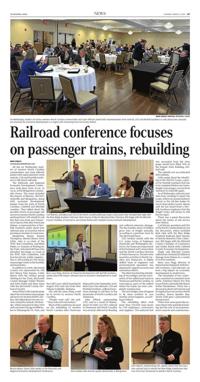
Mary Lesa Pegg, director of industrial development with Norfolk Southern, speaks about the impact railroads have on economic development in small towns.

Carl Warren, president and CEO of the North Carolina railroad, leads a discussion that included Kyle Ogle with the Blue ridge Southern railroad, Matt Haynes of Martin Marietta/Giles chemical, Bill Slagle with the Mitchell county chamber of commerce and Ashley Bolick with Caldwell county Economic development.

On Wednesday, leaders of various western North Carolina communities and state officials joined with representatives from Amtrak, CSX and Norfolk Southern to talk about how railroads are essential for economic development in a region still recovering from hurricane Helene.
All day on Wednesday, leaders of western North Carolina communities and state officials joined with representatives from Amtrak, CSX and Norfolk Southern to talk about railroads.
The Railroads and Regional Economic Development Conference took place from 8 a.m. to 5 p.m. at the Morganton Community House. The event included the mayors of Marion, Old Fort, Asheville and Morganton, along with economic development leaders from the state of North Carolina, Caldwell and Mitchell counties. They talked about the possible return of passenger rail service to western North Carolina and heard how CSX rebuilt its rail line that runs from east Tennessee to Spruce Pine after Hurricane Helene. A representative of Norfolk Southern spoke about how railroads play an essential role in growing economies in rural areas.
Morganton Mayor Ronnie Thompson, Marion Mayor Steve Little, who is co-chair of the WNC Rail Committee, and Mimi Phifer, co-founder of Waiting for the Train, welcomed all those who attended. Ray Rapp, co-chair of the WNC Rail Committee, told how his private-public organization is advocating for the return of passenger trains to the foothills and mountains.
In addition to Little, McDowell County was represented by Old Fort Mayor Pam Snypes, Cathy Moore with the citizens group Waiting for the Train, McDowell County Manager Ashley Wooten and Patti Holda and Rena Harp with the McDowell County Historical Society.
Anna Stokes with Amtrak spoke about the restoration of passenger rail service to western North Carolina. She talked about two new services started by Amtrak: the Borealis, which launched in May 2024 and runs from Chicago to Milwaukee to Minneapolis/St. Paul, and the Gulf Coast, which launched in August 2025 and runs from New Orleans to Mobile, Alabama.
She said the same thing could be in service in western North Carolina.
"People want rail," she said. "They want rail everywhere."
Much of the conference focused on the rebuilding of western North Carolina after Hurricane Helene hit in late September 2024. Both Class One railroads, CSX and Norfolk Southern, suffered enormous damage to rail lines in the mountains of North Carolina and Tennessee.
John Dillard, representing CSX, said as a result of Helene, about 60 miles of CSX's railroad in Tennessee and North Carolina was severely affected by flooding and suffered extensive damage. The line handles about 14 million gross tons of freight annually, according to a previous story by The McDowell News.
CSX worked closely with the U.S. Army Corps of Engineers (Nashville and Wilmington districts), the Tennessee Department of Environment and Conservation and the North Carolina Division of Water Resources. Permits were issued for activities in North Carolina and Tennessee. A highly skilled team of engineers and environmental specialists was deployed to support recovery and restoration efforts.
The effort involved the rebuilding of two bridges and the restoration of the railbed and tracks in Tennessee and North Carolina. In some places, parts of the railbed where the tracks lay were completely washed away.
The new bridges were designed to be more resilient in case another storm happens, according to Dillard.
The rebuilding effort took more than 570,000 man-hours by CSX employees, contractors and suppliers. The material that was excavated from the river gorge would have filled 74% of the Empire State Building, Dillard said.
The rebuild cost an estimated $450 million.
Little spoke about the rebuilding of the Old Fort Loops, a project by Norfolk Southern that has to be completed before any trains, freight or passenger, can run from Salisbury to Asheville again.
As of Wednesday, railroad crews were busy working to repair the Loops, which run around Andrews Geyser as the rail line makes its way to Buncombe County. Moore said she has heard from a Norfolk Southern employee that the freight trains will return to Old Fort by April.
There was a panel discussion about the future of rail service after Helene.
Carl Warren, president and CEO of the North Carolina Railroad, led the discussion, which included Kyle Ogle with the Blue Ridge Southern Railroad, Matt Haynes of Martin Marietta/Giles Chemical, Bill Slagle with the Mitchell County Chamber of Commerce and Ashley Bolick with Caldwell County Economic Development.
Slagle said Mitchell County suffered an estimated $2 billion in damage from Helene in a county of 15,000 residents.
Mary Lesa Pegg, director of industrial development with Norfolk Southern, said railroads can have a big impact on economic development in small towns.
The remainder of the conference consisted of comments from Little, Salisbury Mayor Pro Tem Susan Kluttz and Asheville Mayor Esther Manheimer. There was a discussion about rail tourism and its implications for western North Carolina. House Speaker Rep. Destin Hall gave a presentation during lunch.
There were more panel discussions about state and federal funding and the role of local government councils and commissions.