
LESSONS IN CARE
Pioneering hospital in Colonial Pennsylvania gets its own museum
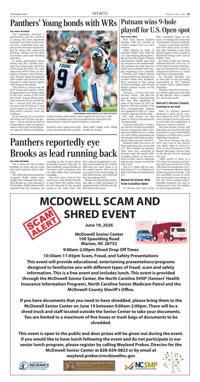
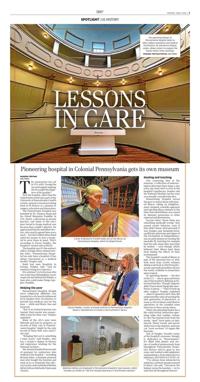
The operating theater at Pennsylvania Hospital dates to 1804, before anesthesia and medical sterilization. An interactive display, center, allows visitors to explore the human body's inner workings.
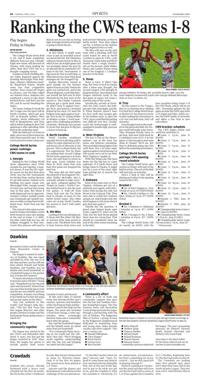
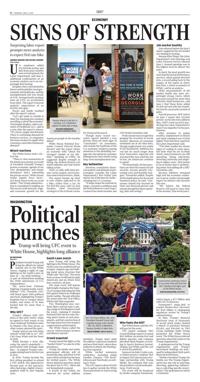
A bust of Benjamin Franklin looks out on the library at Pennsylvania Hospital, which he helped found.
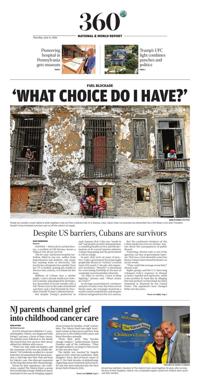
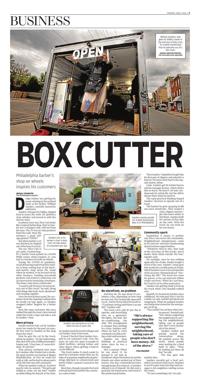
Stacey Peeples, curator and lead archivist at Pennsylvania Hospital, shows a reproduction of a book in the institution's library.
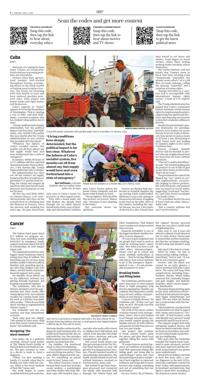
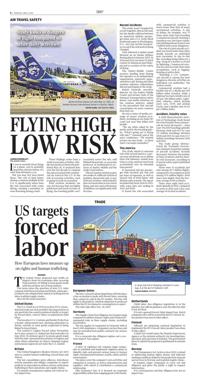
Medicine bottles are displayed in Pennsylvania Hospital's new museum, which includes an exhibit on "the first hospital pharmacy in the thirteen colonies."
SPOTLIGHT | US HISTORY
The cornerstone was set in 1755, with "George the Second happily reigning (for he sought the happiness of his people)." Now the hospital, older than the United States itself and a part of the University of Pennsylvania's health system, opened a museum looking back at its history as a pioneer in surgery, education and innovation.
The Pennsylvania Hospital was founded by Dr. Thomas Bond and his friend Benjamin Franklin in 1751. Bond, a physician in private practice, saw many of the city's poor forced to forego medical care because they couldn't afford it. He approached friends and fellow doctors, who mostly agreed there was a need — but they balked when Bond asked for money to start a hospital to serve those in need. That's according to Stacey Peeples, the hospital's curator and archivist.
The hospital says it's the nation's oldest, though others claimed similar titles. "Pennsylvania Hospital has only been a hospital; it has always functioned as a medical facility," Peeples said.
Bond had seen hospitals in Europe, Peeples said, "and he wanted to bring it to America."
His solution? Go to the man who was at the time Philadelphia's most respected and influential thinker, a man who could make things happen: Franklin.
Helping the poor
Pennsylvania Hospital, though never religiously affiliated, was founded in a city heavily influenced by its Quaker roots. Its mission: to provide free medical care for the poor — white and Black, free and enslaved.
"But if an enslaved person was treated, their master was responsible to pay for their care," Peeples explained.
Many of the city's poor were illiterate and had no property, so records of their care at Pennsylvania Hospital "might be the only record of them that even exists," she said.
"Bringing that out is something I enjoy most," said Peeples, who has a master's degree in history and experience working for the National Archives.
She showed handwritten records of payment by contractors who worked at the hospital — including Richard Allen, a formerly enslaved man who bought his freedom and went on to co-found the Free African Society and established Mother Bethel African Methodist Episcopal Church.
Healing and teaching
One surprising find at the museum: a collection of meteorological data kept three times a day every day from 1824 to 1922 in the hospital's apothecary. Peeples said the National Weather Service even occasionally consulted the data.
Pennsylvania Hospital served the poor as well as those with mental illness, taking an Enlightenment-inspired, scientific approach and rejecting ideas common at the time: that mental illness was caused by demonic possession or other supernatural phenomena.
Doctors there "knew there was something medically wrong" that caused erratic behavior, even if they didn't know what precisely it was, Peeples said. Benjamin Rush, a politician, physician and signer of the Declaration of Independence, was an early pioneer in treating the mentally ill, insisting for example that the cells where they were kept be heated — even though others believed their illness kept them from feeling the effects of their environment.
The hospital's medical library is part of the museum tour as well, with more than 13,000 volumes dating as far back as 1483 from physicians and medical facilities all over the world, available to researchers upon request.
Its operating theater — the first in the U.S. — also is open and forms one of the hospital's defining architectural features. Though surgeons didn't know about things like anesthesia or germs — "They'd wash up after surgery," Peeples explained — when it opened in 1804, they did understand the value of teaching the next generation of physicians, as many as 300 of whom could observe operations in the rounded room from two or three stories above.
Today, the operating theater has a life-sized virtual, interactive operating table that enables visitors to view the human body from the inside, "peel" back layers of skin, muscle, blood vessels and nerves all the way to the skeleton, and even cut "cross sections" of organs like the brain.
One of Peeples' favorite rooms of the hospital's museum, though, is dedicated to "Perseverance." It's filled with photos and stories of medical professionals from throughout Pennsylvania Hospital's history who've gone to war zones and worked amid epidemics and pandemics, from yellow fever to influenza, HIV/AIDS to COVID-19.
"I've always been interested in epidemics and how people respond to them," she said. "You know, the helpers versus the hoarders — we've seen that all throughout history."