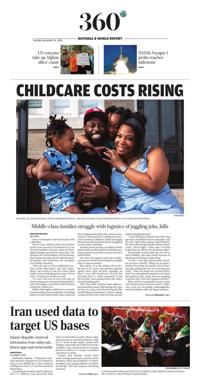

Border bleus
Cheesemakers in US, Canada tangled up in Trump's tariff dispute

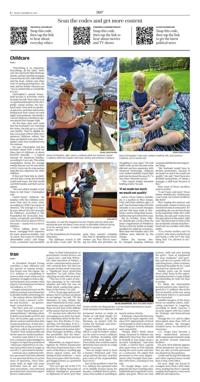
Above: a worker moves large wheels of cheese on a scissor lift oct. 28 in the cellars at Jasper Hill Farm in Greensboro, Vt.
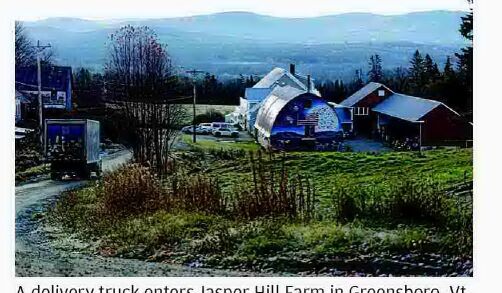
A delivery truck enters Jasper Hill Farm in Greensboro, Vt.
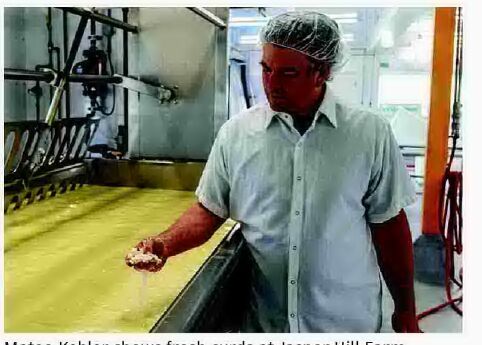
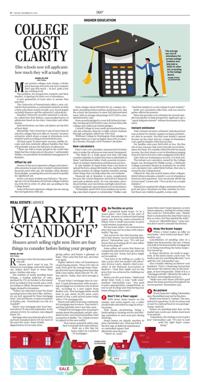
Mateo Kehler shows fresh curds at Jasper Hill Farm.
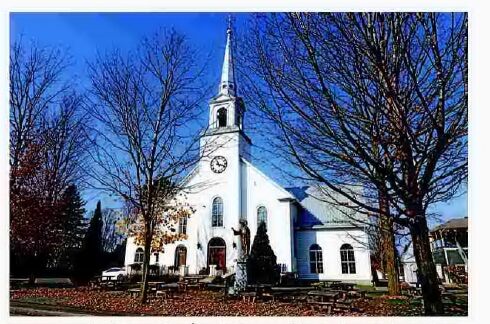
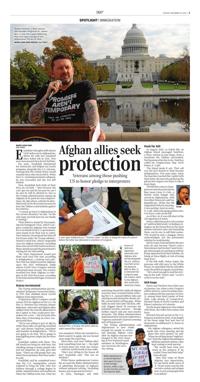
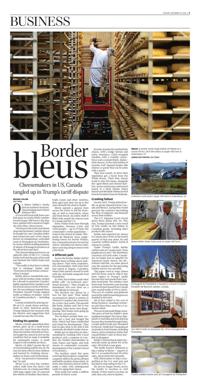
Fromagerie du Presbytère is housed in a church in sainte-Élizabeth-de-Warwick, Quebec, Canada.
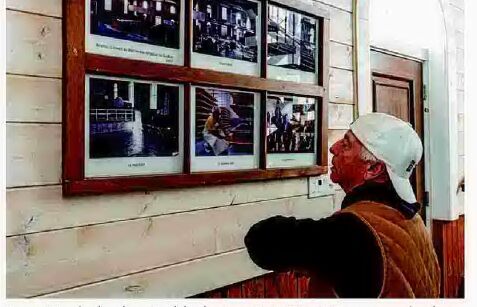
Jean morin looks at old photos oct. 29 at Fromagerie du Presbytère.
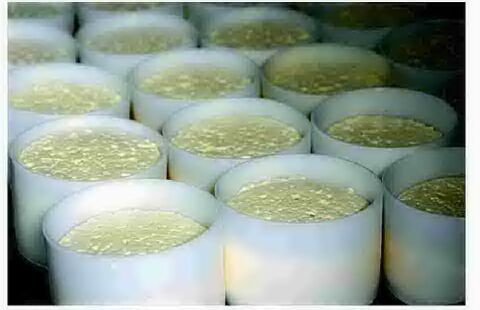
Freshly molded cheese rests at Fromagerie du Presbytère.
On Mateo Kehler's family farm in northern Vermont, cheesemaking starts before darkness lifts.
A truck with fresh milk from cows that graze in nearby fields rumbles toward Jasper Hill Farm's big blue barn, painted with a mural of a night sky and a blue-cheese moon.
Two hours to the north, Jean Morin steps into the former Catholic church he bought for one Canadian dollar and turned into part of his cheese factory. In a temperature-controlled room at Fromagerie du Presbytère, he surveys shelves holding hundreds of wheels of fromage he produces at the old rectory next door.
The cheesemaking businesses on opposite sides of the U.S.-Canada border both feel the pain of the tariff war between the United States and Canada.
"The reality is that there's nobody that is winning," Kehler said. "Everyone in these border communities is losing."
Kehler, who co-founded the company with his brother Andy, worked for a decade to penetrate Canada's highly regulated dairy market to sell his artisan cheeses north of the border. He was looking to expand when President Donald Trump slapped tariffs on billions of dollars' worth of Canadian products — including cheese.
Canada retaliated by placing tariffs on U.S.-made cheese and hundreds of other American goods. Trump inflamed the tensions with his rhetoric and suggestions that Canada become the 51st state.
Finding his passion
Morin, a fourth-generation dairy farmer, grew up in a small house across the street from the church, where his mother attended services. He bought the church in 2015 on the condition that he make it available for community events. A small chapel is still available for Mass.
Morin, 65, didn't master the art of cheesemaking until he was 50. He runs his farm with his four children and learned by studying cheesemakers in France and Switzerland.
Now, "my passion is cheesemaking," he said.
About 3 a.m. every day, workers collect milk from the farm's 168 Holstein cows. In a damp room filled with large copper vats, it's pressed into wheels of cheddar, blue cheese, triple cream and other varieties, then aged next door for up to five years beneath the church steeple.
Morin opened a general store across the street to sell his fromage, as well as charcuterie, wines and fresh bread. An entire shelf is filled with awards his cheeses won in Canada and the U.S.
Every Friday from June through September, between 2,000 and 5,000 people — up to 10 times the community's entire population — come to the church in Sainte-Élizabeth-de-Warwick from neighboring towns for Festive Fridays, free community picnics focused on cheese. Attendees eat cheese curds, dance and sing along to music from a live band.
A different path
Across the border, Kehler and his brother knew nothing about making cheese. They were carpenters, not cheesemakers. Both were born and raised in Bogota, Colombia, where their parents moved to work with the charitable nonprofit Ford Foundation.
In 1998, the brothers made what Kehler calls "an irrational, emotional decision": They bought an abandoned 200-acre farm on a rocky hillside in Vermont.
The decision was driven by a love for this land. Their family vacationed for almost a century at Vermont's Caspian Lake, known for its crystal-clear water. The area felt like home, Kehler said. But it was changing. Dairy farms were disappearing. New homes were going up in former cow pastures.
The brothers pooled their savings, got a loan and bought the farm, which had been subdivided and slated for development. They had no idea what to do with it but eventually decided to make cheese.
Kehler got an education in cheesemaking by working with a local producer and a company in London. He studied cheesemakers in Italy, France and Spain, and took classes in community economic development at the London School of Economics.
The brothers spent five years restoring their property, using their carpentry skills to fix up the old barn and build a modern cheese plant. In 2006, they blasted a hole in a hill to make a cellar with underground vaults for aging their cheese.
They made just under a million pounds of cheese a year.
Rounds of perfectly marbled blue cheese, with a fudgy texture and nutty sweetness. Cloth-wrapped cheddar, with a crumbly consistency and a caramel finish. Alpinestyle cheeses, in the style fashion of Gruyère. Soft-ripened, fondue-like cheeses so gooey they can be eaten with a spoon.
They won awards. In 2014, their reputation got a boost from the White House. Their blue cheese made it onto the menu, alongside dry-aged ribeye and charred shallots, oyster mushrooms and braised chard, at a State Dinner where Barack and Michelle Obama hosted French President Francois Hollande.
Crushing fallout
In early 2025, Trump ordered tariffs on goods imported from Canada and Mexico, saying they would pressure the countries into halting the flow of migrants and fentanyl across their borders.
The U.S. Supreme Court struck down those duties Feb. 20. This July, Trump launched a new round of 50% tariffs on $20 billion in Canadian goods, including dairy products like cheese.
Kehler had exported his cheese to Canada since 2024; in the fourth quarter of that year alone, he sold a quarter-million dollars' worth of cheese in Canada.
Under Trump's tariffs, Kehler said his sales in Canada went "from gangbusters to zero." His distributor canceled a $25,000 order. Canadians no longer had an appetite for American-made cheese, the distributor told him. An order placed over the summer for the upcoming holiday season was canceled.
The paper used to wrap cheese and the boxes used to ship it also were subject to Trump's tariffs because they were made from Canadian wood pulp. The stainless steel brine tank, fermenters and cleaning systems he purchased from Canada now carried tariffs of 15% to 100%. The cost of a ladder and platform used in the milk fermenting process doubled to $50,000.
All of that added to the cost of doing business, meaning customers pay three times more for a 5 oz. cheese wheel.
The war in Iran made things worse. The price of fuel for Kehler's farm equipment jumped. His cheese shipments to Australia and Asia dried up because they traveled through Dubai, a major global trade port disrupted by the war. Tariffs that Trump placed on products from Europe, including cheese, led to retaliatory duties that caused Kehler's sales in those markets to disappear.
Kehler's international orders historically made up about 8% of his sales. All of that is now gone.
The tariffs haven't delivered as big a wallop to Morin — exports to the U.S. accounted for just 2% of his sales, about $100,000 annually.
Still, Morin plans to skip a competition in the U.S. next year and decided to stop selling to the U.S.
He also no longer travels across the border to vacation or visit friends. If they want to see him, he said, they can come to Quebec.