
CHILDCARE COSTS RISING
Middle-class families struggle with logistics of juggling jobs, bills

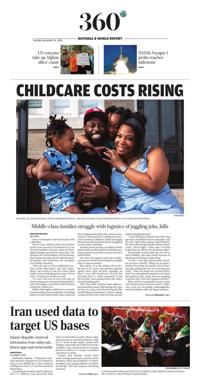
Kyra Betts, 37, and her husband, 39-year-old Nathan Patton Sr., with their two boys: 5-year-old Nathan Patton Jr. and 3-year-old Kyren Patton.

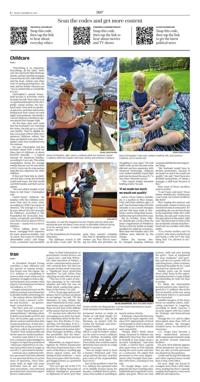
Diana Christopher, right, steers a sailboat while her husband, Daniel Crawford, holds the couple's twin boys, Ashley and Cameron Crawford.

Diana Christopher's twin sons, Ashley Crawford, left, and Cameron Crawford, are 21 months old.

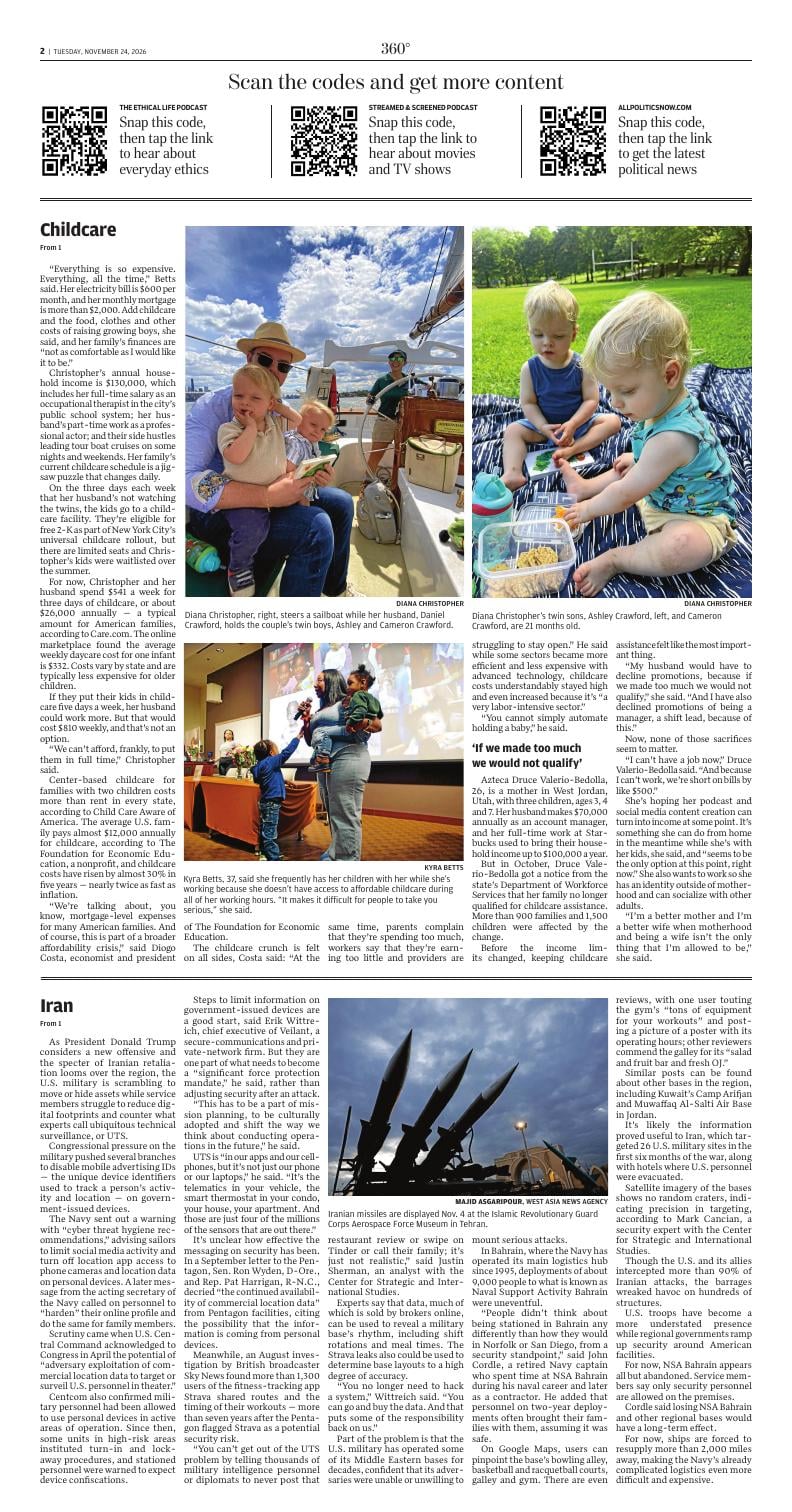
Kyra Betts, 37, said she frequently has her children with her while she's working because she doesn't have access to affordable childcare during all of her working hours. "It makes it difficult for people to take you serious," she said.
Diana Christopher starts most days with a dilemma.
The 41-year-old New York City resident needs to be at work in The Bronx by 8 a.m. Her twin toddlers' daycare center in Washington Heights opens at the same time. The distance isn't the problem, just the timing. Her husband is typically the default dropoff parent, but sometimes his workdays start earlier than hers.
"How do I get us to two different locations at the same time?" she said. Sometimes, the answer is the less-than-ideal reality many working parents know all too well: "I would just be late to work."
"It's not a fun way to start your day, of just knowing you're behind, immediately," said Christopher, a member of New Yorkers United for Child Care.
While Christopher said her boss is mostly understanding, there are plenty of working parents in the United States who could risk their employment under the same circumstances. Thousands do, battling the monetary burden of childcare while managing the mental and emotional drain of juggling various daily schedules.
Families need care they can afford, obtain and actually use during their working hours. Today, parents across the country say that's hard to find.
For some, the logistics and cost of childcare prevent them from having the families they've always wanted.
Kyra Betts, 31 is the mother of two little boys in St. Louis. She and her husband spend more than $15,000 annually on their 3-year-old's preschool. That $1,300 monthly bill is a relief compared to the $2,500 they were paying before her oldest started kindergarten.
Still, those bills stop her from addressing immediate needs, like buying new tires for her car; long-term financial goals like establishing an emergency fund or college savings for her boys; and even big-picture family planning dreams.
"I was telling my husband not that long ago that I would like to have a daughter, and he said, 'Well, who's gonna watch (them)? We can't afford to put another kid in school.' I said, 'You're right,'" Betts said. "I've had to give that up. But he was absolutely right."
Christopher waited until she was 40 to have children, she said, partly because of the financial burden of parenting.
"It was a very big conversation about, do we have a family? When do we have a family? How large of a family? All of that," she said, adding she was set on having one child. "Then we found out we had twins. And I was immediately panicked, just from the logistical, like, again, how are we going to pay for this? How am I going to do this?"
Betts said her household income is just over $100,000 per year. But today's childcare costs are becoming unmanageable, even for families with six-figure incomes.
"Everything is so expensive. Everything, all the time," Betts said. Her electricity bill is $600 per month, and her monthly mortgage is more than $2,000. Add childcare and the food, clothes and other costs of raising growing boys, she said, and her family's finances are "not as comfortable as I would like it to be."
Christopher's annual household income is $130,000, which includes her full-time salary as an occupational therapist in the city's public school system; her husband's part-time work as a professional actor; and their side hustles leading tour boat cruises on some nights and weekends. Her family's current childcare schedule is a jigsaw puzzle that changes daily.
On the three days each week that her husband's not watching the twins, the kids go to a childcare facility. They're eligible for free 2-K as part of New York City's universal childcare rollout, but there are limited seats and Christopher's kids were waitlisted over the summer.
For now, Christopher and her husband spend $541 a week for three days of childcare, or about $26,000 annually — a typical amount for American families, according to Care.com. The online marketplace found the average weekly daycare cost for one infant is $332. Costs vary by state and are typically less expensive for older children.
If they put their kids in childcare five days a week, her husband could work more. But that would cost $810 weekly, and that's not an option.
"We can't afford, frankly, to put them in full time," Christopher said.
Center-based childcare for families with two children costs more than rent in every state, according to Child Care Aware of America. The average U.S. family pays almost $12,000 annually for childcare, according to The Foundation for Economic Education, a nonprofit, and childcare costs have risen by almost 30% in five years — nearly twice as fast as inflation.
"We're talking about, you know, mortgage-level expenses for many American families. And of course, this is part of a broader affordability crisis," said Diogo Costa, economist and president of The Foundation for Economic Education.
The childcare crunch is felt on all sides, Costa said: "At the same time, parents complain that they're spending too much, workers say that they're earning too little and providers are struggling to stay open." He said while some sectors became more efficient and less expensive with advanced technology, childcare costs understandably stayed high and even increased because it's "a very labor-intensive sector."
"You cannot simply automate holding a baby," he said.
'If we made too much we would not qualify'
Azteca Druce Valerio-Bedolla, 26, is a mother in West Jordan, Utah, with three children, ages 3, 4 and 7. Her husband makes $70,000 annually as an account manager, and her full-time work at Starbucks used to bring their household income up to $100,000 a year.
But in October, Druce Valerio-Bedolla got a notice from the state's Department of Workforce Services that her family no longer qualified for childcare assistance. More than 900 families and 1,500 children were affected by the change.
Before the income limits changed, keeping childcare assistance felt like the most important thing.
"My husband would have to decline promotions, because if we made too much we would not qualify," she said. "And I have also declined promotions of being a manager, a shift lead, because of this."
Now, none of those sacrifices seem to matter.
"I can't have a job now," Druce Valerio-Bedolla said. "And because I can't work, we're short on bills by like $500."
She's hoping her podcast and social media content creation can turn into income at some point. It's something she can do from home in the meantime while she's with her kids, she said, and "seems to be the only option at this point, right now." She also wants to work so she has an identity outside of motherhood and can socialize with other adults.
"I'm a better mother and I'm a better wife when motherhood and being a wife isn't the only thing that I'm allowed to be," she said.