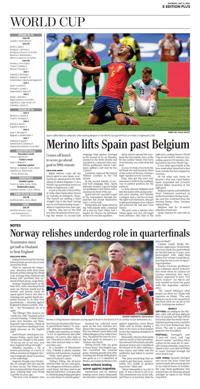

France on to semifinals after shutout of Morocco
Mbappe makes up for PK miss with eighth goal of tournament
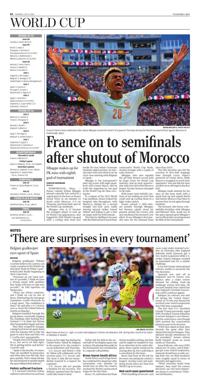
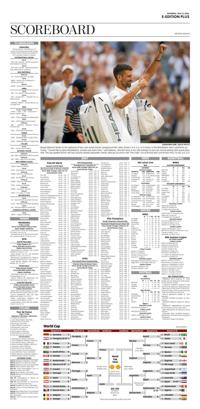
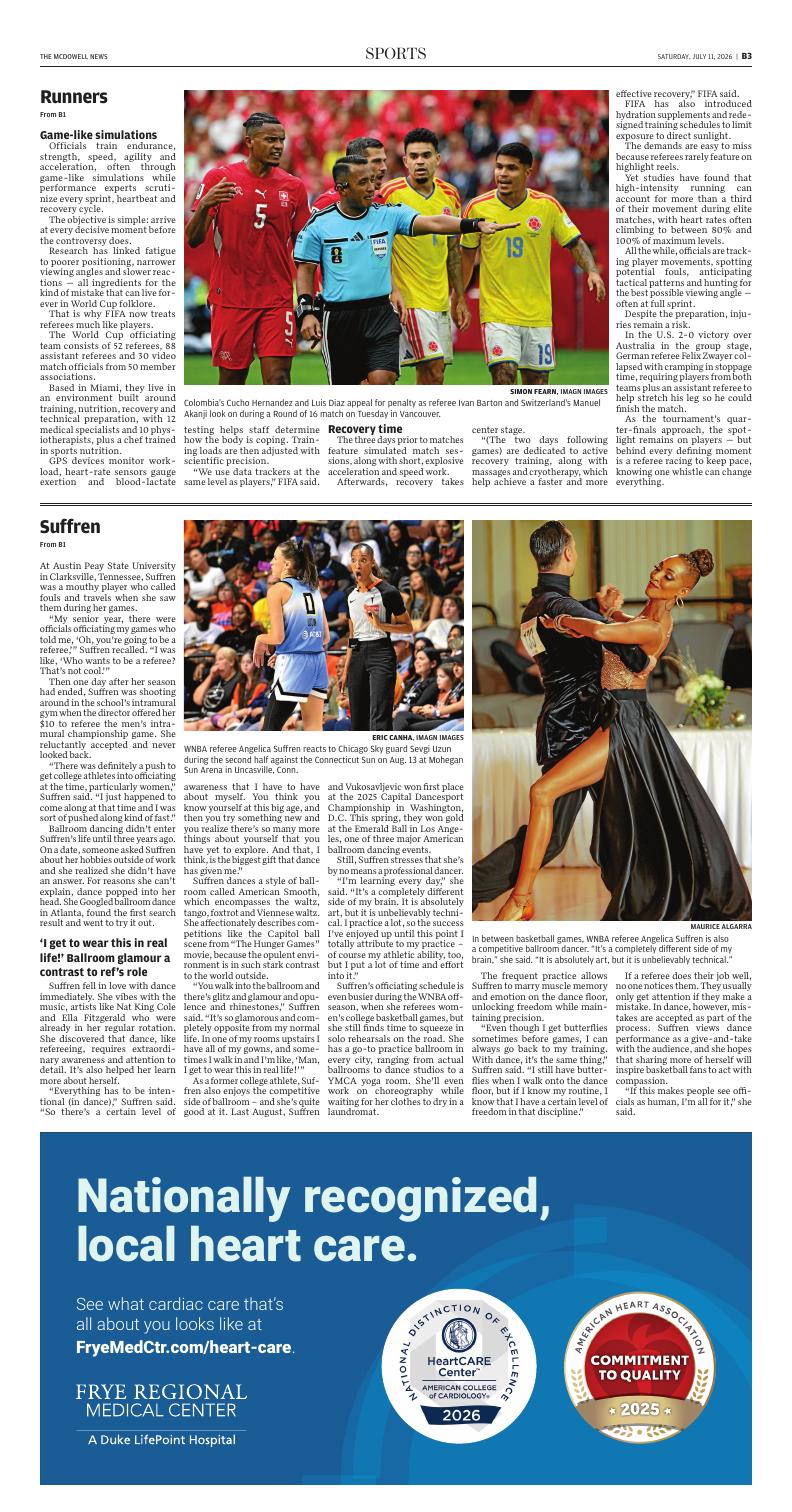
France's Desire Doue celebrates after Kylian Mbappe scored the team's first goal on Thursday during the World Cup quarterfinal against Morocco in Foxborough, Mass.
FOXBOROUGH, Mass. — France captain Kylian Mbappe missed a penalty but curled in a superb goal on the hour as France struck twice in six minutes to brush aside Morocco 2-0 on Thursday and book their spot in the World Cup semifinals.
Mbappe, who at 27 became the youngest player to rack up 20 World Cup appearances, also bagged his 20th World Cup goal with a curling shot from just inside the box before Ousmane Dembele added another six minutes later with a low drive to set up a last-four meeting with Belgium or Spain.
Mbappe is the tournament's joint top scorer with eight goals, level with Lionel Messi, and he trails the Argentine by one goal in the World Cup all-time scoring list.
In a repeat of the 2022 World Cup semifinal, France looked the hungrier side throughout, with Morocco, aiming for a second straight last-four spot, badly missing injured striker Ismael Saibari and failing to get a shot on target until the 84th minute.
The French, bidding to become only the third nation to reach three consecutive World Cup finals, started strongly with a couple of early chances.
Mbappe, who also equaled the all-time French record held by Hugo Lloris for World Cup matches, had an early opportunity with a low drive that Morocco keeper Yassine Bounou managed to tip wide.
Both teams were initially cautious of not making an error that could end up costing them in a high-stakes match.
France earned a 28th-minute penalty through Mbappe, but Bounou calmly stood his ground, picked the correct side and smothered the forward's low effort. It was Mbappe's first penalty miss for the national team since Euro 2020. The title favorites also hit the crossbar in first-half stoppage time through Lucas Digne's powerful 30-meter drive, while Morocco struggled to reach their opponents' box and did not have an effort on or off target in the first half.
Mbappe made amends for his miss on the hour mark with a quick look up and superb finish and before Morocco had time to recover they struck again through Dembele.
The forward, who forms a formidable frontline with Mbappe and Michael Olise, made use of the space opened up by Mbappe's run to rifle in their second goal and his fifth of the tournament.
'There are surprises in every tournament'
Belgian goalkeeper eyes upset of Spain
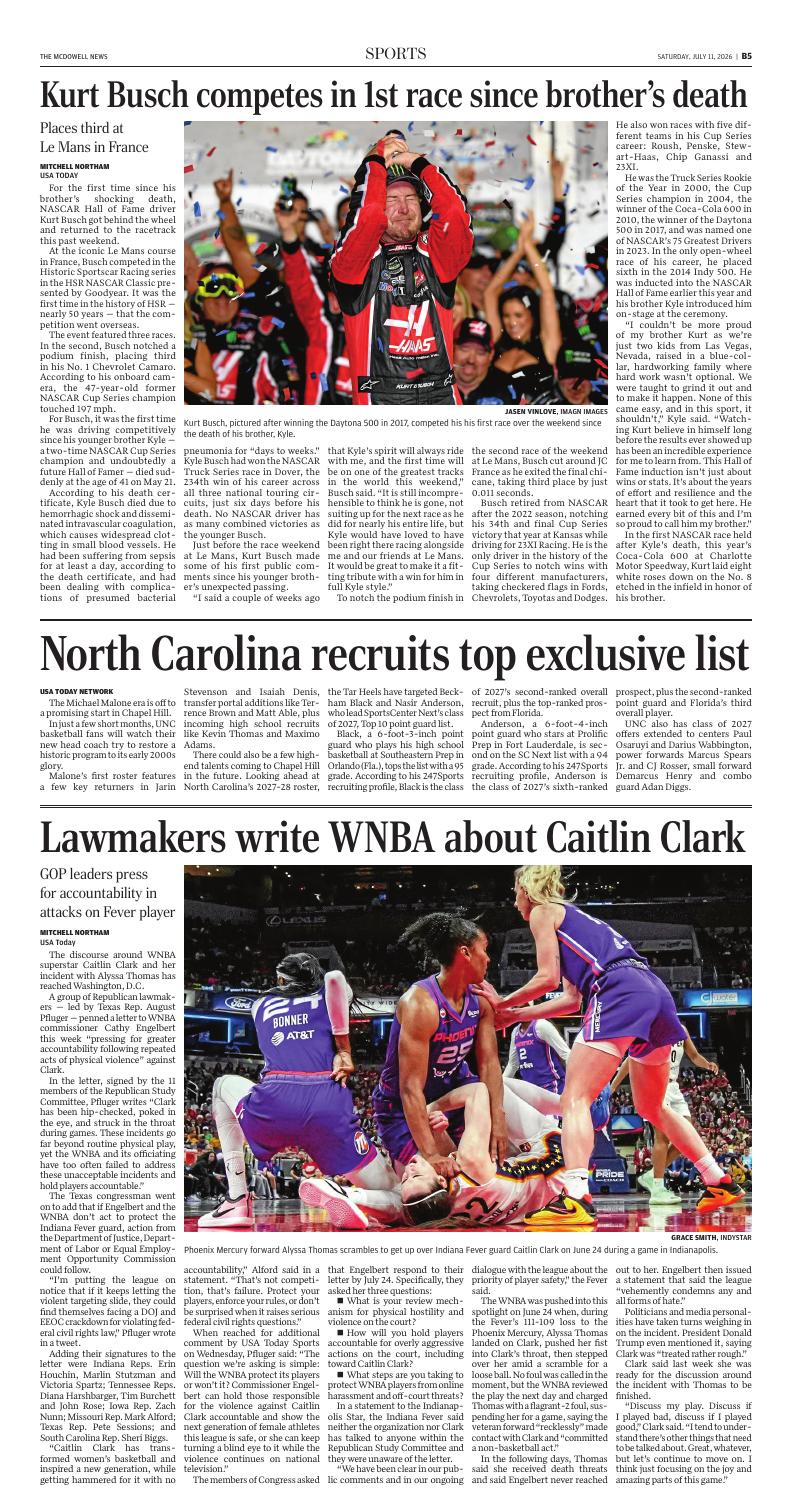
Matt Freese of the U.S., right, in action with Belgium's Charles De Ketelaere, left, during their round of 16 match on Monday in Seattle.
NOTES
Belgium goalkeeper Thibaut Courtois believes his country can create a surprise at the World Cup and upset Spain in Friday's quarterfinal after finally beginning to show some form.
"Everyone on our team realizes it's possible. I think we have a strong squad with qualities that Spain will have to take into account," he told reporters on Wednesday.
"There are always surprises, and I think we can be one of them. Eliminating the European champions would obviously be a huge upset. The confidence is there," he said after a 4-1 victory over co-hosts the United States in Seattle on Monday.
Belgium bumbled through the group phase, eventually topping the standings after beating New Zealand 5-1 in their last fixture after being held by Egypt and Iran.
They then scraped by Senegal, coming back from two goals down with five minutes left to take the game to extra time and then win 3-2 with a last-gasp penalty.
"People were a bit disappointed in us, but we've set that right. We're getting better and better," Courtois said.
"Spain is the favorite, of course. They are excellent in possession, and when they lose the ball, they press quickly. That's where the key lies: knowing how to quickly exploit the space behind their defense."
Pulisic suffered fracture
U.S. forward Christian Pulisic suffered a microfracture and bone bruise in his right leg during the United States' defeat by Belgium in the round of 16, the country's soccer federation said Thursday.
U.S. Soccer and Pulisic's club AC Milan will collaborate on his recovery plan, U.S. Soccer said. The Serie A side did not immediately respond to a request for comment.
U.S. Soccer did not provide a timeline for his recovery. The Athletic reported that the injury could take weeks to heal.
Pulisic left the field in the second half of the Belgium game due to injury. His playing time earlier in the tournament was curtailed due to a separate calf problem.
Broos leaves South Africa
South Africa coach Hugo Broos has confirmed his departure after uncertainty over whether he would stay on after the country reached the World Cup knockout stages for the first time.
Broos, 74, said before the finals that he would be retiring, but later said he might be tempted to stay. In an interview in his native Belgium, Broos said he would not be staying after all, but could help as a consultant for the team.
Broos had been in the job for five years, becoming the country's longest-serving coach and qualifying South Africa for their first World Cup in 16 years.
Red-card cases questioned
FIFA's handling of two red-card cases came under renewed scrutiny on Thursday after England defender Jarell Quansah got a two-match suspension while U.S. striker Folarin Balogun avoided an immediate ban for a similar challenge.
It has left former international referees unable to reconcile the two decisions.
Quansah was sent off in England's last-16 victory over Mexico after a video review deemed his sliding studs-up challenge serious foul play. He was later handed a two-match ban that England's Football Association said it could not appeal.
Balogun, by contrast, was sent off during the United States' round-of-32 win over Bosnia but received a one-match suspension that FIFA later suspended.
The fact that U.S. President Donald Trump personally urged FIFA President Gianni Infantino to review Balogun's case intensified the controversy, even though FIFA insisted the conversation played no part in its decision.
"FIFA have failed in their duty towards the game after they delayed the ban for Balogun. They allowed outside interference by the president," former referee Keith Hackett wrote on social media on Thursday.
Jonas Eriksson, who was a FIFA referee for 16 years, said if Balogun got a one-match suspension, Quansah should have as well, seeing their two on-field incidents were roughly equal in terms of intensity and aggression.
"What everyone wants from referees, they want the correct decisions, yes, but more important always is consistency," Eriksson told Reuters.