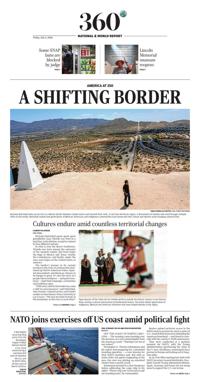

A SHIFTING BORDER
Cultures endure amid countless territorial changes

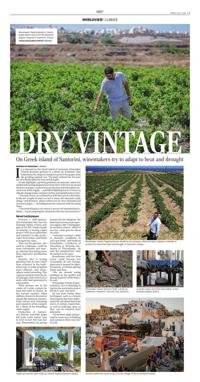
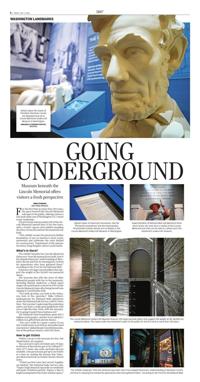
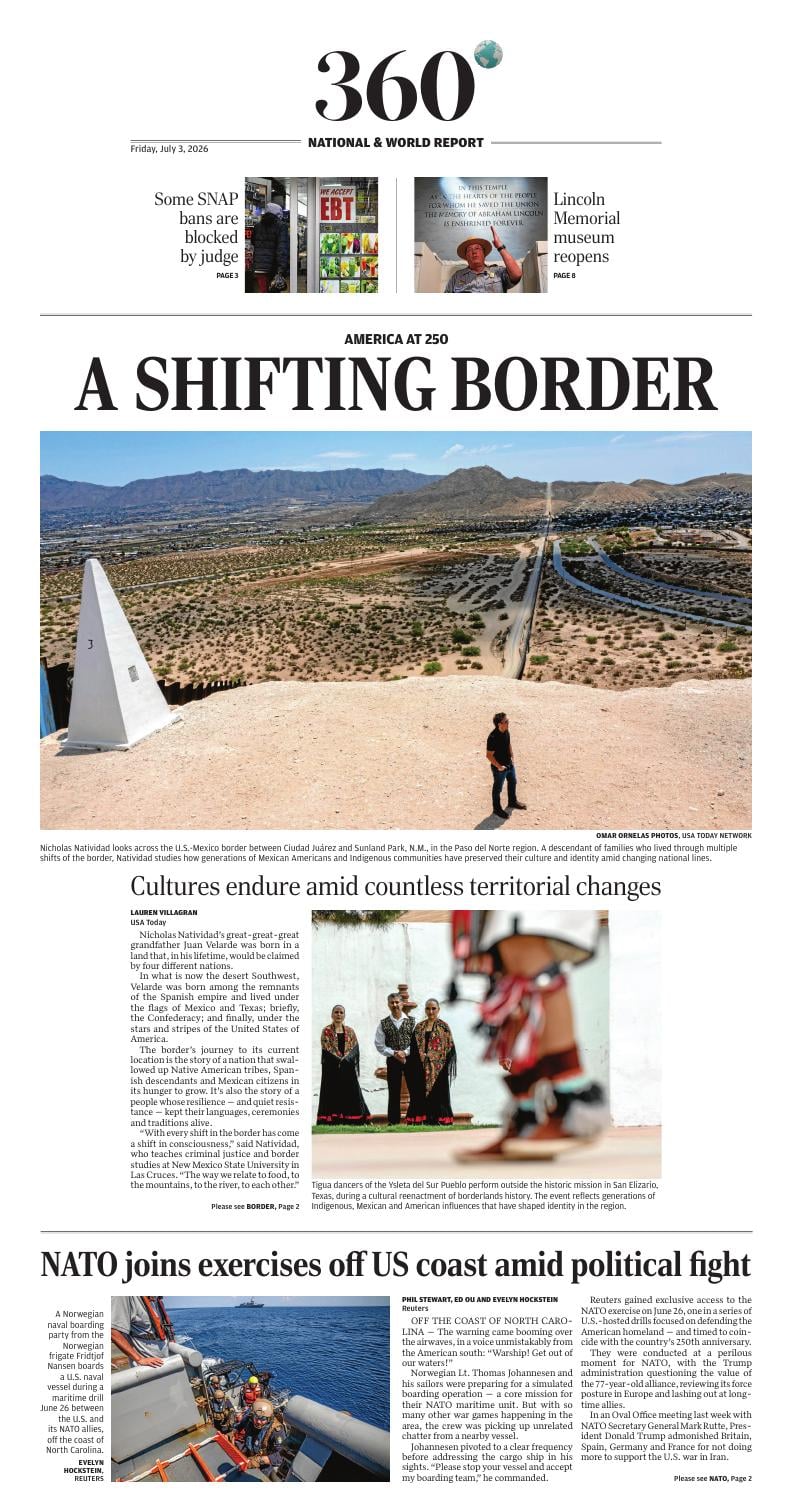
Nicholas Natividad looks across the U.S.-Mexico border between Ciudad Juárez and Sunland Park, N.M., in the Paso del Norte region. A descendant of families who lived through multiple shifts of the border, Natividad studies how generations of Mexican Americans and Indigenous communities have preserved their culture and identity amid changing national lines.

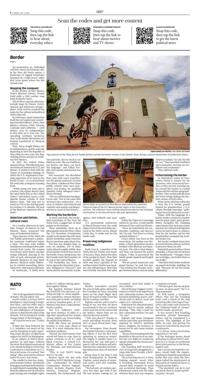
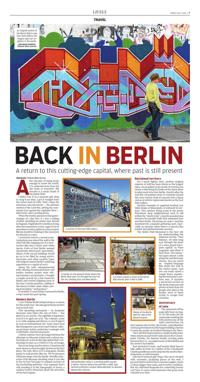
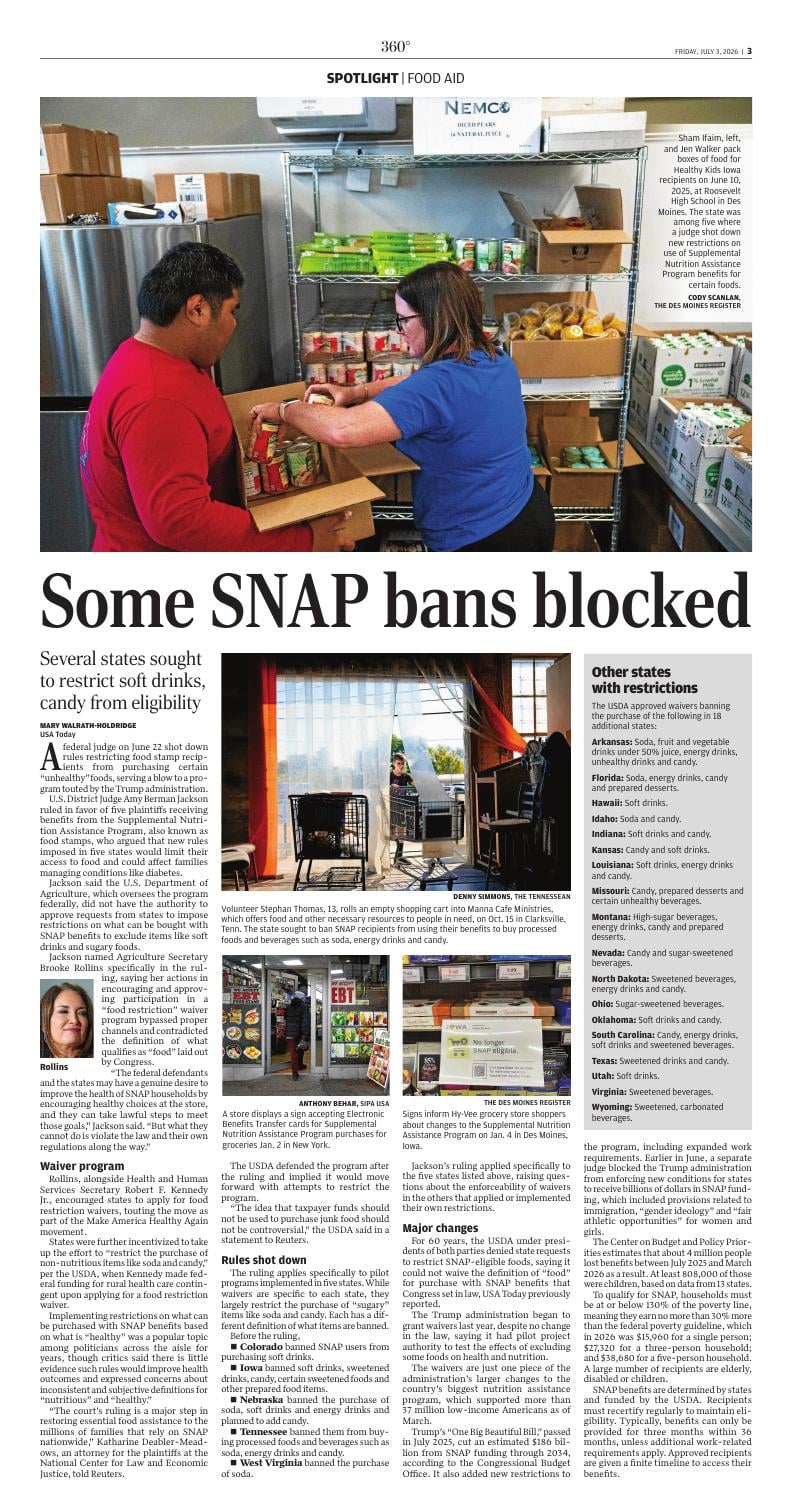
Tigua dancers of the Ysleta del Sur Pueblo perform outside the historic mission in San Elizario, Texas, during a cultural reenactment of borderlands history. The event reflects generations of Indigenous, Mexican and American influences that have shaped identity in the region.

Tigua dancers of the Ysleta del Sur Pueblo perform outside the historic mission in San Elizario, Texas, during a cultural reenactment of borderlands history.
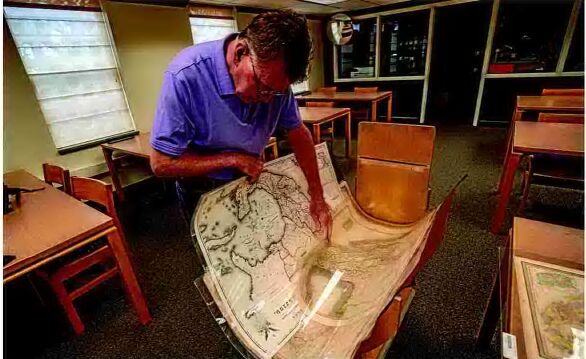
Dennis Daily, an archivist at New Mexico State University, examines historical maps of the U.S.-Mexico border region in the university's archives. The collection traces shifting national boundaries that reshaped communities in the Paso del Norte area over generations.
AMERICA AT 250
Nicholas Natividad's great-great-great grandfather Juan Velarde was born in a land that, in his lifetime, would be claimed by four different nations.
In what is now the desert Southwest, Velarde was born among the remnants of the Spanish empire and lived under the flags of Mexico and Texas; briefly, the Confederacy; and finally, under the stars and stripes of the United States of America.
The border's journey to its current location is the story of a nation that swallowed up Native American tribes, Spanish descendants and Mexican citizens in its hunger to grow. It's also the story of a people whose resilience — and quiet resistance — kept their languages, ceremonies and traditions alive.
"With every shift in the border has come a shift in consciousness," said Natividad, who teaches criminal justice and border studies at New Mexico State University in Las Cruces. "The way we relate to food, to the mountains, to the river, to each other."
Six generations on, Natividad still lives where his forebears did: in the Paso del Norte region, a landscape of rugged mountains hemmed by a high desert valley that turns green where the Rio Grande runs.
Mapping the conquest
In the archive of New Mexico State's Branson Library, Dennis Daily pulls a 19th century map from its plastic sleeve.
The archive's special collections include maps by French, Dutch, Spanish and American cartographers. Daily said he acquired the maps for the cultural and political stories they tell.
For 300 years, Spain claimed for itself the vast region now consisting of modern Mexico, Texas, New Mexico, Arizona, Utah, Nevada, Colorado and California — until Mexico won its independence in 1821 after an 11-year war. The sprawling northern territories clear to the Rocky Mountains and beyond transferred to Mexican control.
Next, Texas fought Mexico for its independence, and for a decade beginning in 1836 the Republic of Texas flew its own Lone Star flag, claiming El Paso and part of southern New Mexico.
In 1845, the United States annexed Texas. The following year, war broke out between the U.S. and Mexico. It ended in 1848 with the Treaty of Guadalupe Hidalgo, in which the U.S. negotiated a stunning expansion of its land to the Pacific Ocean — or, as viewed from the south side, arranged a stunning theft.
"While being 250 years old as a nation, this region doesn't have the same birth date as the United States," said Ruben Leyva, a Gila Apache border scholar at New Mexico State. "We look not so much to 1776 as the starting point for modern U.S. identity. We look at the Mexican-American War in 1848."
American patriotism, cultural roots
On a Sunday afternoon in early May, troupes of dancers in San Elizario, Texas, reenacted 500 years of borderlands history.
Tigua dancers of the Ysleta del Sur Pueblo performed a prayerful ceremony traditional before a hunt. The men wore buffalo headdresses and draped otter pelts around their necks; the women wore flower-print shawls. Another troupe followed, dancing in the style of each subsequent power: Spanish flamenco in long black dresses; Mexican ballet folklorico in colorful swooshing skirts; Tejano two-step in jeans and boots.
As Americans, "I think we're very patriotic, but we stuck to our Mexican roots, like our traditions, our fiestas, our dress, our food, the language," said Lillian Trujillo, born nearby and raised in San Elizario.
Not reenacted: the bloodshed that came with every transition, nor the quieter endeavors to erase the culture. Children in West Texas public schools were once punished, even beaten, for speaking Spanish; today, bilingual education is thriving.
"We can celebrate the founding," Leyva said, "but at the same time we have to also understand ... it's a story of violence and removal and captivity and warfare and dispossession as a part of that history."
Marking the borderline
At dawn and dusk, the borderland mountains of the Paso del Norte form a jagged line of deep purple on the horizon.
These mountains show up in photographs from the 1890s, when the U.S. Boundary Commission sought to document the still-fresh desert borderline amid concerns that no one knew quite where it lay.
The line was marked then, as now, by obelisks, 276 of them today, placed roughly within view of one another from El Paso west to the Pacific Ocean. Headed east, the Rio Grande marks the boundary on its way to the Gulf of Mexico.
The borderline has been, at turns, ignored to the point of poverty; maligned as "insecure"; and barricaded by monuments, border agents, steel bollards and razor wire.
U.S. government contractors in March blasted away the south slope of one of the mountains pictured in the 1890s survey, Mount Cristo Rey, to make way for the border wall.
Preserving Indigenous tradition
Rudy Cruz Jr., a member of the Ysleta del Sur Pueblo and mayor of Socorro, Texas, knows the story of his people by heart. How they revolted against the Spanish in 1680 and were captured at the northern Isleta Pueblo near modern-day Albuquerque. How they were forcibly marched 400 miles south.
Today, the Tigua are a sovereign nation in Socorro, a rural hamlet between El Paso and San Elizario.
"Have we maintained our ceremonies, traditions and dances? Yes," he said, "but there is a strong Spanish influence."
Cruz's father was born on the reservation. His mother was Hispanic, a third-generation Socorro resident with Mexican and Spanish roots. His wife is from Mexico and their son learned the native tongue, T'aiki, in preschool; the family speaks Spanish and English at home.
"We are proud Americans and proud Texans," he said, but also: "The mixture has become stronger between Mexico and me being American Indian," he said. He tells his son, "They have their traditions and ceremonies; we have our traditions and ceremonies."
They celebrate both.
Crisscrossing the border
In Natividad's native El Paso, Ochoa Street is named for his ancestors, who crisscrossed borders as they moved. Growing up, he crossed the border to Ciudad Juárez with his mother and grandmother. They would walk the Paso del Norte bridge linking the historic centers of both cities.
What sticks with him still today is how the U.S. border guards treated his grandmother, a U.S. citizen through marriage, "grilling her because she had an accent."
Today, with the language of a border studies scholar, he wonders how his great-great-great grandfather navigated the changing expectations that each new power exacted, the cultural and linguistic norms he had to learn or unlearn. How he, his mother and his late grandmother navigated the modern border, too.
But border residents know how to move between cultures and how to preserve them, he said.
Natividad quoted author Gloria Anzaldúa, a Texan who wrote from the borderlands: "Voyager, there are no bridges, one builds them as one walks."
"She hints that border residents are experts in bridge-building," he said. "Because we see the border differently."