
Face of recovery
She survived a gunshot as a teen, then came dozens of operations

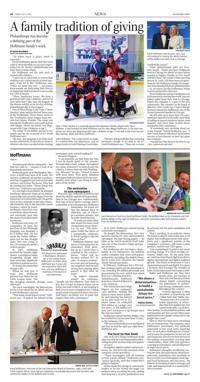
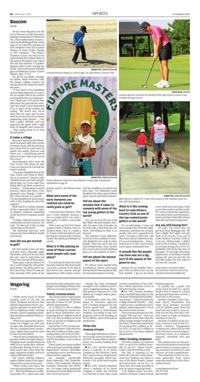
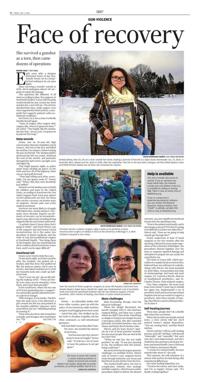
Amedy Dewey, then 24, sits on a chair outside her home, holding a portrait of herself as a high school cheerleader Jan. 25, 2024, in Scottville, Mich. Dewey lost her vision in 2018, after her stepfather shot her in the face with a shotgun. He then killed Dewey's mom and killed himself. Dewey was 18 when she sustained her injuries.
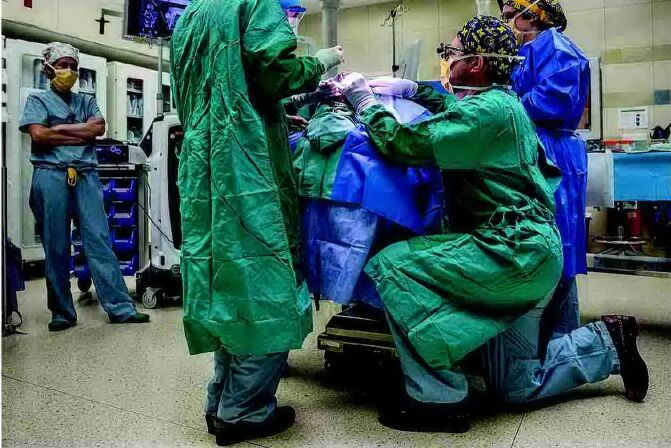
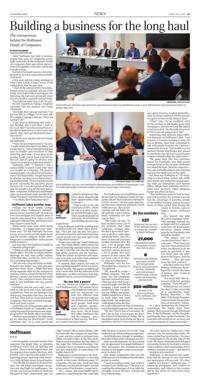
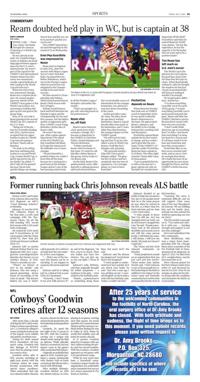
Christian Vercler, a plastic surgeon, takes a knee as he performs a facial reconstruction surgery on Dewey in 2023 at the University of Michigan C.S. Mott Children's Hospital in Ann Arbor.
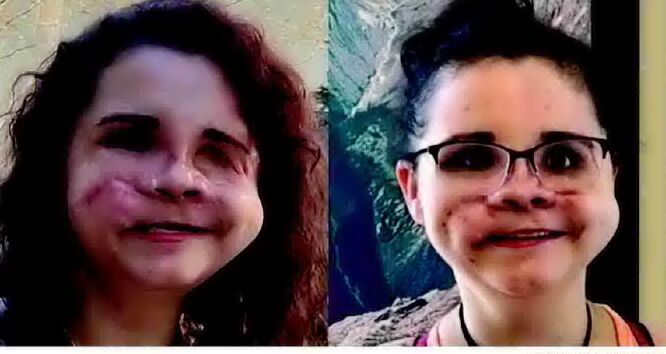
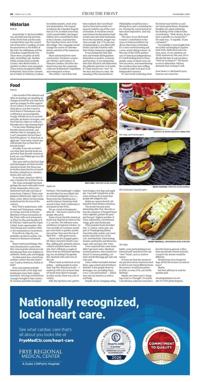
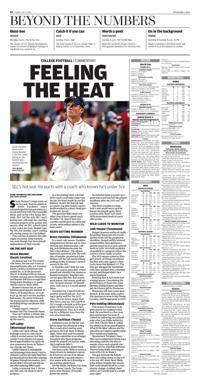
Over the course of three surgeries, surgeons at Lenox Hill Hospital used bone from Amedy Dewey's lower leg to rebuild her upper jaw, implemented a set of prosthetic teeth and inserted specialized implants into her eye socket to support a future prosthesis. After months of healing, they fitted a custom orbital prosthesis.
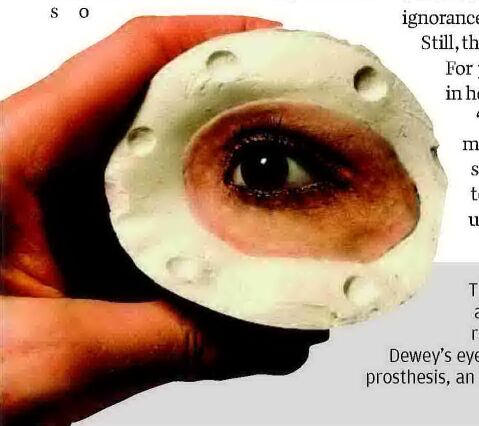
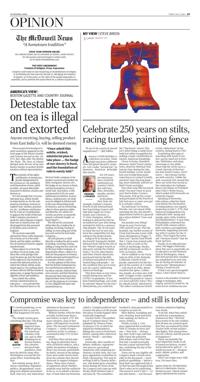
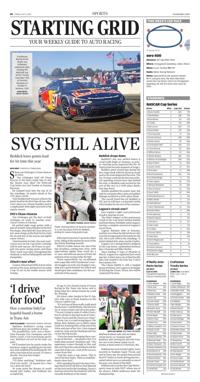
The team at Lenox Hill created a custom orbital prosthesis to replace structures lost around Dewey's eye socket, along with an ocular prosthesis, an artificial eyeball, that fit in it.
GUN VIOLENCE
Eight years after a shotgun destroyed much of her face, Amedy Dewey sat in a hospital bed waiting to be cut open again.
Since surviving a murder-suicide in 2018, she'd undergone almost 40 surgeries to repair the damage.
This operation felt different. If all went according to plan, the surgeons at Northwell Health's Lenox Hill Hospital would rebuild her jaw, restore her teeth and give her a new left eye. The doctors donated their time, while surgery costs were supported by NextGenFace, a nonprofit that supports patients with craniofacial conditions.
For Dewey, 26, it was a chance to finally feel like herself again.
"Years of surgery after surgery after surgery, like, when is it gonna be done?" she asked. "The weight, like the anxiety, the fear that, 'oh my God, I'm gonna be in pain for this long.'"
Deep wounds
Dewey was an 18-year-old high school senior when her stepfather, David Somers, shot her in the face and killed her mother, Lisa Somers, before turning the gun on himself. The shotgun pellets destroyed her left eye socket, shattered the roof of her mouth, and profusely damaged her optic nerve, eyesight, nose and upper lip.
That frigid January night, as police spent hours picking up pieces of her teeth and face off of the highway, there was no clear path forward.
"They kept telling each other, essentially, I'm not gonna make it," Dewey said. "When I did, they were absolutely just baffled."
Firearms are the leading cause of death for children and teens in the United States, according to Everytown for Gun Safety Support Fund. Each year, almost 22,000 adolescents are shot. For those who survive, recovery can involve years of surgeries, chronic pain and costly medical treatment.
Survivors are more likely to struggle with depression, anxiety and post-traumatic stress disorder. Experts say elements of recovery can be retraumatizing for years afterward, including during surgeries like the one Dewey underwent.
"A patient doesn't know when that's going to strike," said David Hirsch, one of the surgeons who led Dewey's facial reconstruction. He is the senior vice president of dental medicine and the chair of oral and maxillofacial surgery at Northwell Health. "You bring them to the hospital, they see something that all of a sudden a flood of emotions comes back, and it can be super difficult."
Emotional toll
Dewey never tried to hide the scars.
On her prom night, just three months after the incident, she picked out a beaded, dark blue dress that puffed out like the princess gowns she'd seen in movies, and asked a hairdresser to swirl her brunette locks into a half-up halfdown look.
"Don't cover me up," she recalls telling the makeup artist. "These are battle scars, these are not shameful, I wear them, and I wear them proudly."
In her small town, where she was one of 99 in her graduating class, a supportive community quickly adjusted to Dewey's physical changes.
With strangers, it was harder. The first time she went out to a bar afterward, a girl covered her left eye and pointed at her. Another called her "pig nose," and a man told her she was "offending makeup by wearing it."
There were also those who treated her as fragile, and strangers who would blurt out, "Oh my God, I'm so sorry." Dewey — an adrenaline junkie who loves roller coasters, grew up with the antics of two boisterous older brothers and goes mud bogging down back roads — hated that pity. She chalked up the bar barbs to drunken stupidity and the other comments as well-intentioned ignorance.
Still, that didn't mean they didn't hurt. For years, she avoided the mirrors in her house.
"Just because I got shot, doesn't mean to treat me fragile," Dewey said. "It took me a lot of years to have the patience to not get upset."
Many challenges
More frustrating, though, were the physical challenges.
When her weight fluctuated, her mouth changed with it. Her dentures stopped fitting, and there was a point where she didn't have teeth. Something as simple as trying to eat a burger became a herculean ordeal. Her diet consisted primarily of mashed potatoes, mac and cheese and finely diced chicken cubes.
Hirsch said his team doesn't operate on a lot of facial gunshot wounds, because most people who are shot in the face don't live.
"When we met her, she was really positive," he said. "It was just amazing to me, the resilience that this human being could have."
Reconstructive facial surgery presents challenges on multiple fronts, Hirsch said. In Dewey's case, surgeons had to work through extensive scar tissue and find blood vessels farther from the face.
The mental health piece was just as complicated. Patients who undergo multiple surgeries, often because earlier procedures failed to deliver the desired outcome, can carry significant emotional trauma into the operating room.
"How is the patient emotionally, and is she having so much PTSD that it is going to be difficult to achieve our objectives?" Hirsch said. "How are we going to help Amedy get through this?"
Dewey underwent at least 15 facial surgeries in the two months after the shooting, followed by more major operations at the University of Michigan. The procedures blurred together over the years as surgeons repaired damage and attempted to prepare her eye socket for a prosthetic eye.
The team at Lenox Hill, which specializes in complex facial reconstruction, believed there was still more it could do. Along with Hirsch, the team included Dr. Brett Miles, vice president and chair of otolaryngology and head and neck surgery; Dr. Lawrence Brecht, director of maxillofacial prosthetics, and Dr. Charles Thorne, chair of plastic surgery.
Over three surgeries, the team used bone from Dewey's lower leg to rebuild her upper jaw, implemented a set of prosthetic teeth and inserted specialized implants into her eye socket to support a prosthesis. After three months of healing, they fitted a custom orbital prosthesis on June 4.
Self-healing journey
These days, people don't do a double take when they see Dewey.
When she recently ran errands around town, a store owner told her she'd noticed Dewey's upbeat disposition. "You are coming back," another friend told her.
Dewey said she's still on a self-healing journey, and still "battling" with herself "internally" and "mentally." But each year she's seen improvement, and she's worked to raise awareness about gun violence and mental health. June is National Gun Violence Awareness Month.
"I scream for mental health, because nobody talks about it," she said.
This summer, she will volunteer at a retreat with myFace for kids living with craniofacial differences.
Her outer healing helped her, too.
"I look in the mirror, and I just smile, and I'm so happy," Dewey said. "It's finally coming together."
Help is available
This story includes discussion of suicide. If you or someone you know needs help, the national suicide and crisis lifeline in the U.S. is available by calling or texting 988. There is also an online chat at 988lifeline.org.
If you or a loved one is experiencing domestic violence, you can contact the National Domestic Violence Hotline. Text "START" to 88788, call 800-7997233 or chat at thehotline.org.