Our area is dotted with many brown state markers saluting and remembering the Overmountain Men who joined regular colonial militia at differing times to thwart the British Army Regulars and loyalists moving through the Carolinas after American independence was declared.
These men often volunteered for service, fought hard at places like Kings Mountain, and absolutely shaped the areas of Morganton, Lenoir, Wilkesboro, Rutherfordton, and small towns and villages along the way. They fought furiously in battle, bringing their own frontier spirit and tenacity to each fight. Moreover, they were fighting for independence. As a Vietnam veteran once shared, "When you are fighting for freedom, you get down (to the business of accomplishing it)." And so they did.
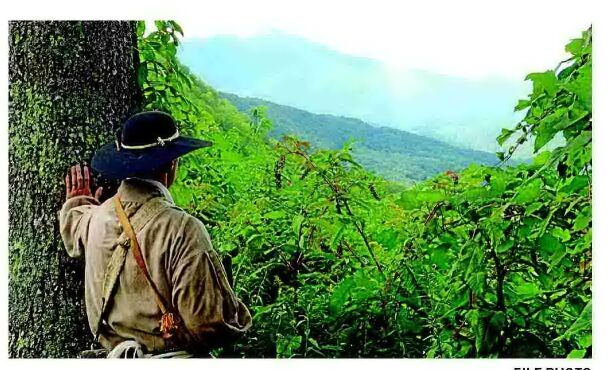
Each summer, whether driving from Morganton to Forest City or to Marion and to the Kerr Scott Dam, I am reminded of the many impacts of the Overmountain Men. When traveling in the early morning, among the mist, I can sometimes hear them and see them; marching from their homes to various camps along Indian trails and frontier paths toward various conflicts, but especially, Kings Mountain in October of 1780.
The War for Independence in the 1770s and early 1780s was largely a frontier war. For sure, there were captures of major cities like New York, Charleston and Savannah by the British, but in the South, the conflict was often defined by battles between loyalists and patriots. Loyalists allied themselves to the British troops and organized militias. Patriots could be a much more motley crew; doing what local militias had done since the beginning of the revolution; fighting behind trees and rock walls. As one historian described it, "Fighting like Indians fought."
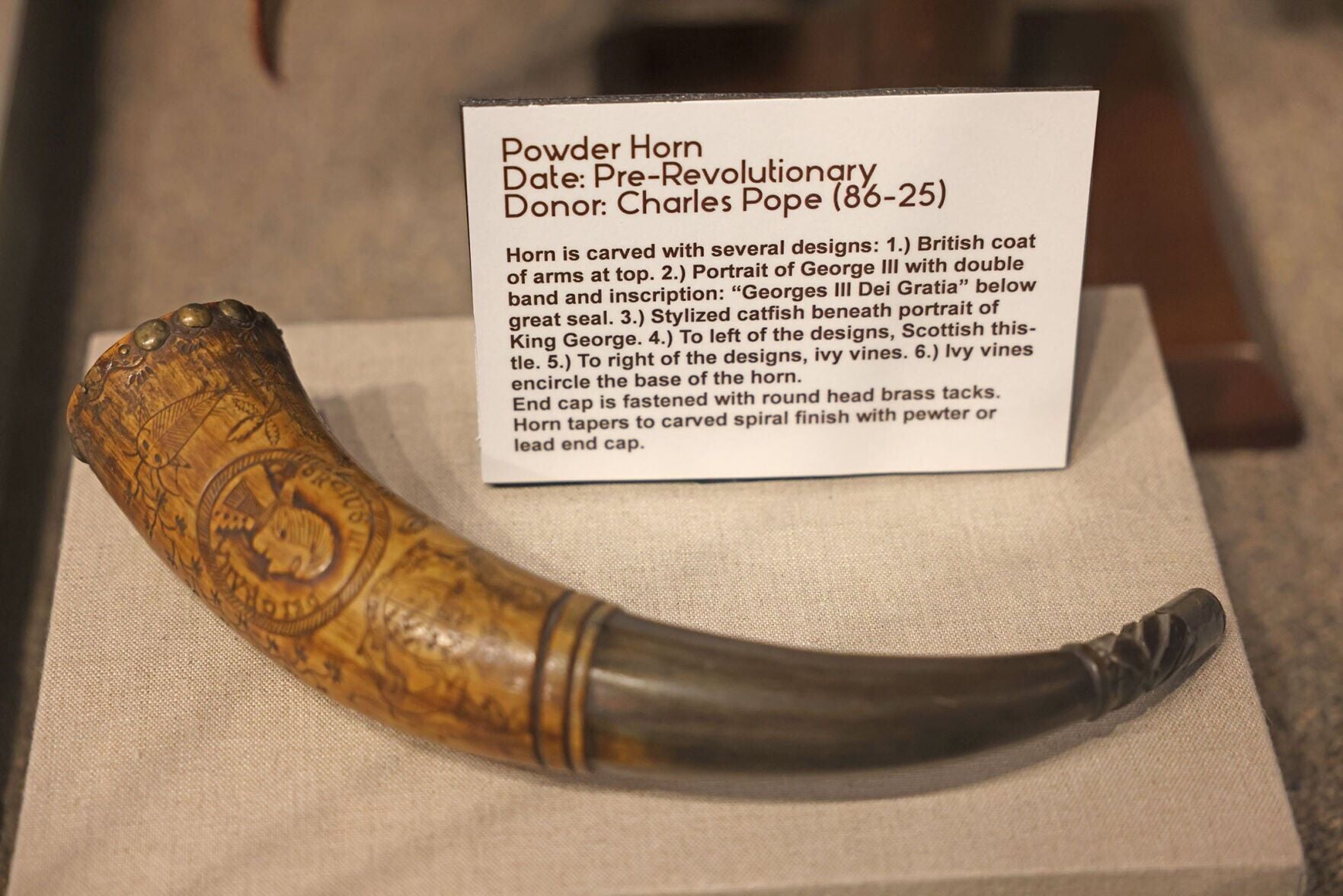
True, in many cases, the Overmountain Men were men who often slept with their wives next to them on one side and their rifles on the other. These were true "minutemen" because they had to be ready to defend their homes and villages from whatever threat came: Indians, wolves, loyalists, British troops, and anything or anyone else.
While no Revolutionary War battles took place in what eventually would be Caldwell County, skirmishes between loyalists and patriots (Whigs) were not unusual on a regular basis. Such was true in Morganton (Burke County coming out of Rowan County) and Wilkesboro (being formed out of Surry County). As news of major battles reached these people, there came a push to organize further.
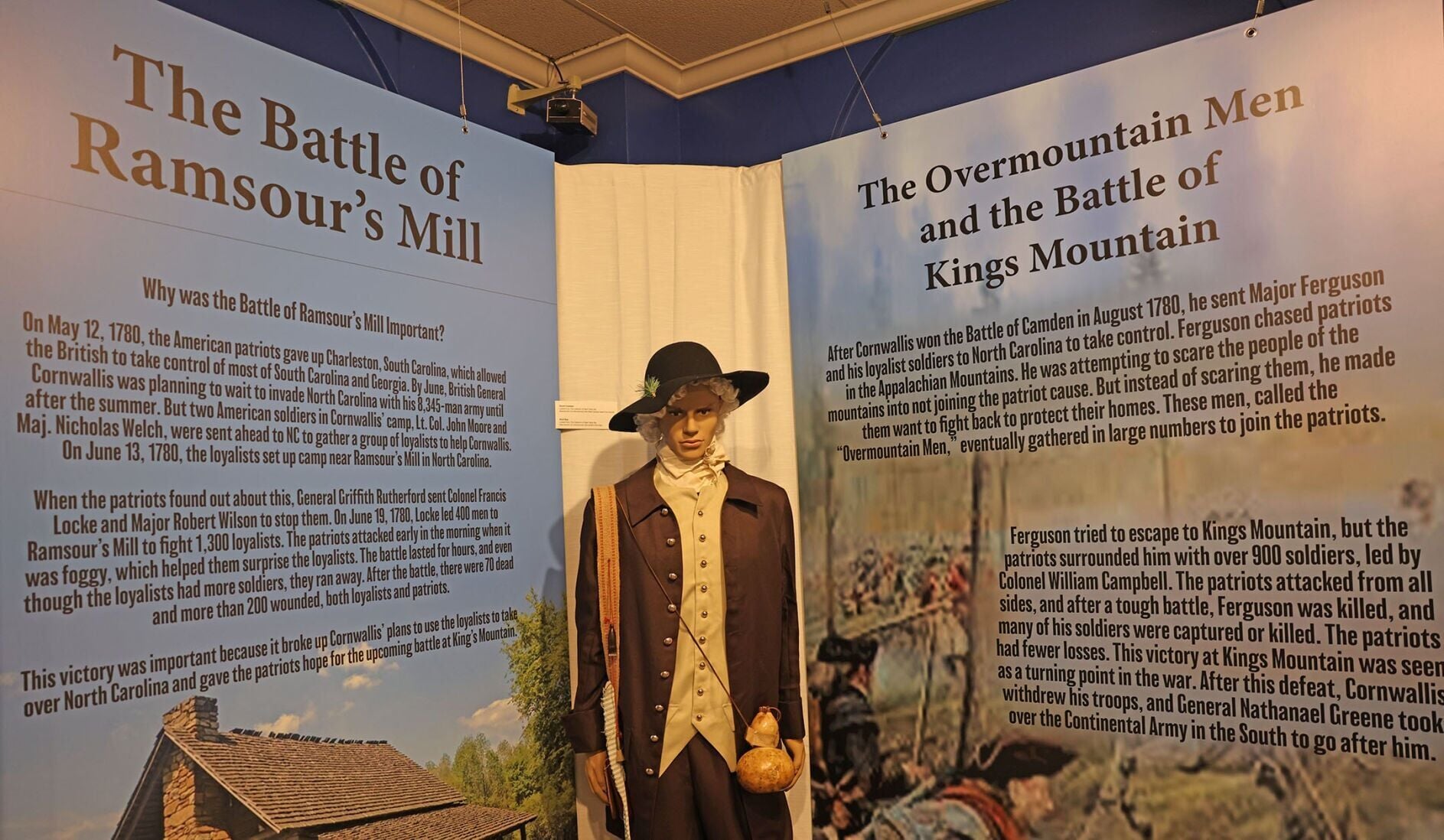
Between 1777 and 1780, these men on the frontier became more of a troupe. One man who significantly helped this organization was Capt. William Lenoir, who had built a home, Fort Defiance, in the Yadkin River Valley which is Happy Valley today. There, a fort was constructed and ridges around the valley fortified as best as possible (now downtown Lenoir near the old high school). Capt. Lenoir was assisting Col. Cleveland and Maj. Joseph McDowell of the Burke County Militia. Fort Defiance became a popular meeting place in the early years of the Revolution. Local Committees of Correspondence kept western North Carolina's citizens informed of loyalist movements and informed citizens in the areas regarding British troop movements. As patriots organized, they made their focus the whereabouts of a detachment of the British Army composed mainly of loyalists led by an undefeated colonel by the name of Patrick Ferguson. The Overmountain Men in the region joined other volunteers marching from Tennessee and moved toward Charlotte. John Sevier and Isaac Shelby led the men from Tennessee.
They caught up with Colonel Ferguson and his band of loyalists about 30 miles west of Charlotte in early October 1780. The Battle of Kings Mountain was brief, but incredibly consequential. Ferguson had bragged to his men that they could defeat any "rabble" that comprised the patriot army. He called the patriots "a set of mongrels." Yet, the ingenuity and the "long rifles" of the patriot army helped to quickly repel the loyalist forces. Ferguson and his army fought well, but were repulsed. The patriots lost 32 soldiers out of 700. The loyalists lost 250 men out of their army of 1,000 men, which included Colonel Ferguson. The battle had lasted about an hour, but spelled doom for the British army and the loyalists in the South and West.
Years later, Maj. McDowell would become a general and reminisce, along with others, about the battle. He likened it to the battle of Thermopylae during the Persian Wars. He called it the turning point of the American Revolution. Later, many of those who served: Shelby, Lenoir, Cleveland and McDowell, for example, all had land in North Carolina named for them.
After the battle, most of the Overmountain Men went on to fight in other places or went home, but they never forgot the ferociousness and intensity of that hour in October of 1780 when Patriot forces surrounded loyalists and swiftly defeated them. Many returned to camps in Rutherford County and around Morganton or in Happy Valley — the places many of us know today, but might still not know their story completely. Most of them were volunteers defending their homes and their lands. They took independence seriously, as a good many of them were involved in local politics both before, during and after the revolution.
Driving up state road 64 from Morganton and Rutherfordton — crossing the mountains from Elizabethton, Tennessee — roaming down the mountains on 181 or heading up to Wilkesboro from Lenoir — you can almost still see them marching for freedom — coming out of the mist of an early morning — being willing to go the distance — the ordinary but true souls of the American Revolution!
The Overmountain Victory Trail is a National Historic Trail which begins in Virginia and extends all the way down through South Carolina to Georgia. Each September, revolutionary reenactors participate in various demonstrations to show the significance of the Overmountain Men and the fighting they did and their contributions to the Revolutionary War effort. Some 246 years after the battle of Kings Mountain and 250 years after American Independence was voted on, it is the individual free men and women we remember who were willing to give all for that cause. Their stories continue to be important. They link us to our past in the neighboring counties we live in and traverse.
Brent Tomberlin is a social studies instructor for Caldwell County Schools and is an adjunct instructor at various other institutions. He can be reached at coachtomberlin@gmail.com.