
Disneyland uses facial recognition
Some experts have privacy concerns over normalizing the tool
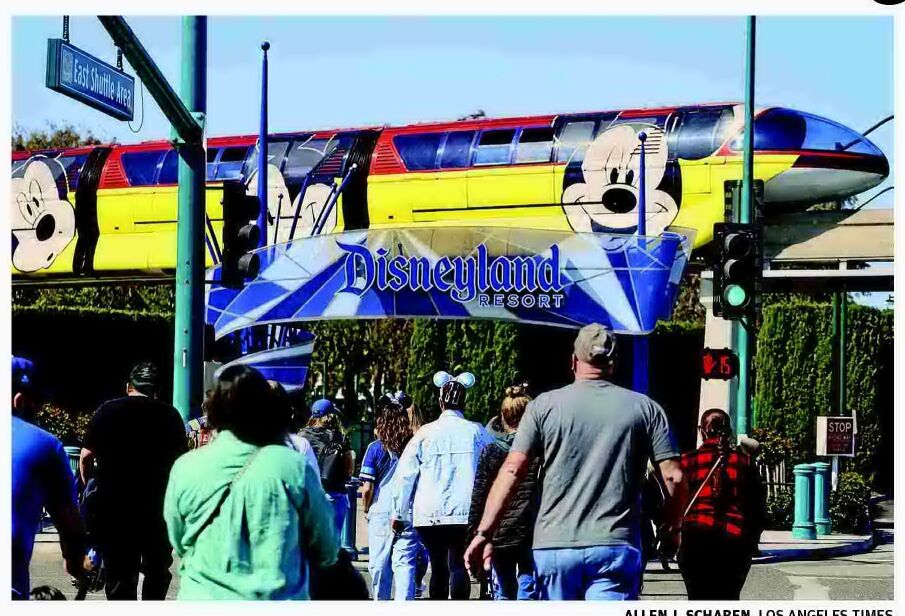
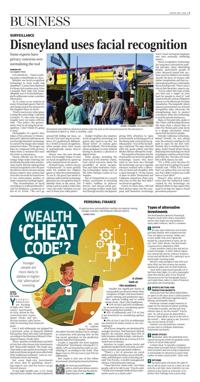
Disneyland and California adventure guests enter the park as the monorail passes by the entrance to Disneyland on March 11, 2024, in Anaheim, Calif.
SURVEILLANCE
LOS ANGELES — There's nothing quite as identifiable as a face.
Retailers use facial recognition technology to more easily nab shoplifters. Casinos have deployed it to keep card counters away. Even a popular New York City venue allegedly uses it to blackball people its millionaire owner considers adversaries.
So, it comes as no surprise to many Disneyland guests that it's now being used at the entrance to the Happiest Place on Earth.
"Pretty much every other place is doing the same thing," said John LeSchofs, 73, who visits the park roughly every six weeks with his wife. "The police, the government, they're all using facial recognition. I don't think it's going to stop."
Photographs of a guest's face taken at the entrance to Disneyland and California Adventure are run through biometric technology to convert the images into unique numerical values. The images can then be compared with pictures taken when a customer first used the ticket or annual pass.
Disney officials say the technology helps make entering and reentering the park easier and prevents fraud. But the rapid growth of facial recognition over the past decade has raised concerns among privacy experts who caution that such data can easily be turned over to law enforcement entities or make companies hacking targets.
"The normalization of facial surveillance is really problematic," said Ari Waldman, a professor of law at UC Irvine. "We can't go around life hiding our faces, so this isn't just next step in surveillance, it's qualitatively different. In a world of facial recognition, when people leave their house it automatically means they're identified."
Venues over the past decade have increasingly begun to lean on facial recognition to speed up entry and purchases for guests.
At Intuit Dome, visitors can use "GameFaceID" to more quickly enter the stadium for Clippers games or other live entertainment. To use it, the guest just needs to upload a selfie and the technology generates face recognition data to identify them at the arena. The venue's privacy policy states they "may also infer whether you are over 21 from your selfie photo."
Dodger Stadium also employs facial recognition technology for guests who want to use the "Go Ahead Entry" at certain gates into the ballpark. The technology allows parkgoers to enter without having to produce a physical or digital ticket.
Some groups, including the American Civil Liberties Union, have raised concerns about the possibility of facial recognition and other biometric tracking technologies being used at the 2028 Olympic Games in Los Angeles.
But at Disneyland on a recent Friday, vacationers in matching T-shirts, toddlers in princess dresses and mouse-eared parents pushing strollers made their way through security checkpoints giving little attention to signs posted nearby notifying guests of the theme park's new facial recognition policy. "Use of this technology is optional," the signs adorned with red, green yellow and blue Mickey Mouse silhouettes reads.
The majority of the lines into the theme parks use facial recognition technology. Guests who don't want to run their face through the technology can use a separate entrance marked with a silhouette of a head and shoulders with a slash through it. Of the dozens of lines to enter Disneyland and California Adventure, there were only four on this day that didn't use facial recognition.
Guests in those lines still had their photos taken, but the company said biometric technology wasn't used. Instead an employee was seen manually validating tickets.
Facial recognition technology has long been criticized for making mistakes when identifying people, particularly people of color. Research found that systems were less likely to accurately classify the faces of women with darker complexions and that certain makeup patterns could render the technology null. There's also a risk of data breaches, experts say.
"If you collect this type of data you have put a target on your back for people to steal it," said Adam Schwartz, privacy litigation director at the Electronic Frontier Foundation. The nonprofit, which opposes government use of facial recognition data, advocates for strengthening laws to protect consumers when the technology is used by private businesses.
Many at the park who spoke to The Times said deciding between the more than a dozen lines to enter the theme park came down to a simple calculation: which queue had the fewest people.
Outside California Adventure, Robert Howell, 30, was sitting near the entrance waiting for the park to open for his first visit. Howell, who is visiting from Virginia, hadn't heard about Disney deploying the technology to check in parkgoers until he arrived at the park that day. The idea of it made him a little uneasy, he said.
"It's a little scary because it's not clear how it's going to be used," Howell said. "With TSA I know that's an option that you can opt out, but I didn't realize you could here so I just did it."
Disney's data privacy policy notes that the numerical values created by the technology are deleted within 30 days unless they need to be kept for legal or fraud prevention purposes.