

A COPPER COMEBACK?
Smelter's revival could bring back pollution

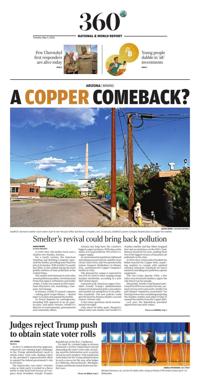
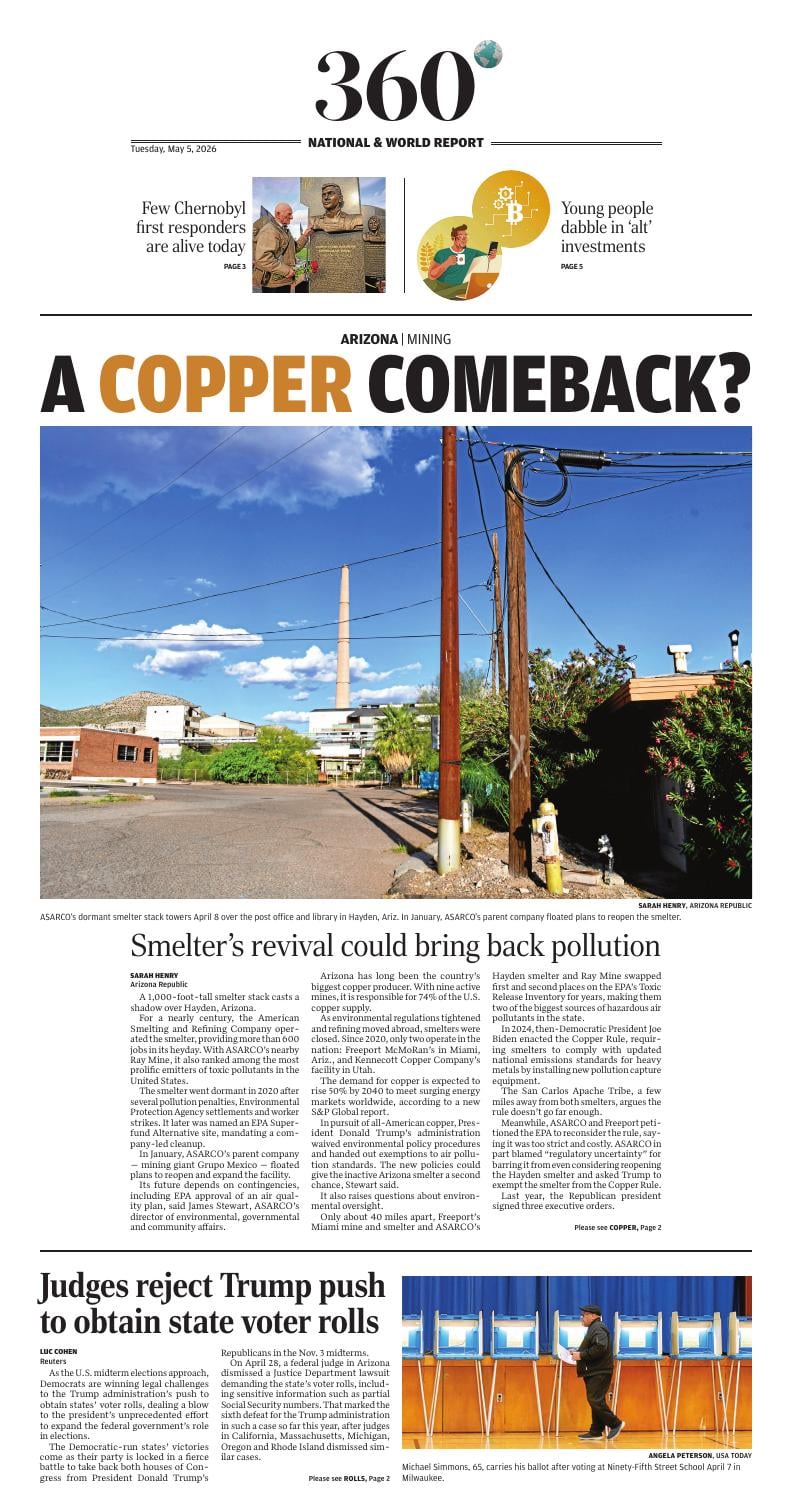
ASARCO's dormant smelter stack towers April 8 over the post office and library in Hayden, Ariz. In January, ASARCO's parent company floated plans to reopen the smelter.

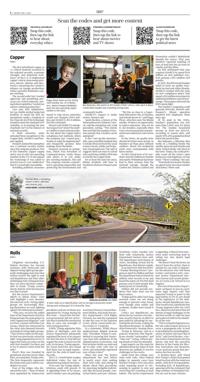
Peggy Plews looks out her dining room window Jan. 22 in Miami, Ariz., where Freeport-McMoRan owns the only operating copper smelter in the state.

Bea Bejarano, who works at the Hayden Public Library, talks April 8 about a time when Hayden was a bustling mining town.
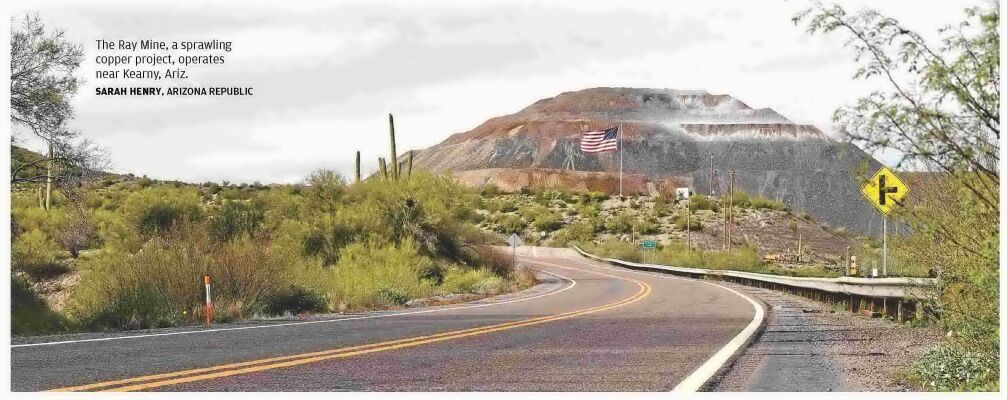
The Ray Mine, a sprawling copper project, operates near Kearny, Ariz.
ARIZONA | MINING
A 1,000-foot-tall smelter stack casts a shadow over Hayden, Arizona.
For a nearly century, the American Smelting and Refining Company operated the smelter, providing more than 600 jobs in its heyday. With ASARCO's nearby Ray Mine, it also ranked among the most prolific emitters of toxic pollutants in the United States.
The smelter went dormant in 2020 after several pollution penalties, Environmental Protection Agency settlements and worker strikes. It later was named an EPA Superfund Alternative site, mandating a company-led cleanup.
In January, ASARCO's parent company — mining giant Grupo Mexico — floated plans to reopen and expand the facility.
Its future depends on contingencies, including EPA approval of an air quality plan, said James Stewart, ASARCO's director of environmental, governmental and community affairs.
Arizona has long been the country's biggest copper producer. With nine active mines, it is responsible for 74% of the U.S. copper supply.
As environmental regulations tightened and refining moved abroad, smelters were closed. Since 2020, only two operate in the nation: Freeport McMoRan's in Miami, Ariz., and Kennecott Copper Company's facility in Utah.
The demand for copper is expected to rise 50% by 2040 to meet surging energy markets worldwide, according to a new S&P Global report.
In pursuit of all-American copper, President Donald Trump's administration waived environmental policy procedures and handed out exemptions to air pollution standards. The new policies could give the inactive Arizona smelter a second chance, Stewart said.
It also raises questions about environmental oversight.
Only about 40 miles apart, Freeport's Miami mine and smelter and ASARCO's Hayden smelter and Ray Mine swapped first and second places on the EPA's Toxic Release Inventory for years, making them two of the biggest sources of hazardous air pollutants in the state.
In 2024, then-Democratic President Joe Biden enacted the Copper Rule, requiring smelters to comply with updated national emissions standards for heavy metals by installing new pollution capture equipment.
The San Carlos Apache Tribe, a few miles away from both smelters, argues the rule doesn't go far enough.
Meanwhile, ASARCO and Freeport petitioned the EPA to reconsider the rule, saying it was too strict and costly. ASARCO in part blamed "regulatory uncertainty" for barring it from even considering reopening the Hayden smelter and asked Trump to exempt the smelter from the Copper Rule.
Last year, the Republican president signed three executive orders.
The first prioritized copper as "a critical material essential to the national security, economic strength, and industrial resilience" of the U.S. It emphasized copper's role in clean energy projects, electric vehicles and electronics, lamenting the country's reliance on foreign production; China currently dominates copper smelting.
The second order fast-tracked approvals and permitting processes for critical minerals, noting federal regulation "eroded our nation's mineral production."
Last year, EPA Administrator Lee Zeldin invited industrial facilities to email the EPA for exemptions under a loophole in the Clean Air Act if the technology needed to meet the standards isn't available, or if meeting the new standards isn't in the interest of national security.
A third executive order extended those exceptions to the Copper Rule. ASARCO and Freeport applied.
Freeport claimed the exemption was a national security matter since the company produces 70% of the domestic copper supply and is one of only two operating smelters in the U.S. It also argued the technology it was asked to invest in was so "cost-ineffective" that it's essentially unavailable.
Installing pollution measures meant to trap excess emissions would cost Freeport $59.9 million and ASARCO, $15.4 million, the EPA estimated.
Stewart said ASARCO's exemption request isn't about the smelter's ability to meet emissions limits, but about the Copper Rule's compliance test methods, which the company says "cannot practicably or safely be implemented" and frequently produce false readings above the limits.
Freeport received an exemption, which Vice President of Communications Linda Hayes said allows it to run under pre-existing standards. She said the company remains committed to operating responsibly and protecting the environment and community health. ASARCO's request is under review, Stewart said. Sarah Buckley, a lawyer at the National Resource Defense Council, said the exemption sets a bad precedent, noting, "The statute does not limit the number of two year periods that a facility can be exempted."
It also "sets up this unreviewable, unaccountable loophole that is totally divorced from the usual science based, public participation-based approach," she said. It suggests there are ways to curtail rules and it buys Zeldin's EPA time to rewrite the Copper Rule.
For at least the next two years, Miami residents will have to breathe in whatever Freeport puts out.
"We live so close to a Superfund Alternative Site, to Hayden, and nobody knows it," said Peggy Plews, who lives near the Miami smelter. If there's an opportunity to reduce emissions, why not do it, she wonders, especially when traces of environmental contamination are evident just a few towns over.
In the 1990s, air quality tests showed 60 times more arsenic in Hayden's air than areas without smelters. About 250 residential yards were contaminated with heavy metals.
In 2015, blood tests of 83 residents showed children in Hayden and nearby Winkelman had more lead in their systems than the national average, though the Centers for Disease Control and Prevention couldn't definitively identify the source. That year, ASARCO reported emitting 14 tons of lead into the air from its smelter and Ray Mine.
An EPA settlement that year required ASARCO to spend $150 million on new pollution controls and pay a $4.5 million civil penalty.
In 2022, the EPA found Hayden failed to meet air quality standards for lead and sulfur dioxide. ASARCO worked with the state on new compliance plans; that meant a $30 million investment in additional pollution control technology. Those plans still await the EPA's green light.
The smelter's reopening could generate 400 jobs, Stewart said. Freeport's Miami operation reported 830 employees three years ago.
At its peak in the 1920s, Hayden's population was just more than 2,000; now, it's about 330. The median household income in 2024 was $29,722, according to census data, and nearly 30% of its population lived below the poverty line.
Bea Bejarano, a librarian who works in a building beside the smelter, grew up near Hayden and often visited family who lived in the town. Today, she could probably count all the town's open businesses and employers on one hand. "There's nothing," she said.
" Everybody just knows Hayden as a ghost town since that smelter shut down," Plews said.