This content is unavailable. Please contact customer service for more information.
Already a subscriber? Login or Activate your account.
You've reached the end of the standard E-Edition.
This content is unavailable. Please contact customer service for more information.
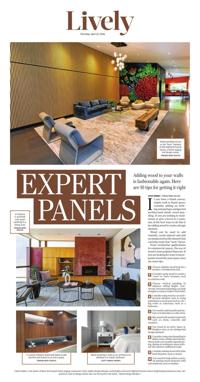
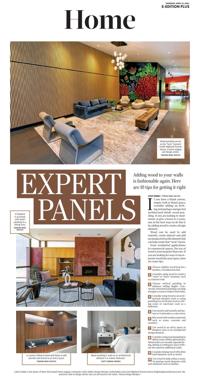
EXPERT PANELS
Adding wood to your walls is fashionable again. Here are 10 tips for getting it right
CATHY HOBBS | Tribune News Service
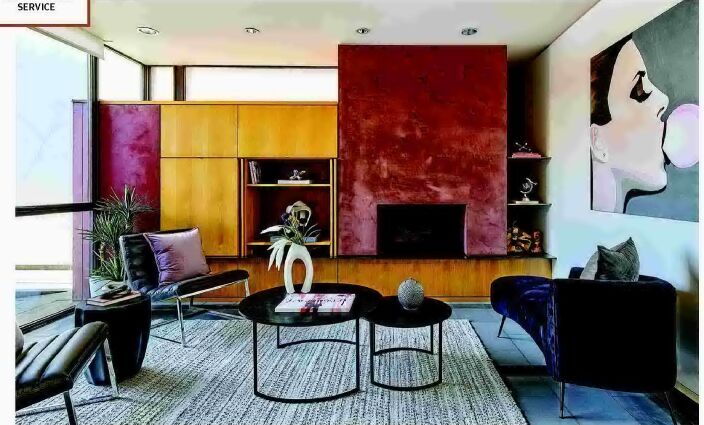
Wood paneling serves as the "hero" moment inside
Highland Passive House, a home staging and design center.
TRIBUNE NEWS SERVICE
A fireplace is accented with wood paneling in a sitting
area.
TRIBUNE NEWS SERVICE
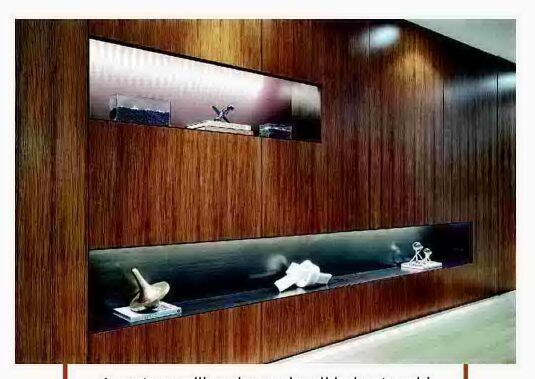
A custom millwork wood wall helps to add warmth and drama to an
entry space.
TRIBUNE NEWS SERVICE
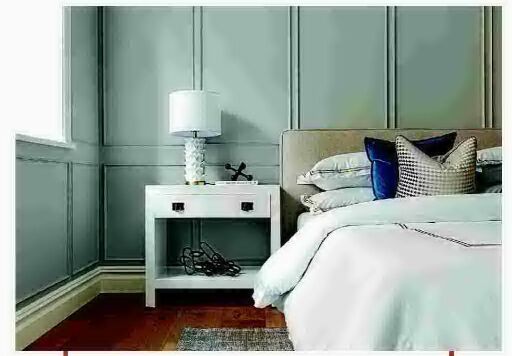
Wood paneling is used as an architectural element in a master
bedroom.
SCOTT GABRIEL MORRIS
If you have a blank canvas, empty wall or bland space, consider adding an inviting and perhaps unexpected architectural detail: wood paneling. If you are looking to modernize or give a boost to a room, one of the best ways to do this is by adding wood to create a design element.
Wood can be used to add warmth, create interest and add an unexpected tactile element that can help create that "wow" factor.
From residential applications to commercial spaces, the use of wood is more popular than ever. If you are looking for ways to incorporate wood into your space, here are some tips.
1 Choose a lighter wood tone for a modern, Scandinavian feel.
2 Consider using wood to create a "wow" or "hero" moment, such as a feature wall.
3 Choose vertical paneling to enhance ceiling height. Conversely, horizontal paneling can help elongate a room or make it feel wider.
4 Consider using wood as an architectural element such as using paneling in a social area such as a living room or sanctuary such as a bedroom.
5 Use wood to add warmth and texture or to introduce a color story.
6 Mix wood with modern materials such as stone, concrete and ceramics.
7 Use wood in an entry space or fireplace area as an unexpected design element.
8 Consider using wood paneling to define zones within open layouts. Wood walls can visually separate living, dining or workspace areas without the need for additional walls.
9 Consider mixing wood with other hard elements such as metal.
10 Use wood to help soften a room, by pairing wood elements with soft materials such as textiles.
Cathy Hobbs is the owner of New York-based home staging companies Cathy Hobbs Design Recipes (cathyhobbs.com) and Highland Passive House (highlandpassivehouse.com). Her practical, how-to design advice also can be found in her book, "Home Design Recipes."
Click and hold your mouse button on the page to select the area you wish to save or print.
You can click and drag the clipping box to move it or click and drag in the bottom right corner to resize it.
When you're happy with your selection, click the checkmark icon next to the clipping area to continue.