

Rescue mission in peril
LINK craft careening amid bid to save prized Swift space telescope
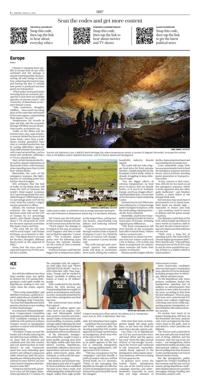
An artistic rendering of the swift Observatory
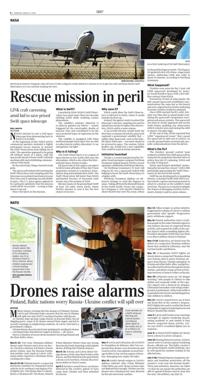
Northrop Grumman's stargazer takes off June 23 with a Pegasus rocket ahead of a mission to try to get into orbit and boost NASA's swift Observatory so it can continue studying the stars.
NASA
NASA's mission to save a vital space telescope from plummeting back to Earth is in trouble.
At the beginning of July, NASA and its commercial partners mounted a highly anticipated rescue mission to prevent the Swift Observatory from falling out of orbit. The operation appeared to be going off without much of a hitch, with the spacecraft meant to boost Swift's altitude reaching orbit and establishing communications with Earth.
By the end of July, things started to look grim.
The spacecraft tasked with reaching the Swift Observatory and clamping onto the telescope encountered mechanical issues that since sent it spinning uncontrollably in space. The U.S. space agency appears to be cautiously optimistic that the mission could still be successful — as long as time doesn't run out.
Here's the latest on the mission.
What is Swift?
Launched in 2004, NASA's Swift Observatory has spent more than two decades orbiting Earth while studying cosmic phenomena.
The satellite's primary objective is to observe gamma-ray bursts — events triggered by the catastrophic deaths of massive stars and considered to be the most powerful types of explosions in the universe.
The satellite is equipped with three multiwavelength telescopes that are able to collect data in visible, ultraviolet, X-ray and gamma-ray light.
Why is it falling?
The Swift Observatory is in a region of space known as low-Earth orbit near the atmosphere, which is also where the International Space Station resides.
All spacecraft in that region can expect to fall to lower altitudes if they don't have propulsion systems to counteract atmospheric drag and maintain their orbits. The Swift Observatory fell faster than NASA anticipated because of increased solar storms since the autumn of 2024.
Mission teams on the ground kept Swift at least 185 miles above Earth, where NASA's mission to save it has the best chance of success.
Why save it?
NASA could allow the Swift Observatory to fall back to Earth, where it would harmlessly burn up.
Instead, the agency wants to extend the telescope's mission, negating the need to spend more money to replace the observatory, NASA said in a news release.
A successful mission would mark the first time a commercial robotic spacecraft captured a government satellite that — unlike other spacecraft, such as the Hubble Space Telescope — was never meant to be serviced in space. The venture, NASA leaders say, would test a new capability that could be used on future missions.
Initiative launched
On July 3, a rocket manufactured by Virginia-based aerospace company Northrop Grumman helped launch NASA's rescue operation, dubbed the Swift Boost Mission.
On Northrop Grumman's 55-foot-tall Pegasus XL was a spacecraft tasked with helping to boost the Swift Observatory to a higher orbit.
Northrop Grumman deploys an airlaunch strategy to send the Pegasus to space. Taking off from the Marshall Islands in the South Pacific Ocean, the company's Stargazer L-1011 aircraft climbed to about 40,000 feet over the ocean, where it released the Pegasus rocket. The Pegasus XL ignited its first of its three-stage rocket motors, delivering LINK into orbit in about 10 minutes, according to Northrop Grumman.
What happened?
Troubles soon arose for the 5-foot-tall LINK spacecraft developed by Arizona-based Katalyst Space with a $30 million contract from NASA.
Powered by 20 feet of solar panels, the 880-pound spacecraft established communications the same day as the launch and sent a signal back to Earth confirming its power systems worked as planned.
Once LINK reached Earth's orbit, Katalyst was then due to spend weeks evaluating the spacecraft's propulsion, navigation and sensor systems. The spacecraft was then to slowly approach and survey Swift before grabbing the observatory with its robotic arms and raising the orbit to almost 370 miles high.
At the end of July, NASA reported that LINK "experienced issues" that caused the spacecraft to spin out of control. As a result, ground teams received only sporadic communications from the device.
What's the fix?
The Katalyst ground control team worked to stabilize the LINK spacecraft by using electric propulsion thruster burns to reduce how fast it's spinning, NASA said in a July 31 blog post.
NASA said Katalyst identified "potential paths forward for a boost," with LINK potentially approaching the Swift Observatory by the end of this month.
Swift has no docking ports or grappling fixtures, so Katalyst built LINK with a custom robotic capture mechanism meant to attach to a feature on the satellite's main structure. The process is meant to mitigate the chance of damaging sensitive instruments, Katalyst said in a news release.