
FOR YOUR AMUSEMENT
Behind the scenes with fan-favorite whirling, plunging carnival rides
Ron Gustafson
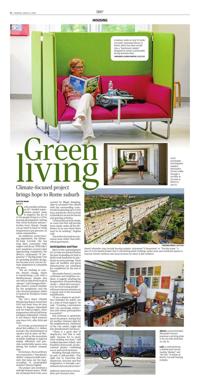
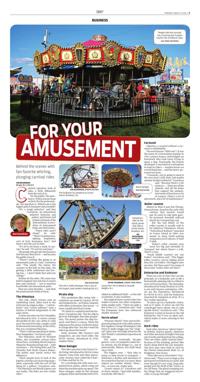
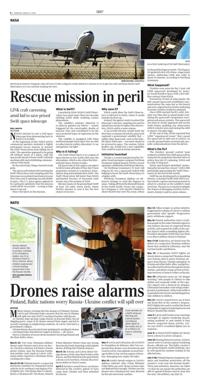
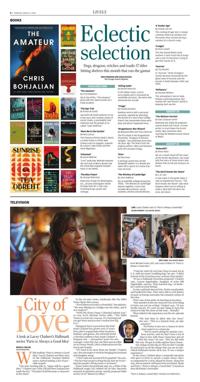
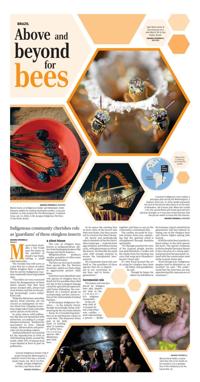
Casino Pier Ferris Wheel in Seaside Heights, N.J.
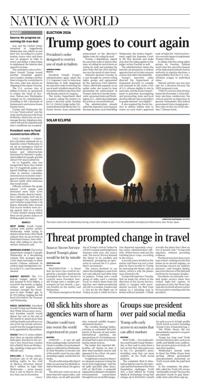
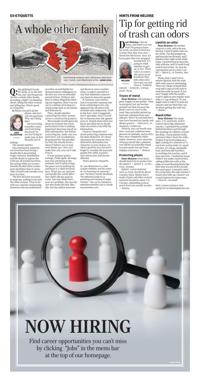
This Hit In 2000 Himalaya ride is one of the largest road models traveling the U.S.
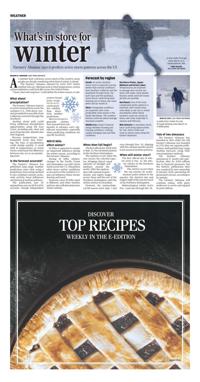
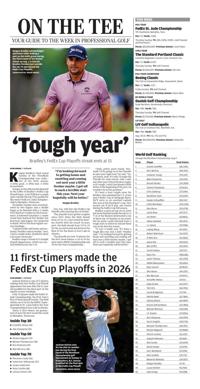
Zamperla's take on the classic pirate ship ride at Coney Island, Brooklyn, N.Y.
Wave Swinger
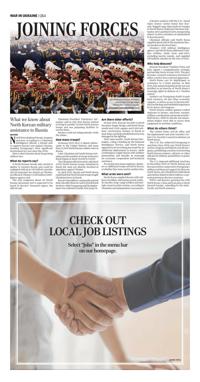
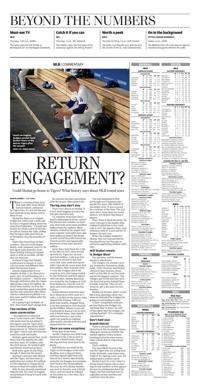
The Endeavor by Zamperla at Coney Island, Brooklyn, N.Y.
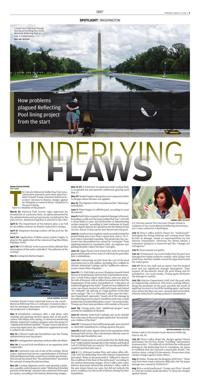
People ride the carousel July 23 during the Franklin County Fair in Hilliard, Ohio.
BUSINESS
Carnival operators look at rides a little differently from the rest of us.
For the public, the ques-tion is: Which one do we go on first? For the professionals, the question is: Which one is the biggest pain to transport and assemble?
"It's a tough industry," said Ron Gustafson, an amusement industry historian and author, and former hall of fame chairman of the International Association of Amusement Parks and Attractions.
"These rides aren't cheap," he said. "There's maintenance, upkeep, employees, cost of fuel, insurance, fees." And there's also the cost in time.
"It's 60 to 80 hours a week, in season," he said. "It's not for everyone."
The people who get into this business do it because they love it — and because the public loves it.
"There's nothing like going to an amusement park or a fair," Gustafson said. "The smells, the noises, the screams of the kids on the rides, the getting a little sunburned and having fun — I don't think that will ever change."
Neither do the rides. The same ones tend to reappear over and over at county fairs and carnivals — not to mention boardwalks and amusement parks.
Here are some favorites — and what the professionals think of them.
The Himalaya
This ride, which courses over an undulating track, dates back to the 1950s but its origin is older — "switchbacks" and "scenic railways" were a feature of British fairgrounds in the early 1900s.
A closer ancestor was the Caterpillar, introduced in 1922. A canvas canopy descended on the cars; when it came up at the end of the ride, couples could be discovered smooching. In the 1920s, this was considered hilarious.
"There's still one operating in Salem, New Hampshire," Gustafson said.
The Himalaya, made by Wisdom Rides, also resembles several other attractions, including Musik Express (Majestic Manufacturing) and — with variations — The Flying Bobs and The Thunder Bolt (both Chance Rides). The public may barely notice the difference.
"Show people have to look at the logistics and the cost of moving equipment, especially with the cost of fuel being $5 a gallon," Gustafson said. "The Himalaya and Musik Express are one trailer. The Bobs are two-trailer rides."
Pirate ship
This pendulum-like swing ride — variations are made by Chance, HUSS and Zamperla Inc., an Italian company with offices in Boonton, New Jersey — is more complicated than it looks.
"It's kind of a sophisticated mechanism," Gustafson said. "For the ship to get to its full height, that takes propulsion. The motor pushes the ship forward. And there's a sensor. When the ship passes the sensor, it tells the motor to change direction. You don't want the ride to go above the tower."
Some versions, like Chance's and Zamperla's, are one-truck rides; the HUSS version, introduced in 1978, requires three.
Wave Swinger
This ride's ancestor is the Traver Circle Swing, introduced in 1904 in Coney Island's Luna Park and other places. Later versions were called the ChairO-Plane and the Yo-Yo.
It's a revolving ride with seats suspended from chains, which swing out when the machine picks up speed. The Wave Swinger, made by the German company Zierer and introduced in 1972, added an additional thrill — as the ride accelerates, it also oscillates.
The original Zierer version takes two trailers to move, but other companies make smaller units. "There are quite a few in the U.S.," Gustafson said. "And the Europeans have also embraced smaller versions."
Ferris wheel
"Pleasure wheels" were seen in fairgrounds going back to the 18th century. But engineer George Washington Gale Ferris Jr. built a bigger one: the "original" giant 264-foot high wheel for the 1893 World's Columbian Exposition in Chicago.
The name eventually became generic. Lots of companies make Ferris wheels; the Eli Bridge Co., out of Jacksonville, Illinois, has built them since 1900.
The biggest ones — they take as many as nine trucks to transport — dominate a skyline and announce to the world that the fair is in town. More typical are smaller wheels: three-, twoor even one-trailer jobs.
"Guests expect it," Gustafson said of Ferris wheels. "And with families, everybody will ride it."
Carousel
Likewise, a carnival without a carousel is unthinkable.
The word means "little war"; it was the name of a tournament popular in 17th-century France, with knights on horseback who took turns trying to spear a ring. Eventually, the French developed a mechanical contraption to train its riders — wooden horses on a revolving frame — and the merry-goround was born.
"Carousels, you're going to need at the very least a full semi, and maybe another (trailer) behind it," Gustafson said. "Because there's a lot of pieces. … There are all the animals, and all the poles that support the animals. And some of them have a lot of scenery. There's a lot of piecework, and a lot of maintenance."
Roller coaster
Miners in what is now Jim Thorpe, Pennsylvania, found in the early 19th century that tourists would pay 50 cents to ride their gravity-powered downhill railroad meant for transporting coal.
But the real father of the roller coaster is usually said to be LaMarcus Thompson, whose "Switchback Railway," launched at Coney Island in 1884, was meant to keep thrill-seeking young men out of saloons. It went 6 mph.
Today's roller coasters may seem too big and unwieldy to transport but where there's a will, there's a way.
"Small kiddie coasters are one trailer," Gustafson said. "The bigger roller coasters, you're talking about four, five, six trailers. The biggest ones are nine. But there aren't too many of those nine-trailer rides out there."
Enterprise and Endeavor
There are a lot of rides that use the principle of a hydraulic arm to lift a horizontally spinning ride to a tilted or even vertical position. The Roundup, introduced by Frank Hrubetz in 1954, is one well-known contraption. Others are the Enterprise, introduced by HUSS in 1972, and the Endeavor, launched by Zamperla in 2016. It's a two-trailer operation.
"It raises up via a hydraulic center, and as it spins, it raises up and the centrifugal force allows you to ride upside down," Gustafson said. "The Endeavor is kind of based on the old Enterprise, but it has an open seat, which makes it more enticing to the rider."
Dark rides
Dark rides, known as "ghost trains" in Britain, feature ghosts, skeletons and other mechanical frights that pop out of walls and drop from the ceiling. They are often called "pretzel rides" because of the winding, pretzel-like tracks along which the cars meander. The first ones were built in 1928 by the Pretzel Amusement Ride Co. of Bridgeton, New Jersey.
"They take one or two trailers," Gustafson said. "They're not as large as the permanent installations in a park. But even though it's not a big, long ride, people love the thrill of the 'tricks,' as we call them. The ghosts jumping out, the things that are triggered electrically as you go through."