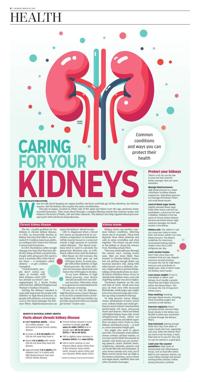


CARING FOR YOUR KIDNEYS
Common conditions and ways you can protect their health
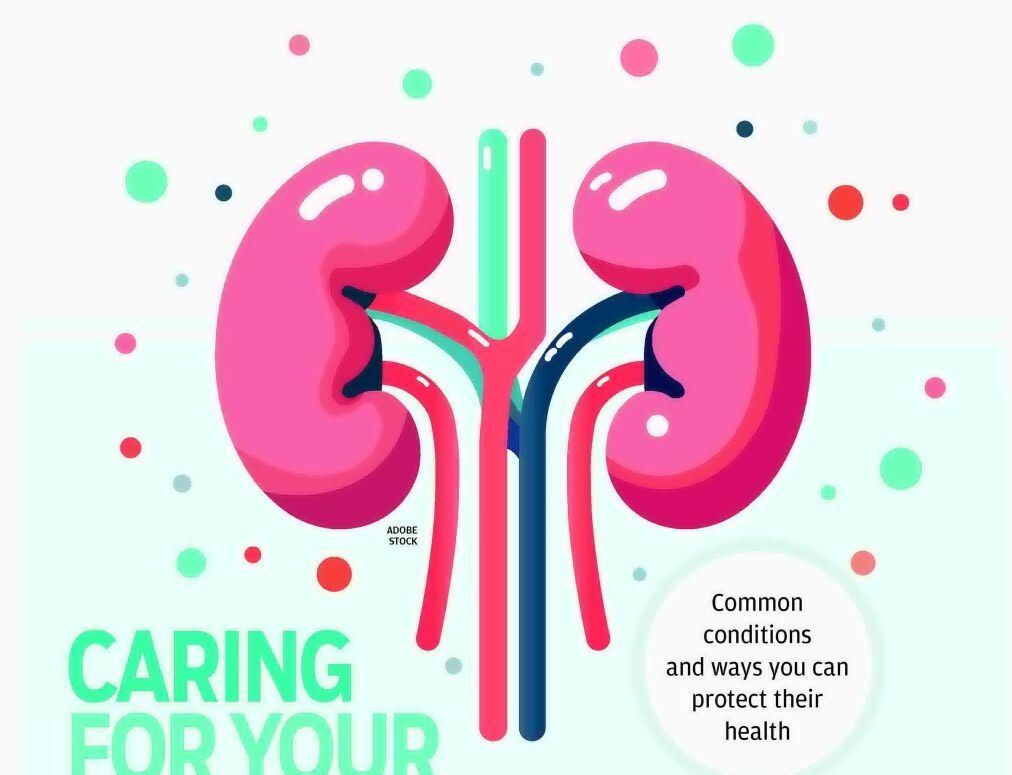
When we talk about keeping our organs healthy, the heart and brain get all the attention, for obvious reasons. But the kidneys also require the same consideration.
The pair of organs, located on either side of the spine just below your rib cage, performs many essential functions. They route blood through a complex filtering system that removes toxins and balances the levels of fluids, salt and other minerals. The kidneys also help regulate blood pressure and assist with red blood cell production.
Chronic kidney disease
The No. 1 health problem for the kidneys is chronic kidney disease, or CKD, an irreversible decline in kidney function that aff ects an estimated 35.5 million American adults, according to the Centers for Disease Control and Prevention.
In CKD, the kidneys suff er enough damage over time that they have difficulty doing all their essential jobs. People with advanced CKD need to have a machine filter their blood for them — a treatment called dialysis — or get a kidney transplant.
"Unfortunately, people don't notice any signs of trouble with their kidneys until CKD has already occurred," says nephrologist Dr. J. Kevin Tucker with Harvard-affiliated Brigham and Women's Faulkner Hospital.
Getting the kidneys checked is especially important for people with diabetes or high blood pressure. In people with diabetes, too much glucose in the blood damages the kidneys' filters. High blood pressure can injure the kidneys' blood vessels. CKD is diagnosed when a blood test shows an elevated level of creatinine (a byproduct of metabolism within muscle tissue) or a urine test reveals a high amount of a protein called albumin. The blood creatinine level is used to calculate the glomerular filtration rate, or GFR, which reflects how well the kidneys filter blood. As CKD worsens, the creatinine level goes up and GFR goes down. In many people with either diabetes or high blood pressure, the urine albumin test becomes abnormal even before the GFR begins to decline.
If you have diabetes or high blood pressure, your doctor should annually test your kidney function. Otherwise, there is no general recommendation for kidney disease screening.
"If you are at risk for diabetes, high blood pressure or heart disease, or if you have a family history of kidney failure, talk with your health care provider about how often you should get tested," Tucker says.
Kidney stones
Kidney stones are another common kidney condition, aff ecting about one in 10 people. These hard deposits form when minerals and salts in urine crystallize and stick together. The stones can get stuck in the kidney or along the urinary tract, blocking urinary flow.
They may eventually pass through the urinary tract, causing severe pain. Men are more likely than women to develop kidney stones, but not getting enough fluids can increase anyone's risk, along with other factors such as diabetes, obesity, a high sodium or protein intake, taking certain medications or a family history of kidney stones. If you've already had a kidney stone, your risk of getting another one also is higher.
Treatment depends on the size and type of stone. Small ones may pass on their own with increased fluid intake, while larger ones might have to be removed surgically or broken up using soundwave therapy.
To help prevent future kidney stones, drink plenty of water, watch your sodium intake and avoid getting too much animal-based protein (particularly red meat, processed meats and cheeses, which are linked with higher kidney stone risk). Avoid ultraprocessed foods, which can contribute sodium and added sugars that can place extra strain on your kidneys and blood vessels — as well as cause unwanted weight gain.
You might also need to adjust your diet. For example, many kidney stones contain calcium oxalate, so you may need to limit the amount of oxalate-rich foods you eat, including spinach, chard, rhubarb, beets, raspberries, almonds, peanuts and soy foods like tofu and edamame. If your stone contains uric acid, you'll likely restrict foods that are high in the amino acid purine, such as meat and organ meats, shellfish, beer and other alcoholic beverages.
MARCH IS NATIONAL KIDNEY MONTH</p>
Facts about chronic kidney disease
■ 1 in 7 American adults — about 35.5 million people — are estimated to have chronic kidney disease.
■ As many as 9 in 10 adults with CKD do not know they have it.
■ About 1 in 3 adults with severe CKD do not know they have the disease.
■Approximately 1 in 3 adults with diabetes and 1 in 5 adults with high blood pressure may have chronic kidney disease.
■ Chronic kidney disease is more common in people aged 65 years or older (34%) than in people aged 45 to 64 years (12%) or 18 to 44 (6%).
■ CKD is slightly more common in women (14%) than men (12%).
■ CKD is more common in nonHispanic Black adults (20%) than in Non-Hispanic Asian adults (14%), Hispanic adults (14%) and non-Hispanic White adults (12%).
— Centers for Disease Control and Prevention
Protect your kidneys
There's a lot you can do now to slow and even prevent kidney damage. Here are some examples:
Manage blood pressure: High blood pressure is a major contributor to kidney disease progression. High blood pressure can damage the kidney's filters and small blood vessels.
Control blood sugar levels: Slightly elevated blood sugar levels often mean a person has prediabetes, a precursor for type 2 diabetes. Diabetes is the top cause of chronic kidney disease because persistent excess sugar exposure damages tiny blood vessels in the kidney.
Reduce salt: The sodium in salt can cause your body to retain fluid, and excess sodium can raise blood pressure. The Dietary Guidelines for Americans recommend limiting sodium intake to less than 2,300 milligrams per day.
Limit alcohol intake: Don't have more than one standard drink per day. Regular excessive alcohol drinking increases the risk for high blood pressure and contributes to weight gain, both of which make the kidneys work harder.
Lose excess weight: If you're overweight or obese, your kidneys must handle a greater blood flow and higher pressures within the kidney filters. This increases the risk of long-term kidney injury.
Stop smoking: Smoking damages blood vessels, including those providing oxygen and nutrients to the kidneys.
Exercise regularly: Heartpumping aerobic exercise helps blood vessels in the kidney stay flexible to allow easy movement of blood through the kidneys' filters.
Stay hydrated: Getting enough fluids each day, from water or watery foods like fruit, vegetables and soup, helps the kidneys flush out toxins from the body. A daily fluid total of 15 cups for men and 12 cups for women is a good goal.
Limit over-the-counter painkillers: High doses of nonsteroidal anti-inflammatory drugs, such as ibuprofen (Advil, Motrin) and naproxen (Aleve), can cause kidney damage and worsen existing kidney disease. Follow dosing directions carefully.