ELECTIONS 2026
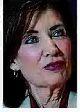
After the Supreme Court struck down many of President Donald Trump's global tariffs, New York Gov. Kathy Hochul listened as a plaintiff in the case recounted the levies' financial toll on his business.
"This is a heavy tax and you have to pay it up front," Victor Schwartz, the owner of VOS Selections, told Hochul as they walked alongside bottles of wine he imports from 16 countries.
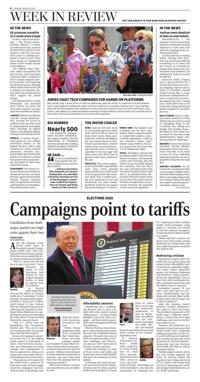
As Hochul seeks reelection, she says the effects of Trump's tariffs are a "centerpiece" of her message. She pressed the administration to issue a $13.5 billion tariff refund to New Yorkers after the ruling and released an ad criticizing her Republican challenger, Bruce Blakeman, for supporting the levies and attending the event where Trump unveiled them with a massive board.
"This is a lethal issue for Republicans this November," Hochul said. "You can be sure we're going to make sure people know who did this to them."
Democrats running for governor across the U.S. are making tariffs central to their pitch to voters. They bet that in an election year dominated by issues ranging from immigration to the war against Iran, rising costs connected to the tariffs will be a motivating issue for many voters.
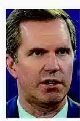
"That picture of (Trump) with the tariff board is going to be front and center in every single one of our campaigns," said Gov. Andy Beshear of Kentucky, who leads the Democratic Governors Association this year.
White House spokesman Kush Desai countered that "what Democrats are really running against are President Trump's Most-Favored-Nations deals to slash prescription drug prices by up to 90 percent, trillions in investments to bring manufacturing back to America, and new trade deals that level the playing field for American workers."
"All of these historic victories were possible because of tariffs," he said.
Affordability concerns
Republicans face a challenging election year as they contend with voter anxiety around spiking prices — an issue Trump pledged to fix in his 2024 campaign — and the record of a president's party losing ground during the midterms.
Much of the focus was on Congress, where Democrats are just a few seats shy of taking the House majority. The party also aims to hold on to governorships in Arizona, Michigan and Wisconsin and eyes GOP-held seats in Nevada, Georgia and Iowa.
Democrats running in some of those states said tariffs and the broader issue of affordability will be at the forefront of their agenda.
In Nevada, state Attorney General Aaron Ford sued the administration over its initial round of tariffs and sued again as Trump tried to revive them. As he seeks the Democratic nomination to take on Republican incumbent Gov. Joe Lombardo, Ford called the tariffs "illegal" and blamed them for restaurant closures and fewer visitors to his tourism dependent state.
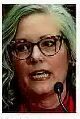
In Arizona, Democratic Gov. Katie Hobbs seeks reelection in a state Trump won by more than 5 percentage points in 2024 with a focus on costs. She criticized GOP Reps. Andy Biggs and David Schweikert, who seek the nomination to challenge her, for "cheering on these reckless tariffs." Both lawmakers voted against a measure last month to end the national emergency Trump declared to impose tariffs on Canada.
Hobbs said cost concerns are about more than tariffs, noting Medicaid cuts, rising health costs and a spike in gas prices amid the war against Iran.
Redirecting criticism
Republicans largely reject the tariff criticism and try to turn the anxiety about affordability back on Democrats, especially in high cost states where Democrats govern. For instance, Blakeman said Hochul is "solely responsible for the affordability crisis in New York, with crushing electric bills, soaring insurance rates and the highest taxes in America."
Schweikert argued, "it was only a few years ago in a previous administration that the Democrats actually liked tariffs. So this seems to be if Trump's for it, they're against it."
After the Supreme Court's decision, Trump's administration seeks to revive the levies. The president announced a 10% tariff using a different mechanism, a move that faces legal challenges, and wants to further raise tariffs to 15%.
However, his prediction of a manufacturing renaissance that would result from companies making more products in the U.S. to avoid tariffs has not materialized. During the first year of his second term, 98,000 manufacturing jobs were lost. Revenue from tariffs did little to reduce the federal deficit.
Polling suggests unease about the way Trump imposed the levies. In January, before the Supreme Court ruling, about 6 in 10 U.S. adults said Trump went too far in imposing new tariffs and using presidential power, an AP-NORC poll found.