
PROBLEMATIC PROSECUTION
Critics say misconduct linked to hundreds of wrongful convictions

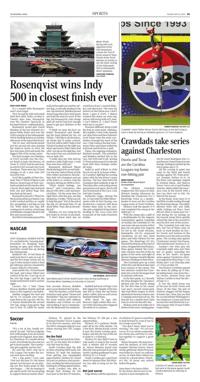
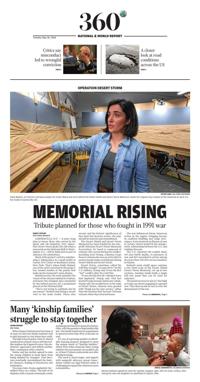
Harry Ruiz stands April 27 in a New York City courtroom as a judge prepares to vacate his murder conviction.
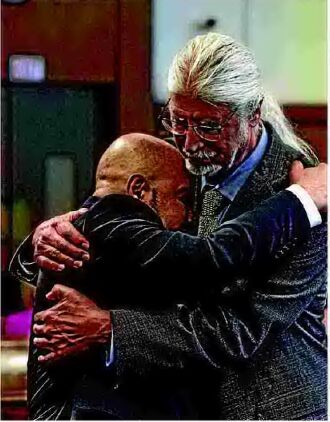
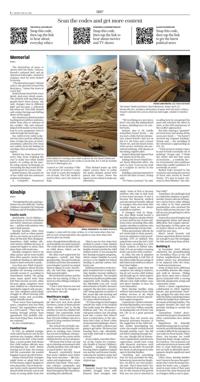
Harry Ruiz hugs his lawyer, Ron Kuby, after a judge in New York vacated his murder conviction.

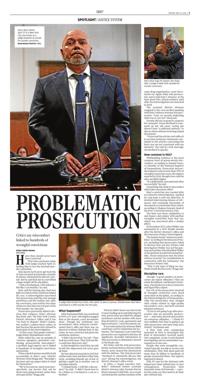
A judge determined Harry Ruiz, who spent 25 years in prison, should never have been convicted in a 1993 murder-for-hire plot.
SPOTLIGHT | JUSTICE SYSTEM
Harry Ruiz should never have been convicted.
That's the conclusion a New York judge reached April 27, leading him to toss the botched murder conviction.
Ruiz knows he'll never get back the 25 years he spent in prison for a murder he always maintained he did not commit. But he said that day in court lifted a huge weight off his shoulders.
"I felt overwhelmed. I felt relieved. I felt like I can breathe," he said.
Ruiz said the hearing also shed new light on evidence that could have helped his case. A reinvestigation uncovered that prosecutors paid the sole teenage eyewitness and her mother and, after the conviction, were told by two other witnesses that Ruiz was not part of the 1993 murder-for-hire plot.
Prosecutors previously failed to disclose that evidence, Ruiz's attorney Ron Kuby said. The New York County District Attorney's Office said it has "no basis to dispute" Kuby's claims, but couldn't confirm them, either, in part because the prosecutor refused to participate in the reinvestigation.
"To this court, that speaks volumes," Judge Robert Mandelbaum wrote.
Kuby called the case an example of "serious, egregious, persistent, continuing prosecutorial misconduct," a problem legal experts say is linked to hundreds of wrongful convictions nationwide.
When asked if anyone would be held accountable in Ruiz's case, District Attorney Alvin Bragg said, "the judge's decision and our papers kind of stand for themselves."
"We're focused on, much more prospectively, any lessons that can be drawn here going forward, rather than retrospectively," Bragg said.
What happened?
After Emmanuel Felix was murdered in 1993, a 13-year-old neighbor pegged Ruiz as the shooter, court documents show. Though her testimony was inconsistent, other witnesses corroborated Ruiz's alibi and there was no physical evidence linking Ruiz to the crime, he was convicted and given the maximum sentence.
"I didn't deserve that," he said. "They took my youth away. They took my life. I could have died every day."
As Ruiz fought his conviction, he said he fell into depression but never gave up hope.
He was released on parole in 2019 but said he rarely went anywhere other than work, secluding himself out of fear of getting caught up in another case of mistaken identity.
"Coming home, I still felt a disconnect," he said. "I didn't know how to be a father or a husband or a son or a brother."
What he didn't know was that in the 15 years leading up to and following his trial, prosecutors provided the alleged eyewitness and her mother with more than $17,000 in "cash, apartments and legal assistance," court documents say.
It was information his attorney likely could have used to undermine her testimony. The Supreme Court ruled that prosecutors are required to disclose all significant, favorable information in their possession to defendants, known as the Brady rule.
But Kuby said the trial prosecutor, former assistant district attorney Helen Sturm, never shared this information with the defense. The trial prosecutor "declined to voluntarily discuss this case" during the reinvestigation, the district attorney's office wrote.
In 2002, a "major narcotics trafficker" informed former assistant district attorney John Dormin that he hired someone to kill Felix, an account corroborated by another member of the same drug organization, court documents say. Again, Kuby said, prosecutors never told Ruiz's attorney at the time about this critical evidence until after the reinvestigation was launched in 2024.
The assistant district attorney assigned to the case recalled speaking with Ruiz's defense attorney but prosecutors "have no records indicating what was or was not" disclosed.
Dormin did not respond to requests for comment. Sturm declined to comment on her old cases, saying she doesn't have "a sufficient memory" to discuss them without reviewing related documents.
"I have read the articles and suffice it to say that numerous statements contained in the articles concerning the Ruiz case are not consistent with my memory," she said in a text message; she declined to specify.
How common is this?
Withholding evidence is the most common form of prosecutorial misconduct, according to Samuel Gross, co-founder of the National Registry of Exonerations. Prosecutor misconduct played a role in more than 30% of wrongful conviction cases, the registry reported in 2020, though Gross said the rates are likely higher.
"It's deliberately concealed and often successfully," he said.
Unearthing this kind of misconduct often takes enormous effort.
Ruiz's conviction was vacated after an extensive reinvestigation, sparked by a tip from a cold case detective. It involved interviewing dozens of witnesses and reviewing thousands of documents to corroborate these claims, according to Shalena Howard, head of the Post-Conviction Justice Unit.
The Ruiz case bears similarities to and shares a key player with another wrongful conviction from that era, which was uncovered after a similar effort.
In November 2023, Jabar Walker was exonerated in a 1995 double murder after the district attorney's office and the Innocence Project reinvestigated.
The inquiry found "numerous problems," according to the Innocence Project, including that prosecutors failed to disclose that one key witness told investigators Walker was not the gunman and another who identified Walker as the gunman was given housing benefits. Sturm told jurors that the latter witness received "no consideration in connection with her testimony," the Innocence Project said.
"This is the type of thing we routinely would disclose now," Bragg said.
Discipline rare
Though "a good number of prosecutors are repeat offenders," they are rarely disciplined, said Bennett Gershman, a law professor at Pace University and legal ethics expert.
Just 4% of the prosecutors involved in wrongful conviction cases faced some kind of discipline, according to the National Registry of Exonerations. Only two prosecutors were charged with crimes related to high-profile misconduct cases, and both received minimal sentences.
"If you're not going to go after prosecutors who are presently prosecutors — and many present prosecutors are notorious offenders — I think it's very unlikely that they're going to go after prosecutors who have long since retired," Gershman said.
A New York state commission launched in 2021 to investigate this kind of misconduct received nearly 500 complaints. So far, it only finished investigating and recommended consequences in one case.
People who were wrongfully convicted typically are able to secure cash settlements; New York alone paid out more than $1 billion to hundreds of people exonerated there, the registry reported in March.
Still, it's rare for the attorneys who helped put them behind bars to face consequences. Prosecutors have immunity from civil lawsuits — a protection some say they need to do their jobs without fear.