
A life-or-death choice
Family, community help man recover after quadruple amputation
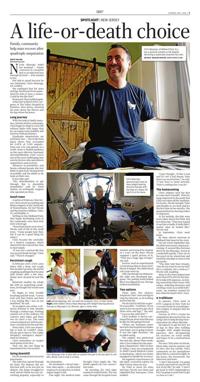
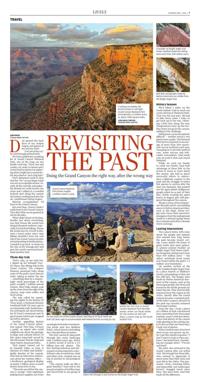
Chris Mayorga, of Midland Park, N.J., has a positive outlook on life despite becoming a quadruple amputee last year.
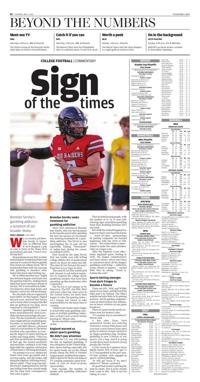
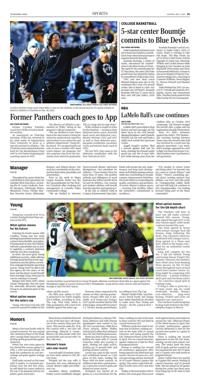
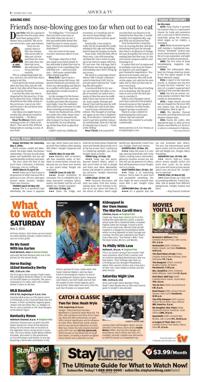
Chris Mayorga demonstrates how he does weight-bearing physical therapy with the help of a Hoyer lift April 15 at his home.
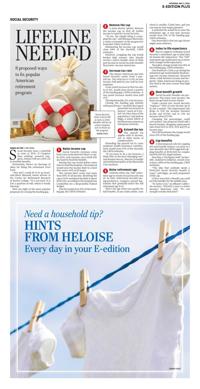
Right: aide Gideon Owusu helps Mayorga with weight-bearing physical therapy as Mayorga's cat, Winston, gets a closer look.
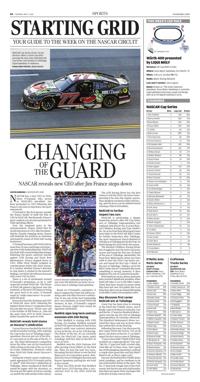
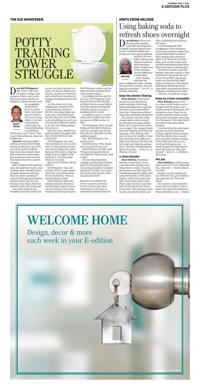
Left: Nicole Mayorga, left, sits with her husband, Chris, in their home.
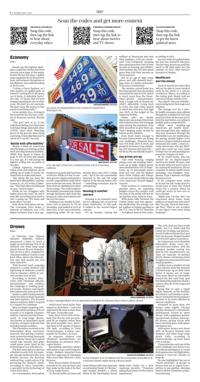
Chris Mayorga tries to deal with an eyelash that got in his eye april 15. His wife, Nicole, had to step in to help.
SPOTLIGHT| NEW JERSEY
Nicole Mayorga asked her husband — barely conscious in a hospital bed as an infection tore through his body — if he wanted to live.
Not able to speak because he was intubated, Chris Mayorga, 44, nodded.
She explained that his arms and legs would need to be amputated for him to have a chance. Could he live like that?
He paused, then nodded again. A day later in March 2025, surgeons at The Valley Hospital in Paramus, New Jersey, removed his arms above the elbows and his legs above the knees.
Long journey
With the help of family members, friends and his community, Chris began to adapt to a new life without limbs with hopes that he can regain some mobility and function with prosthetics.
Quadruple amputations are extremely rare — one study from Japan shows they accounted for 0.02% of 5,500 amputations over a 30-year period. As a result, there is limited guidance on the most effective treatment and rehabilitation. Chris' case is one of the most challenging seen even by doctors who specialize in amputations and recovery.
Advances in prosthetics and bionics allowed people who lost limbs to gain back varying levels of mobility and the ability to do tasks on their own.
It also takes grit. "His determination to get through this is absolutely remarkable," said Dr. Omri Ayalon, an orthopedic surgeon who operated on Chris.
Small town
A native of Paterson, New Jersey, Chris earned accounting and finance degrees at the University of Pennsylvania. He met Nicole and they had two children: Tyler, 10, and Maddie, 6.
Settling in tiny Midland Park, they began developing roots in the community once their kids were school age.
"Everybody knows your story," Nicole said of life in the small town. "Some people hate that, but it can be a good thing for others."
Chris became the controller at a biotech company, which allowed Nicole to devote her time to their family.
"It was just a normal life that you see everybody having," Chris said. "Then it changed."
Persistent cough
In February 2025, Chris came down with a deep, wet cough that wouldn't go away. He started coughing up phlegm that became dark brown after a few days. Home tests showed he had the flu.
Relatively healthy his whole life with no underlying conditions, he thought this would soon pass.
He began to have trouble breathing and felt weak. "I never took sick days before and here I was feeling like I was on my deathbed," he said.
At an urgent care center, a clinician listened to him breathe through a stethoscope. Nothing seemed out of the ordinary. No cultures were taken and there was no chest x-ray. The same scenario played out with his primary care physician the next day.
Hours later, Chris was wheezing so bad, he couldn't sleep. Nicole drove him to The Valley Hospital's emergency department in Paramus.
Chris remembers an oxygen mask going on his face.
That was the last thing he remembered for two months.
Going downhill
His flu morphed into bacterial pneumonia. The infection spread through his body. His kidneys did not function well, so he was put on dialysis. His lungs struggled to work and his blood was not circulating properly, especially to his extremities. He developed a blood infection, then sepsis — an often fatal response to an infection, in which organs begin to fail.
One night, the medical team thought Chris might die. The family signed a do-not-resuscitate order.
By morning, his vital signs somehow looked better. The sun came through the hospital room window and formed the shadow of a cross on the floor. Nicole snapped a quick picture of it. "That was a huge sign of hope," she said.
Doctors used an experimental CytoSorb machine to clean Chris' blood; it helped. His white blood cell count went up.
Still, the damage was immense. His right arm developed gangrene. His peeling hand looked like it was dipped in wax. His legs looked mummified.
Two options There were two choices:
Amputate Chris' arms and legs to stop the infection, or do nothing and let him die.
Nicole tried to tell him as gently as possible. "I told him, 'If you want to live we need to get rid of those arms and legs,'" she said. "'Can you live with that?'"
Chris nodded. A doctor cautioned Nicole about what life may be like for him going forward.
"When my husband comes back into this hospital and shakes your hand, you're going to know it was the right decision," she recalled saying.
The surgery was performed the next day, almost three weeks after Chris walked into the emergency department. After 22 days at Valley, Chris was transferred to Weill Cornell Medical Center in Manhattan, which was better equipped to handle his recovery.
He regained consciousness in late April, covered in a gown. He didn't know where he was.
He tried to move his arms and legs; Nicole was there and explained they were gone. Chris nodded.
"I just thought, 'If this is real and it's not a bad dream, then there's no reset button,'" he said. "I just have to move forward. There's nothing else I can do."
The homecoming
Chris' kidneys were the first to come back to health. Then his lungs improved to the point that Chris was taken off the ventilator. On Easter, Nicole brought Tyler and Maddie to see their dad for the first time in two months. She prepared them by showing videos of amputees.
At his bedside, the kids were more taken aback that their dad lost all his hair. "They just wanted to see him so badly, it really didn't matter what he looked like," Nicole said.
In September, Chris went home.
By then, almost everyone in Midland Park heard of his story.
On one warm September day, the little town threw a big homecoming. It seemed like everyone drove by the Mayorgas' house in a makeshift parade. Chris sat on the porch in his wheelchair and raised his shoulder to wave to the passersby.
"The kids told their friends, 'Hey do you want to see my dad? He's a celebrity. He's a bad ass,'" Nicole said, laughing.
Many in the town helped raise more than $370,000 for the family to help with expenses, including renovating their house with ramps, widening doorways and creating a more accessible bathroom. An architect waived his fees when he heard Chris' story.
A trailblazer
In January, Chris went to NYU Langone in New York for a second round of osseointegration surgery to prepare him for prosthetics.
Doctors at NYU's Center for Amputation Reconstruction are using Chris to help develop treatment plans for others like him.
He expects to get his first set of legs in May after building strength with weight-bearing exercises. He's documenting his recovery on social media and hopes to be a motivational speaker.
For now, Chris relies on Nicole, hired aides and his parents and in-laws who live nearby. Voice commands on his smartphone allow him to control the lights in the house, the thermostat, the television and more.
"I don't kid myself. I'm going to need some level of care for the rest of my life," he said. "I won't get back to 100% independence but I'm going to work hard to get as close as I can."