
SHOWING THE MONEY
Revamped exhibit at Philadelphia Federal Reserve branch features rare coins and notes
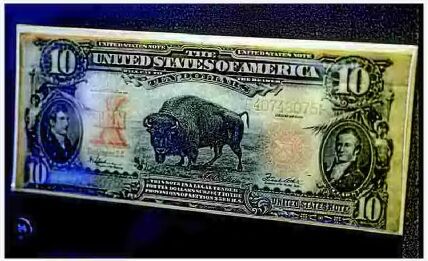
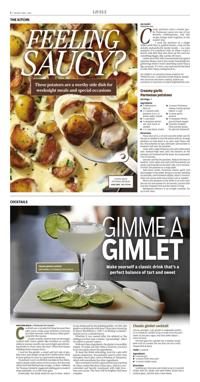
A 1901 $10 Bison Note, issued for the 100-year anniversary of the Lewis and Clark expedition
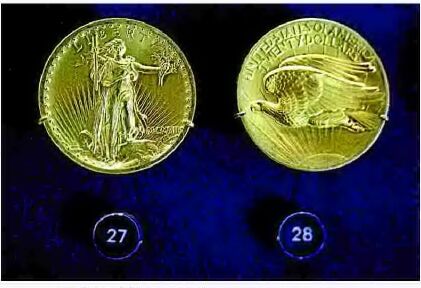
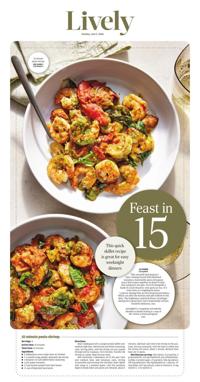
A 1907 $20 gold piece, also known as a Saint-Gaudens Double Eagle
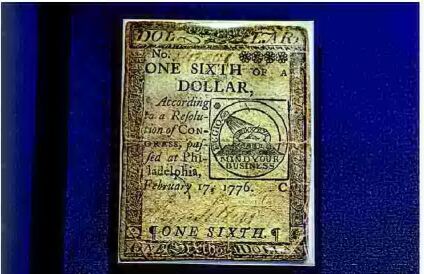
A Continental one-sixth dollar bill, issued Feb. 17, 1776, was designed by Benjamin Franklin.

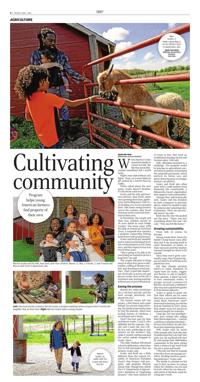
A bag of "Fed Shreds" (above) is given to each visitor.
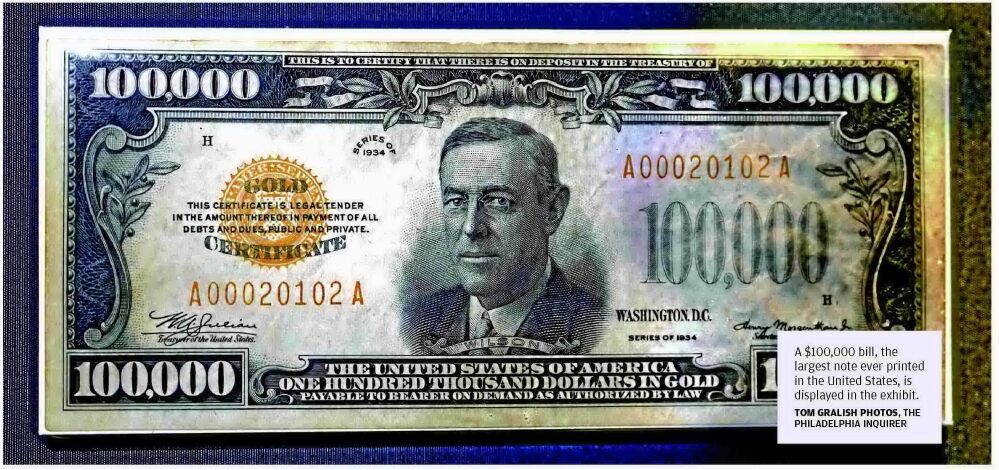
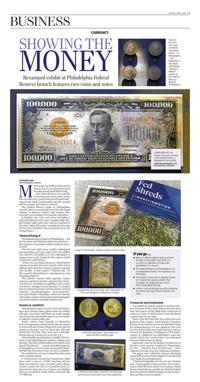
A $100,000 bill, the largest note ever printed in the United States, is displayed in the exhibit.
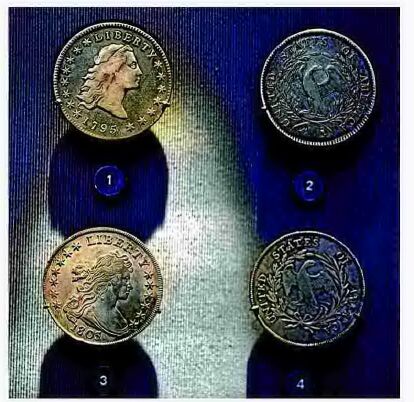
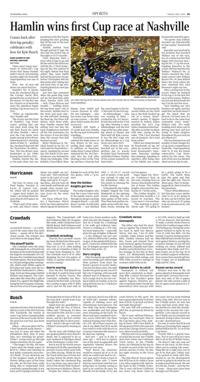
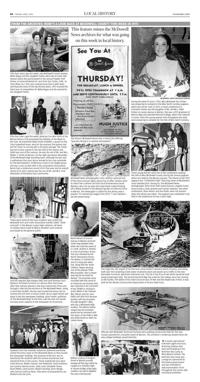
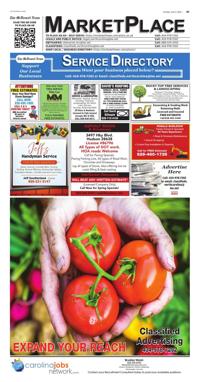
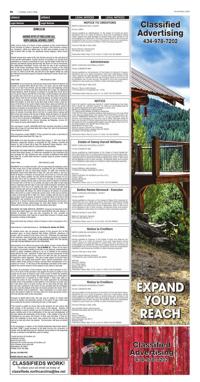
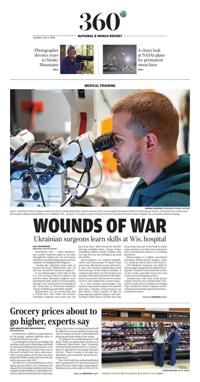
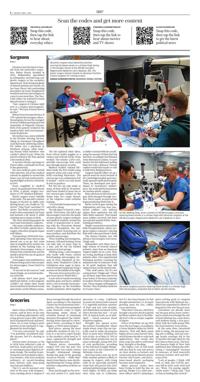
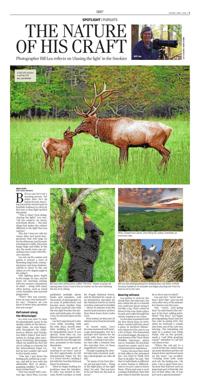
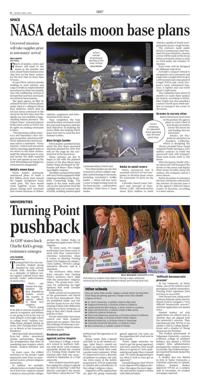
Some of the very first coins minted by the United States — in Philadelphia — are displayed in the newly redesigned "Money in Motion" exhibit at the Federal Reserve Bank of Philadelphia.
CURRENCY
Most people are pretty interested in money, but it's actually pretty hard to make money itself interesting.
How often do those of us outside of the financial sector think about how our monetary system functions beyond making sure our checks are deposited, our bills are paid and we can get cash when we want it?
The Federal Reserve Bank of Philadelphia recently offered a sneak peek tour of its redesigned "Money in Motion" exhibit with Andrew Hill, assistant vice president of economic education.
It displays rare coins and notes, including a $100,000 bill and a 1907 Saint-Gaudens High-Relief Double Eagle gold coin, valued at upward of $35,000, which Hill said is "considered to be (one of) the most beautiful coins ever produced in the United States."
'Demystifying it'
The Federal Reserve Bank of Philadelphia — led by President and Chief Executive Anna Paulson — first opened a free public exhibit inside its doors in 2003.
Over the past eight years, staffers reimagined the experience and since April 2025, the exhibit was closed to the public as it was redesigned. It reopens June 4, just in time for the nation's 250th anniversary celebrations.
"When you say Federal Reserve, I think there's a group of people who know exactly what you're talking about and then there's a group of people who are like, 'Is that a park?'" Paulson said. "So this is partly demystifying it, opening doors, and bringing people in."
The nation's central bank regulates banks, oversees payment systems and provides financial services, including stockpiling cash to make sure there's enough to meet demand. It's broken into 12 regional branches and the leaders of those branches — including Paulson — serve on the Federal Open Market Committee, which sets interest rates in the country with the goal of promoting low and stable inflation and high employment.
Games to cashfetti
After going through a security check and watching a four-minute video, guests enter the exhibit through a facsimile vault door (so many people who toured the old exhibit asked to see the vaults, so officials created a fake one).
Inside, visitors learn through an interactive lock-box experience about what it takes for money to work well and various things that were used as money in the past, such as dried fish. Hill said before the Civil War, there were up to 7,000 different types of currency in use in the U.S.
Other exhibits are about price stability, the creation of the Federal Reserve and how it keeps cash flowing. The latter exhibit offers each visitor a free bag of "Fed Shreds" — cash the Fed determined to be damaged or worn out and subsequently shredded into itty bitty pieces you can use as cashfetti.
The exhibit does its best to keep kids interested with computer games.
A touchscreen interactive boardroom table gives users a seat at a FOMC meeting and has them set interests rates. Another game allows visitors to play the role of a checkout clerk at a cheesesteak shop who has to figure out whether bills are counterfeit using various methods like UV lighting.
Treasures and evolutions
The exhibit also allows visitors to see the evolution of money in the United States and view more than 400 pieces of the Philly Fed's collection of treasures, many of which haven't been displayed in more than two decades.
There's the $100,000 bill, the largest note ever printed in the country, which features Woodrow Wilson on the front because he was president when the Federal Reserve Act was signed in 1913. Just 42,000 of these bills were made and only a few are known to be displayed, including one at the Smithsonian. It's illegal for an individual to own this tender, which was created only to be exchanged between Federal Reserve Banks.
Impressive coins in the displays include two of the first 6,200 quarters minted in Philadelphia in 1796 — valued at about $25,000 each — and a collection of coins from the California Gold Rush.
The paper note collection features distinctly unique bills from each the original 13 colonies that were made on printing presses.
"I think that regardless of who you are," Paulson said, "you're going to walk out with, 'Oh, I understand a little bit more about the economy, about money, about history, and the role that the Federal Reserve (and) the Philly Fed plays in the community and then in the economy.'"
If you go ...
■ Money in Motion debuts June 4 and will be open to the public from 9:30 a.m. to 4:30 p.m. Monday to Friday (last admittance is at 4 p.m.).
■ The Federal Reserve of Philadelphia is at 10 Independence Mall. The entrance is on 6th Street.
„■ The exhibit is free and no advance tickets are required for groups smaller than 15 people. For larger groups, email PHIL.Exhibit@phil.frb.org.
■ Visitors must go through security screening and those over age 18 need a photo ID to enter.