
Hot, dry conditions expected to continue for NC. Will there be water restrictions?
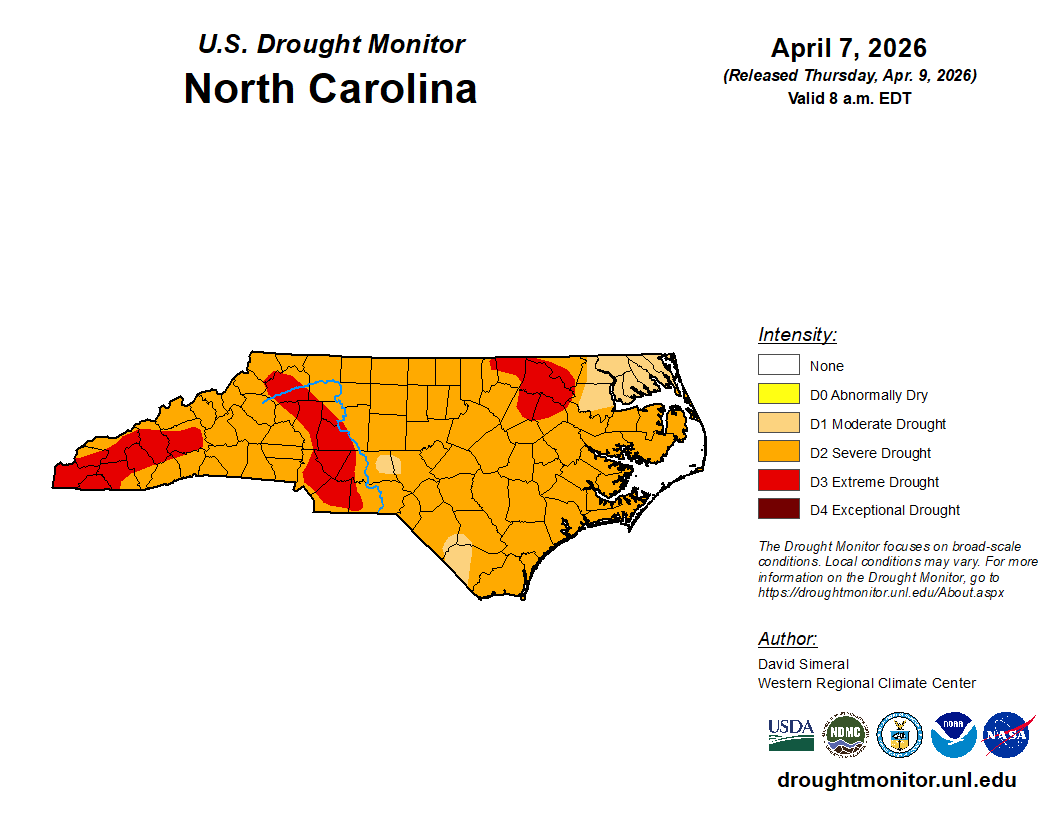
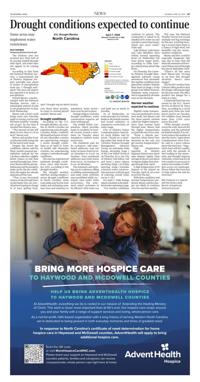
April 7 Drought map for North Carolina.
The Hickory area has received less than half of its normal rainfall through mid-April, and relief does not appear to be coming soon.
According to data from the National Weather Service, a measurement site at Hickory Regional Airport normally sees about 13 inches of precipitation from Jan. 1 through mid-April. This year, the airport has reported 6.36 inches of precipitation.
Patrick Moore, a meteorologist with the National Weather Service, said a meaningful amount of rain is not predicted for 10 days from Wednesday.
Moore said a front could bring some rain Saturday night or Sunday, but he said the front would be “running out of gas” by the time it reached the Hickory area.
“The amount of rain will likely be less than 0.1 of an inch,” Moore said.
Moore said another front could potentially bring rain by the end of next week.
Despite the recent dry conditions, Moore said the three-month seasonal precipitation outlook for the Carolinas called for a slightly better chance of rain than normal through June. However, Moore said the precipitation may not be enough to make up for the dry conditions the region has already experienced this year.
“That, to me, (increased chance of rain through June) would imply that our overall pattern is going to change to at least getting back, over those three months, to closer to normal period rainfall,” Moore said.
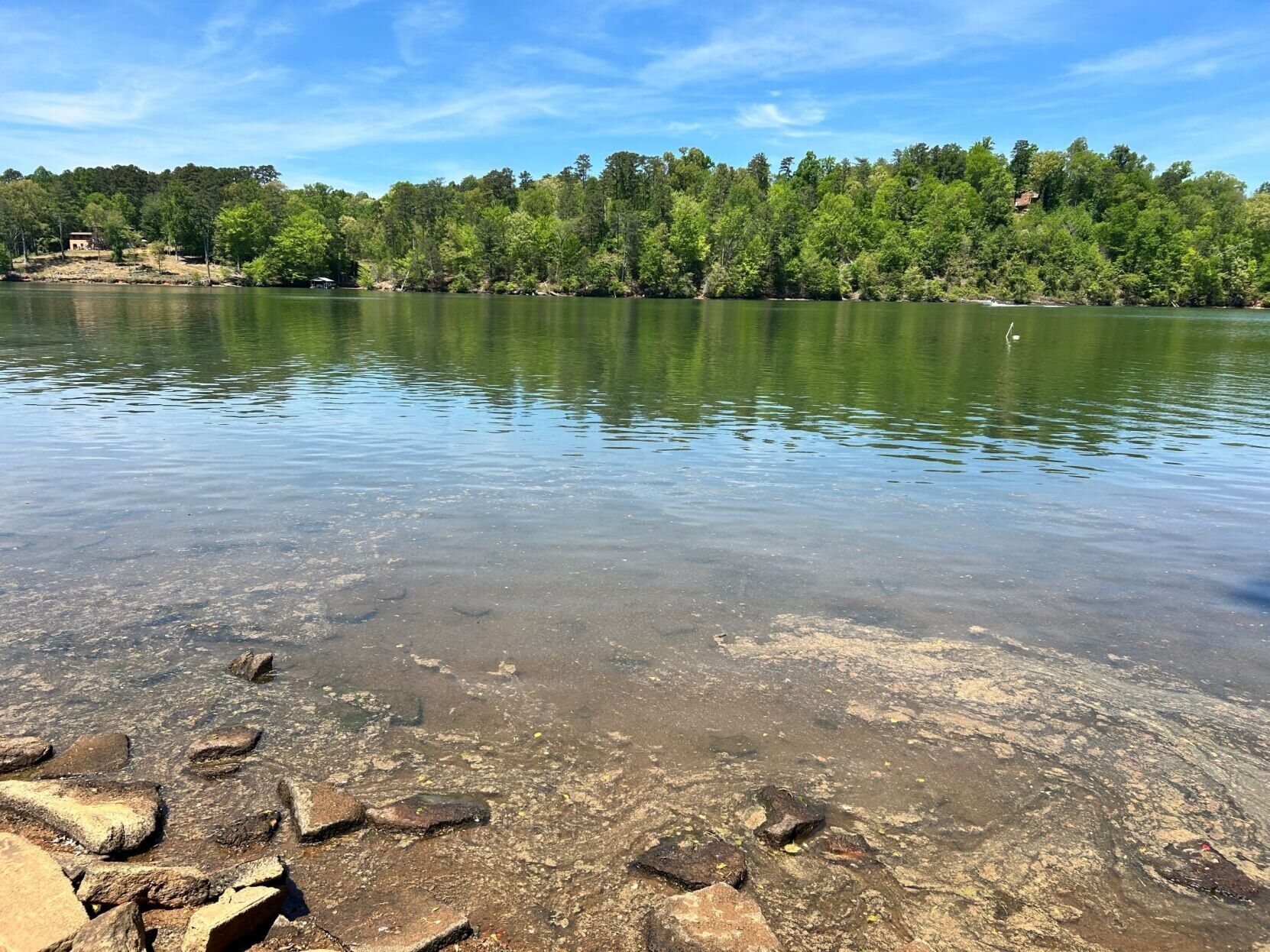
Lake Hickory on April 15, 2026. According to a Duke Energy website about lake levels, Lake Hickory is within maximum and minimum levels but below its target elevation.
Drought conditions
According to the U.S. Drought Monitor, all counties in North Carolina are experiencing some drought. Catawba, Burke, Caldwell, McDowell and parts of Iredell and Alexander counties are experiencing category 2 severe drought conditions as of April 15. Parts of Iredell and Alexander counties are experiencing category 3 extreme drought conditions.
The area has experienced moderate drought conditions since mid-December 2025, according to the drought monitor.
The drought monitor said that, during category 2 severe drought conditions in North Carolina, some crop yields may be low, boat ramps and swimming areas may close and voluntary or mandatory water restrictions may be put in place.
During category 3 extreme drought conditions, water conservation requests are more widespread.
The Iredell Water Corporation, which provides water to residents in Iredell County, issued a statement on Tuesday about mandatory outdoor water restrictions.
The statement said, for its customers, odd-numbered addresses may use water on lawns from 8 p.m. on Saturdays to 8 a.m. on Sundays. Even-numbered addresses may water lawns from 8 p.m. on Sundays to 8 a.m. on Mondays.
The statement said washing cars at residences, filling or refilling swimming pools and some other activities were prohibited while customers were under water restrictions. The statement asked customers to be efficient with water use and limit use as much as possible.
As of Wednesday, no water providers in Catawba, Burke or McDowell counties had issued voluntary or mandatory restrictions on water usage.
City of Hickory Senior Communications Specialist Sarah Killian said by email, "Based on a meeting earlier this week of the Catawba-Wateree Drought Management Advisory Group, we anticipate Duke Energy declaring Stage 1 of the Low Inflow Protocol on Thursday. If so, the City of Hickory will follow suit and issue a press release declaring Stage 1 on Friday morning. Stage 1 includes voluntary water conservation measures with the goal of reducing overall water use by 3-5%."
On April 1, Duke Energy asked customers to be mindful of water and energy usage.
“Dry weather conditions continue to persist. The community is asked to be mindful of its water use and consider conserving energy, which also saves water,” Duke said.
Lake Hickory, Lake James and Lake Rhodhiss were within normal operating levels on Wednesday but were below target levels, according to Duke Energy’s information about lake levels.
On Thursday, the Catawba-Wateree Drought Management Advisory Group announced that extremely dry weather conditions have placed the Catawba-Wateree River Basin in Stage 1 of the group’s Low Inflow Protocol. Voluntary water conservation is requested by all water users across the basin.
Warmer weather expected to continue
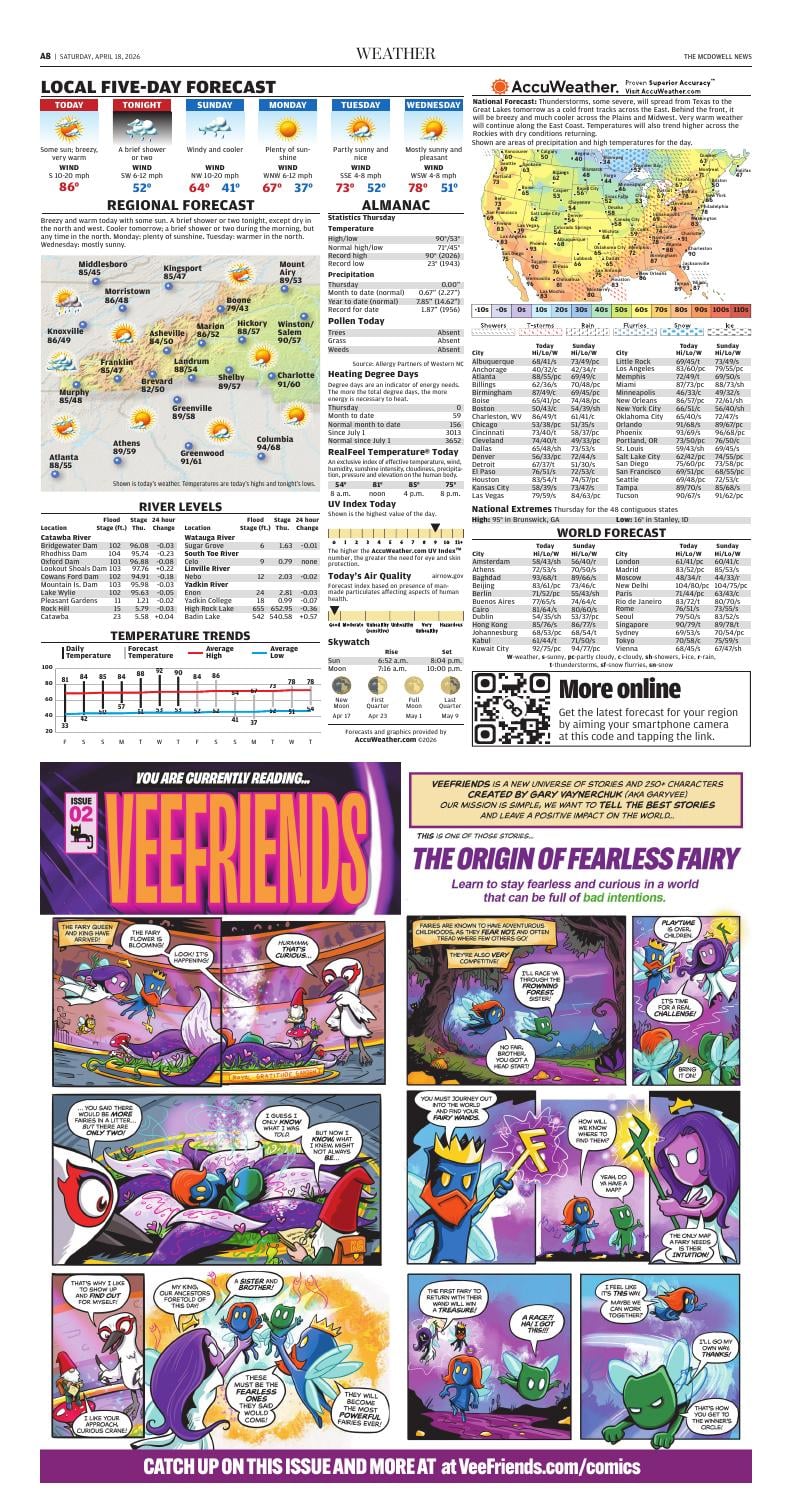
Slightly cooler temperatures are predicted to arrive next week, but Moore said the three-month outlook called for higher temperatures than normal April through June. Moore said the higher temperatures are partially due to less rain.
“From a climate perspective, when there’s less moisture in the soil, you get warmer temperatures,” Moore said.
High temperatures reported at Hickory Regional Airport were about nine degrees higher than average in March and about 10 degrees higher than average through mid-April.
A high temperature of 85 degrees at the airport on Tuesday, April 14, set a new record for the day.
With drier conditions and warmer temperatures predicted, Moore said fire danger was likely to continue over the next few months.
This year, the National Weather Service has issued multiple red flag warnings for the area. A red flag warning is issued when there is a chance of high wind, low humidity and dry, warm-weather conditions.
Moore said fires could be especially dangerous this year due to trees that fell when the remnants of Hurricane Helene moved through the area in September 2024.
“There’s all this extra fuel,” Moore said. “So long as we have this drought situation, there’s extra danger.”
The North Carolina State Climate Office predicts that fire danger will remain high for the next week. The office predicts fire danger for a week at a time.
A statewide burn ban was issued by the N.C. Forest Service on March 28. Since then, according to a social media post from the state forest service on Tuesday, 554 wildfires have burned more than 2,200 acres across the state.
“With drought severity across the state, forecast fire weather and the potential for limited rainfall, it is critical to reduce the number of new fire starts,” Agriculture Commissioner Steve Troxler said in a press release about the burn ban. “Vegetative fuels will dry rapidly, and with the amount of fuel loading in the mountains and drought impacts statewide, a burn ban for all 100 counties is necessary to reduce the number of wildfires across our landscape. Please follow this burn ban to help reduce the risk for everyone.”
Billy Chapman is a reporter with the Hickory Daily Record.