
Leading ladies
Meet the 11 trailblazers inducted this year into Women's Hall of Fame

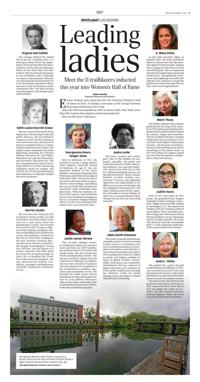
The National Women's Hall of Fame is housed in a former mill across the river and street from the Women's Rights National Historical Park in Seneca Falls, N.Y.
SPOTLIGHT| US HISTORY
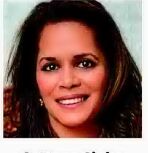
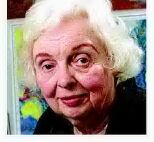
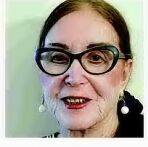
Eleven women were inducted into the National Women's Hall of Fame on Sept. 24 during a ceremony at the George Eastman Museum in Rochester, New York.
Since the Hall was founded in 1969 in Seneca Falls, New York, more than 300 women who shaped society were inducted.
Here are this year's inductees:
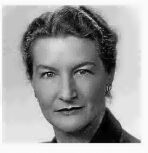
Virginia Hall Goillot
The Gestapo dubbed this World War II spy the "Limping Lady," as a hunting accident led to the amputation of her left leg below the knee. In France, she became an ambulance driver on the front lines and later worked with the French Resistance to run clandestine cells, eventually serving as a radio operator. After the war, she joined the newly formed CIA as its first female operations officer and one of only six women in senior clandestine roles. She later became one of the agency's first female career staff members.
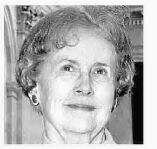
Edith Louise Starrett Green
She was a teacher during the Great Depression, later turning to radio and public advocacy. She was elected to Congress in 1954, the first woman to win a seat on her own, and served 10 terms as a member of the U.S. House of Representatives from Oregon. She helped author landmark education legislation, including the National Defense Education Act, the Higher Education Act and the Elementary and Secondary Education Act. She also championed the Equal Pay for Equal Work Act of 1963, advancing workplace equity for women, and Title IX, the 1972 law prohibiting sex discrimination in federally funded education programs.
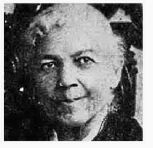
Harriet Jacobs
She was born into slavery in 1813 in Edenton, North Carolina. In a bid for freedom, she hid for almost seven years in a crawl space above her grandmother's home. She escaped to the north in 1842, living as a fugitive while working, raising her children and building ties in abolitionist circles. She published "Incidents in the Life of a Slave Girl," making her the first formerly enslaved African American woman to publish a full-length autobiography. During the Civil War, she was known as a tireless advocate and relief agent for those who escaped bondage. In 1864, she co-founded the Jacobs Free School with her daughter. She also advocated for humane conditions, managed boardinghouses and built a multiracial community of care.
Georgeanna Emory Seegar Jones
Born in Baltimore in 1912, she trained at Goucher College and the Johns Hopkins University School of Medicine. By age 27, she was appointed director of the Johns Hopkins Laboratory of Reproductive Physiology and led the Gynecological Endocrine Clinic. She became one of the nation's first specialists in reproductive endocrinology, identifying key causes of infertility and effective treatments while mentoring other physicians. With her husband, Dr. Howard W. Jones Jr., she founded the first in vitro fertilization program in the U.S. at Eastern Virginia Medical School. In 1981, their work led to the nation's first successful IVF birth.
Jackie Joyner-Kersee
This six-time Olympic medalist redefined excellence in women's track and field; her 1988 heptathlon world record of 7,291 points still stands today. She also earned four World Championship medals. She earned a bachelor's degree from the University of California, Los Angeles, and has been awarded 11 honorary doctorate degrees in recognition of her contributions to athletics, education and community service. She founded the Jackie Joyner-Kersee Foundation in 1988 in her hometown, East St. Louis, Illinois, which provides youth, adults and families with transformative educational, athletic, leadership and health programs.
Audre Lorde
This poet, essayist and activist gave voice to the realities of race, gender, sexuality and power and confronted injustice while celebrating resilience, love and self-definition. Born in New York City in 1934 to Caribbean immigrant parents, she described herself as "Black, lesbian, feminist, socialist, mother, warrior, poet." In essays, she challenged oppression and urged people to see difference as a source of strength. She also engaged in movements for civil rights, feminism and LGBTQ+ equality, and taught at several colleges. In 1980, she co-founded Kitchen Table: Women of Color Press for voices long excluded.
Adele Smith Simmons
This leader in global philanthropy and public policy was the first woman to lead a major U.S. foundation. She rose to national prominence as president of the John D. and Catherine T. MacArthur Foundation from 1989 to 1999, guiding more than $1.5 billion in grants and helping redefine its focus on global security, sustainability and human and community development. She was a pioneer in higher education and continues to foster global collaboration through her Simmons Center for Global Chicago and as president of Global Philanthropy Partnership.
S. Mona Sinha
As the chief executive officer of Equality Now, she leads worldwide efforts to reform laws that discriminate against women and girls, helping drive changes to more than 135 laws around the globe. She has supported more than 90 organizations advancing social justice, strengthening movements and amplifying voices often left unheard. She continues to shape the global conversation through advisory roles with several organizations.
Marie Tharp
She and her colleague Bruce Heezen published the first map of the Atlantic in 1957 and her painstaking handdrawn work revealed a seafloor shaped by canyons, ridges and mountains. The two published the first complete world map of the ocean floors in 1977 and their work helped confirm plate tectonics. The discovery revolutionized our understanding of how almost everything on the planet works. In 1997, the Library of Congress named her one of the four greatest cartographers of the 20th century.
Judith Viorst
Born in 1931 and raised in New Jersey, she graduated from Rutgers University before moving to Greenwich Village and eventually settling in Washington, D.C. She raised three children with her husband, political writer Milton Viorst, and built a prolific writing career. Best known for her beloved children's classic "Alexander and the Terrible, Horrible, No Good, Very Bad Day," she built a remarkable body of work spanning nonfiction, fiction, poetry and musical theater.
Janet L. Yellen
She guided the nation through complex financial challenges as Treasury secretary from 2021 to 2025, and also previously served as chair of the Federal Reserve and chair of the White House Council of Economic Advisers — the only person to lead all three.She graduated from Brown University in 1967, earned her Ph.D. from Yale in 1971 and began her career in academia. She also received numerous honorary degrees. Today, she serves on various boards and associations.