
Review could lead to changes
Abortion pill report due in March; 3 GOP states take new tack

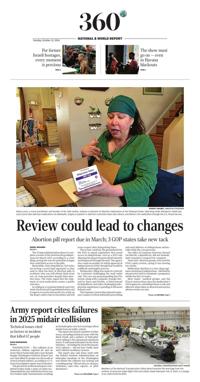
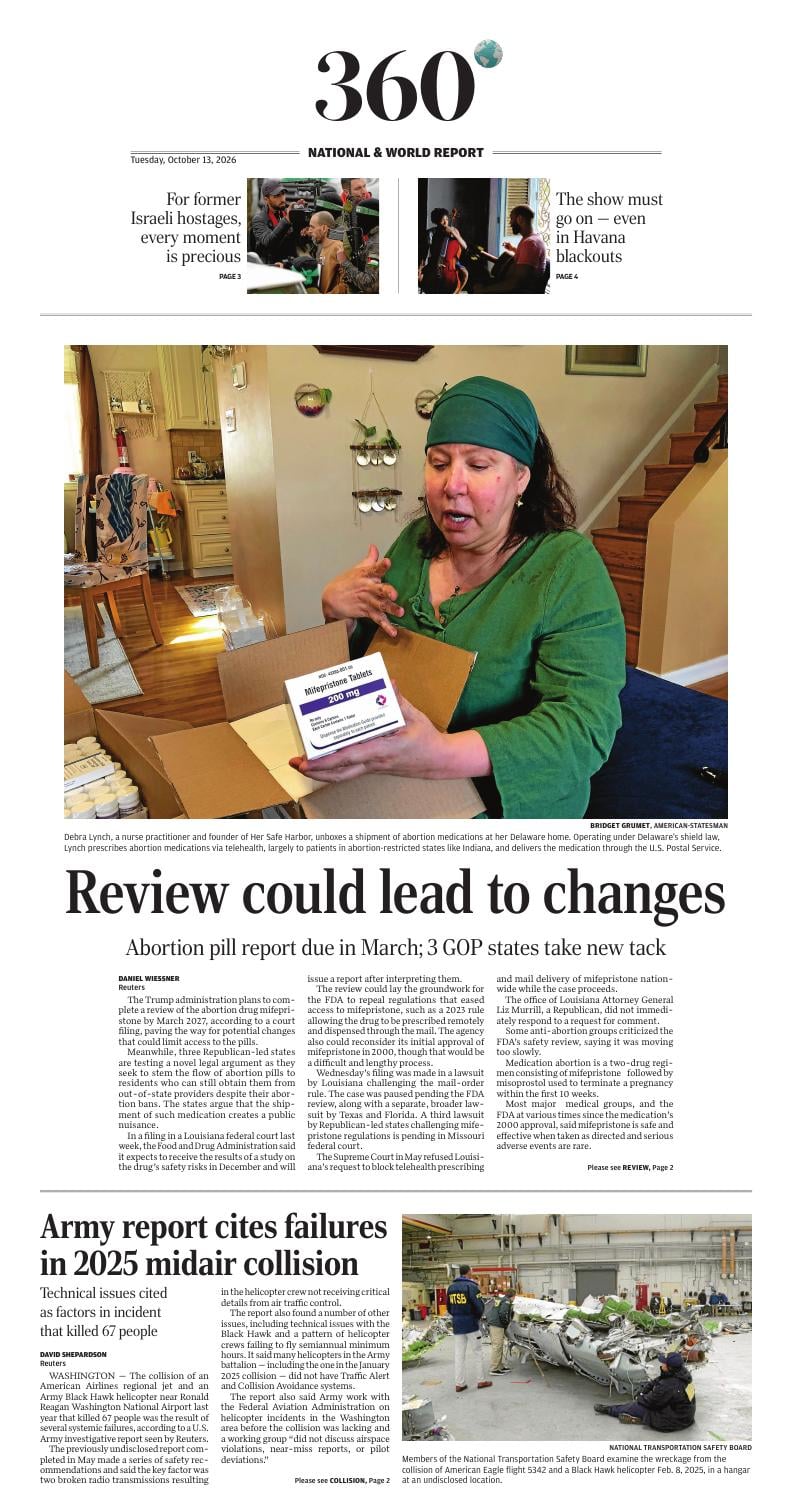
Debra Lynch, a nurse practitioner and founder of Her Safe Harbor, unboxes a shipment of abortion medications at her Delaware home. Operating under Delaware's shield law, Lynch prescribes abortion medications via telehealth, largely to patients in abortion-estricted states like Indiana, and delivers the medication through the U.S. Postal Service.

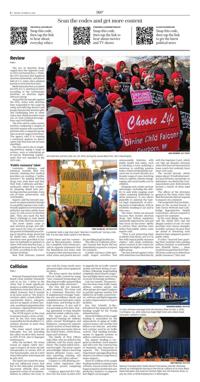
Anti-abortion activists rally Jan. 24, 2025, during the annual March for Life in Washington.

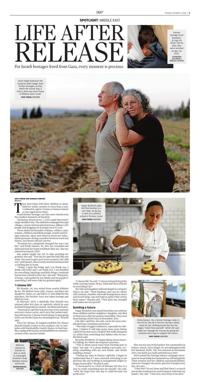
A protester holds a sign that reads "abortion is healthcare" during a rally Feb. 9 at the Iowa State Capitol in Des Moines.
The Trump administration plans to complete a review of the abortion drug mifepristone by March 2027, according to a court filing, paving the way for potential changes that could limit access to the pills.
Meanwhile, three Republican-led states are testing a novel legal argument as they seek to stem the flow of abortion pills to residents who can still obtain them from out-of-state providers despite their abortion bans. The states argue that the shipment of such medication creates a public nuisance.
In a filing in a Louisiana federal court last week, the Food and Drug Administration said it expects to receive the results of a study on the drug's safety risks in December and will issue a report after interpreting them. The review could lay the groundwork for the FDA to repeal regulations that eased access to mifepristone, such as a 2023 rule allowing the drug to be prescribed remotely and dispensed through the mail. The agency also could reconsider its initial approval of mifepristone in 2000, though that would be a difficult and lengthy process.
Wednesday's filing was made in a lawsuit by Louisiana challenging the mail-order rule. The case was paused pending the FDA review, along with a separate, broader lawsuit by Texas and Florida. A third lawsuit by Republican-led states challenging mifepristone regulations is pending in Missouri federal court.
The Supreme Court in May refused Louisiana's request to block telehealth prescribing and mail delivery of mifepristone nationwide while the case proceeds.
The office of Louisiana Attorney General Liz Murrill, a Republican, did not immediately respond to a request for comment.
Some anti-abortion groups criticized the FDA's safety review, saying it was moving too slowly.
Medication abortion is a two-drug regimen consisting o f mifepristone followed by misoprostol used to terminate a pregnancy within the first 10 weeks.
Most major medical groups, and the FDA at various times since the medication's 2000 approval, said mifepristone is safe and effective when taken as directed and serious adverse events are rare.
The use of abortion drugs surged since the Supreme Court in 2022 overturned Roe v. Wade, the 1973 decision that legalized abortion nationwide, and almost half of U.S. states since adopted partial or total abortion bans.
Medication abortion accounted for 65% of U.S. abortions in 2023, according to the Guttmacher Institute, an abortion rights advocacy group.
Along with the lawsuits against the FDA, states with abortion bans responded to the surge by suing and indicting doctors and groups that provide abortion pills and challenging laws in other states that shield providers from out-of-state criminal investigations and civil liability.
The FDA said its safety review involves comparing a sample of 100,000 women who used mifepristone with a comparator group who received surgical abortions. The agency said it is running a statistical analysis to detect safety risks that have not yet been identified.
The FDA said it also is weighing petitions urging a range of actions, such as reinstating an in-person dispensing requirement that was repealed in the 2023 rule.
'Public nuisance' label
Louisiana, Alabama and Arkansas recently filed two lawsuits claiming that medical providers are creating a "public nuisance" by mailing abortion drugs over state lines and that New York, California and Massachusetts aided that conduct by adopting shield laws protecting abortion providers from out-of-state prosecution and civil liability.
Experts said the lawsuits represent an unprecedented attempt to use public nuisance law, traditionally applied in environmental pollution and other public harm cases, to curb access to abortion pills. They also mark the first direct challenge to state shield laws by states that ban abortion.
The novel claims come as anti-abortion groups and offcials search for ways to combat the growth of telehealth prescribing of abortion drugs protected by shield laws. About 91,000 abortions were provided in last year via telehealth to patients in states with total abortion bans, a significant increase from 74,000 in 2024, according to the Guttmacher Institute.
New York Attorney General Letitia James and her counterpart in Massachusetts, Andrea Joy Campbell, both Democrats, said in separate statements that the Republican-led states seek to impose their abortion bans on other states and punish doctors for providing legal healthcare. The offce of California Attorney General Rob Bonta did not immediately respond to a request for comment.
A public nuisance claim generally targets activities that unreasonably interfere with public health and safety, such as blocking a road, polluting a waterway or emitting noxious fumes. States invoked public nuisance law in recent decades in a broader range of cases involving tobacco, opioids, climate change, vaping and social media use by children.
Bringing such a claim can have advantages, including the ability to seek wide-ranging court orders requiring defendants to abate nuisances. It also allows plaintiffs to sidestep the typical legal requirement of proving harm to individuals, both to establish standing to sue and to win cases.
The states' claims are unusual because they involve abortion drugs that federal regulators repeatedly approved for sale and they focus on the states' ability to enforce their abortion bans rather than public safety, some experts said.
"That is not protecting their residents from harm, nor is it in line with typical public nuisance claims," said Linda Goldstein, senior counsel at the Center for Reproductive Rights, an abortion rights group.
The new lawsuit against states with shield laws was filed directly with the Supreme Court, which can take up disputes between states that have not been heard in lower courts but routinely turns away such cases.
The second lawsuit, which names almost 30 individual medical practitioners and groups as defendants, was filed in the Louisiana federal court. Both lawsuits include a variety of other legal claims.
The offces of the attorneys general in the three states that filed the lawsuits did not respond to requests for comment.
Two nonprofits that are defendants in the second lawsuit, A Safe Choice Network and Cambridge Reproductive Health Consultants, did not respond to requests for comment.
In the court filings, the states said the shield laws and the alleged conduct of out-of-state providers were classic examples of public nuisance because they are aimed at thwarting state abortion bans adopted to protect public safety.
If states "enacted laws goading their residents into sending anthrax, fentanyl, or mail bombs into Plaintiff States … there would be no question that Plaintiff States could sue to abate those public nuisances," they said.