

Securing the southern skies
Army tests technology to counter drones near US border with Mexico

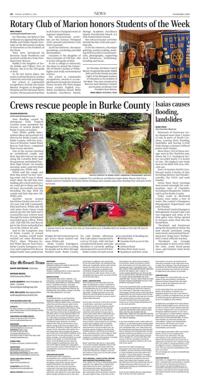
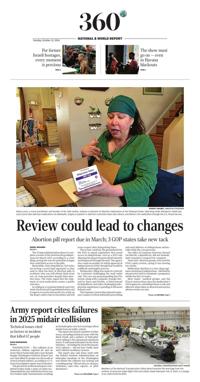
A member of the U.S. military carries an Snduril Ghost-X drone sept. 24 at the Yuma Proving Grounds near Yuma, Ariz.

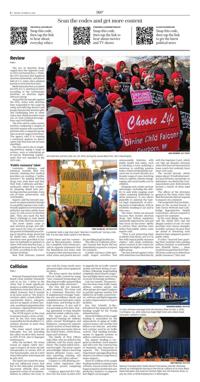
Curtis Taylor, commander of the Joint Task Force-southern border, holds a captured drone sept. 24 as he speaks during Falcon Peak at the Yuma Proving Grounds in Arizona.

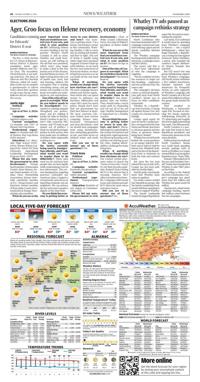
U.S. soldiers from the Joint Task Force-southern border prepare to launch a surveillance drone sept. 23 along the border wall with Mexico near Yuma, Ariz.

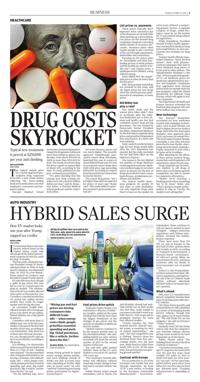
Above: The U.S. Northern command fly-away kit, consisting of sensors and effectors to track drones, is seen sept. 24 during Falcon Peak, an exercise to test anti-drone technology, near Yuma, Ariz.

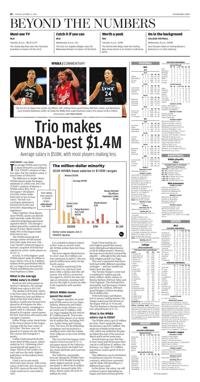
Right: Harmattan AI launches an Gobi interceptor drone, designed for rapid interception of hostile drones, on sept. 22 near Yuma, Ariz.

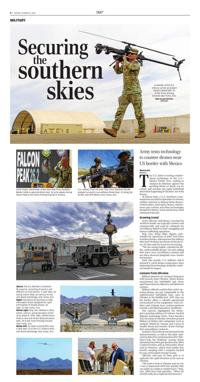
Below left: an Opterra drone flies near a tank sept. 22 as the U.S. military tests anti-drone technology near Yuma, Ariz.

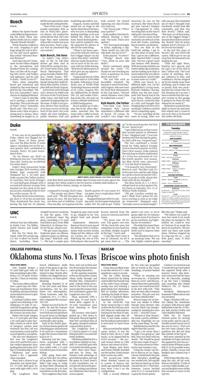
Below right: brig. Gen. Mathew s. ross, center, and U.S. acting secretary of the army Adam R. Telle, right, attend Falcon Peak to view anti-drone demonstrations sept. 24 at the Yuma Proving Grounds near Yuma, Ariz.
MILITARY
The U.S. Army is testing counter drone technology in the U.S. Mexico border area, seeking to sharpen its defenses against the growing threat of drone use by cartels and emulate the rapid battlefield innovation happening in Ukraine's war with Russia.
At Falcon Peak, a U.S. Northern Command exercise held in September in Arizona, soldiers watched as defense firms demonstrated radars, interceptor drones, autonomous gun systems and other technologies designed to detect, track and destroy small unmanned aircraft.
Growing trend
Army officials said drones crossing the southern border are typically systems sold commercially and used by criminals for surveillance linked to their smuggling and human trafficking operations.
Brig. Gen. Brian Filler, deputy commander for operations at Joint Task Force Southern Border, told reporters the military detected 378 drone incursions in the previous 30 days and the trend was increasing.
"We are seeing largely commercial off the-shelf available drones," he said, adding that most carry surveillance cameras and are often observed alongside cross-border movements.
Early this month, U.S. military said it downed 11 cartel drones using lasers since deploying the technology along the southern border in August.
Lessons from Ukraine
Military planners are racing to keep pace with lessons from Ukraine, where drones transformed the battlefield and drove rapid innovation in offensive and defensive systems.
Military officials caution that cartel-operated drones are not comparable to the sophisticated battlefield ones seen in Ukraine or the Middle East. Still, they say the border offers a valuable operational environment to test equipment, train soldiers and evaluate how systems perform outside controlled laboratory conditions.
The exercise highlighted the Pentagon's growing embrace of venture-backed defense technology firms. Since Russia's 2022 invasion of Ukraine, investors poured billions of dollars into companies such as Anduril, Shield AI, Saronic and a wave of smaller drone and counter-drone startups that seek military contracts.
Anduril's Ghost drone was featured in the demonstrations, as well as the radar-andcamera detection system produced by Teledyne FLIR, the "Bullfrog" counter-drone automated machine gun produced by Allen Control Systems and an interceptor drone sold by Powerus, which w ent public this month, merging with a company backed by sons of President Donald Trump.
Officials said part of their goal is to replicate the rapid iteration cycle seen in Ukraine.
"We tend to look at Ukraine and we say, 'I am so impressed with how quickly they can adapt on a daily or weekly basis,'" Brig. Gen. Matt Ross told reporters. "What we should really do is replicate that process."