
Entrepreneurs' dilemma
US sanctions, policies hurt island businesses they aimed to assist
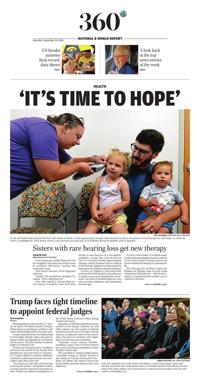
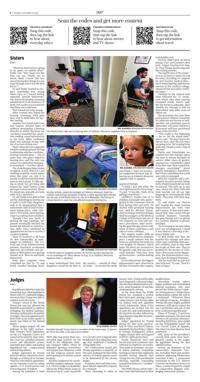
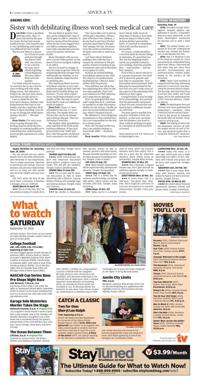
Deshidratados Habana sells packages of dried fruit in Havana's Miramar neighborhood.Company officials would like to sell to trader Joe's and Whole Foods in the U.S. someday.
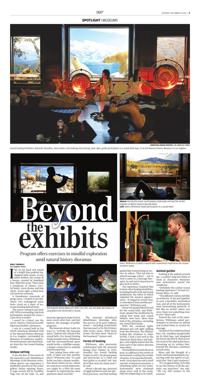
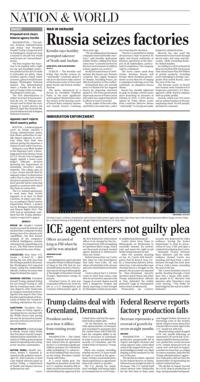
Oscar Fernández, owner and chief executive of Deshidratados Habana, stands in front of a former pizza oven he converted to an early dehydrator.
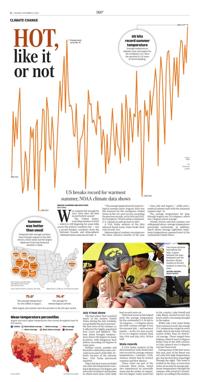
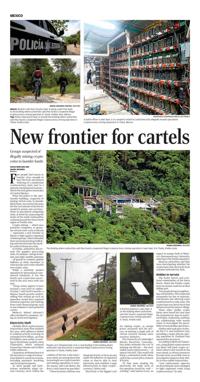
Residents stroll past a Deshidratados Habana storefront in Havana's Miramar neighborhood, which sells packages of dried fruits.
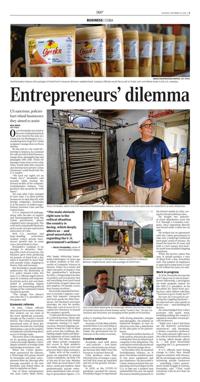
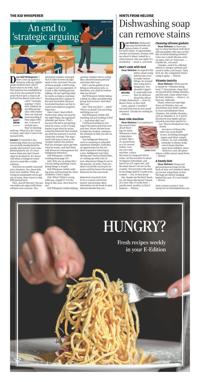
Juan Carlos Blaín Noste grew his hamburger delivery service into a chain of market/restaurants around Havana named "Juanky's pan." He says U.S. sanctions and restrictions are strangling further growth of his business.
BUSINESS| CUBA
Oscar Fernández marveled at the rows of dehydrated fruit as he stood in the aisle at a Trader Joe's in Washington, D.C., wondering how to get his Cuban company's mango slices on those shelves.
By the end of a six-week fellowship to America, he crammed his suitcase full of dried bananas, mango slices, pineapple rings and pineapple with chili. Those 60 packages from stores across nine cities would help him research and develop how private Cuban businesses could break into the U.S. market.
"We have our sights set on Trader Joe's," Fernández said recently while touring the Havana facility of his company, Deshidratados Habana. "Our products line up perfectly with theirs."
Yet even after Cuba changed its laws Sept. 2 to allow private businesses to deal directly with foreign companies, Fernández is at the mercy of stalled negotiations between Cuba and the United States.
A U.S.-imposed oil embargo, along with decades of neglect and mismanagement from the Cuban government, almost crippled Cuba's energy grid. The crisis led to islandwide blackouts and scarcity of water and food in many parts of Cuba.
New U.S. sanctions and long-standing restrictions stunted Cuba's private businesses' growth and, in some cases, forced them to close.
Fernández's company is no stranger to obstacles: Dealing with a lack of resources, his business grew from producing 60 pounds of dried fruit a day when it launched to more than 660 pounds today, shipping to France, Italy and Germany.
But Fernández's predicament underscores the dichotomy of U.S. policy toward Cuba: For years, U.S. officials urged Cuba to open its economy and empower its private sector, but sanctions aimed at punishing regime leaders and fomenting political change on the communist island stunted its growth.
"The mango tree doesn't care who the U.S. president is," Fernández said.
Economic reforms
In June, Cuban officials announced 176 economic reforms that analysts say are some of the most significant economic changes in the country's recent history. The Cuban government announced some of those key measures became law, including eliminating a cap on the number of employees and allowing direct access to foreign trade.
The moves show Cuba depends on its growing private sector, Carlos Luis Jorge Méndez, Cuba's deputy minister of foreign trade and foreign investment, said.
When the Cuban government announced the reforms, a WhatsApp chat group shared by Fernández and other entrepreneurs blew up: Message after message marveled at the new freedoms and shared ideas on how to capitalize on them.
One of those entrepreneurs was Juan Carlos Blaín Noste, who began delivering homemade hamburgers 14 years ago to fellow students at the University of Computer Sciences in Havana. Today, he is owner and chief executive of Juanky's Pan (his grandmother's nickname for him), a burgeoning franchise of markets and restaurants that sell everything from fresh bread to $45 bottles of aged Cuban rum and employs 118 people across four Havana locations.
He recently expanded his business to include a logistics company that imports, transports and stores goods for other businesses, but blackouts and water shortages ate into his profits, Blaín said. Lack of access to U.S. capital also threatens to muzzle his company's growth.
"Cuban private businesses are at a critical juncture," Blaín said.
After sanctions in July, foreign companies, fearing U.S. repercussions, diverted shipping containers bound for Cuba to other ports across the Caribbean, disrupting supply chains and delaying shipments of food, medicine and other vital items, Méndez said. Many private companies lost access to their products for weeks, driving up costs and prices for their Cuban customers.
Today, 40% of the country's goods are imported by private Cuban companies, up from 17% at the end of last year, Méndez said. There are more than 11,300 micro, small and medium-sized predominantly private enterprises operating in Cuba, according to government figures. U.S. policy is stunting that momentum, he said.
Secretary of State Marco Rubio insisted there is no such thing as private enterprise in Cuba and claims the government has its tentacles in the entire economy.
Creative solutions
Fernández read with alarm — and curiosity — how farms across Cuba tossed acres of mangos because they didn't have the resources to harvest them all.
Cuba produces more than 440,000 tons of mangos a year, but half that many go unpicked and rot on the ground, Fernández said.
In 2020, as the COVID-19 pandemic canceled his classes, Fernández began to experiment with drying plantains, mangos and pineapples. He enlisted an industrial designer to turn an old pizza oven into a dehydrator in the side patio of his parents' house.
He burned countless batches of fruit until he attached discarded cooling fans from an old personal computer to the dehydrator. The contraption eventually produced chewy, flavorful mango slices.
In December 2021, he launched Deshidratados Habana. As it grew, Fernández needed money to buy more equipment and pay employees. He persuaded a Cuban-American friend who was pursuing a doctoral degree in the U.S. to take out a student loan and lend him the cash. He repaid the loan in monthly payments to the friend's family in Cuba, saving his friend remittance fees.
He bought two industrial-sized dehydrators from the U.S. through a Canadian company, since importing directly was barred under Cuban law, he said.
He worked out an agreement with the Cuban government to take over a bankrupt medicinal herb plant south of Havana. He leased the land for 20 years and built a 1,100-square-foot facility made from modified shipping containers.
When the factory opens this year, it should produce 5 tons of dried fruit a day, Fernández said. The number of employees is expected to jump from 21 now to 250 within two years, he said.
Work in progress
In 2024, Fernández became the first Cuban ever to win an Eisenhower Fellowship, a prestigious six-week program named for the 34th U.S. president. As he described his dried-fruit production, other fellows told him, "You have to go to Trader Joe's!"
For now, he is focused on surviving the crippling blackouts — he expected new solar panels to arrive soon — and finishing his factory.
He acknowledged that Cuba's economy still needs work, including making the country's regulators friendlier toward private businesses.
"Right now, I don't feel there are any domestic restrictions whatsoever," said Fernández, a former economics professor. "The main obstacle right now is the critical situation the country is facing, which deeply affects us — and great uncertainty regarding the U.S. government's actions."
If U.S. officials want lasting change in Cuba, they should improve relations with Havana, lift the oil embargo and continue bolstering private businesses — something Cuba's government would struggle to contain, Fernández said. "That could transform Cuba in less than six months."
"The main obstacle right now is the critical situation the country is facing, which deeply affects us — and great uncertainty regarding the U.S. government's actions."
— Oscar Fernández, owner of deshidratados Habana