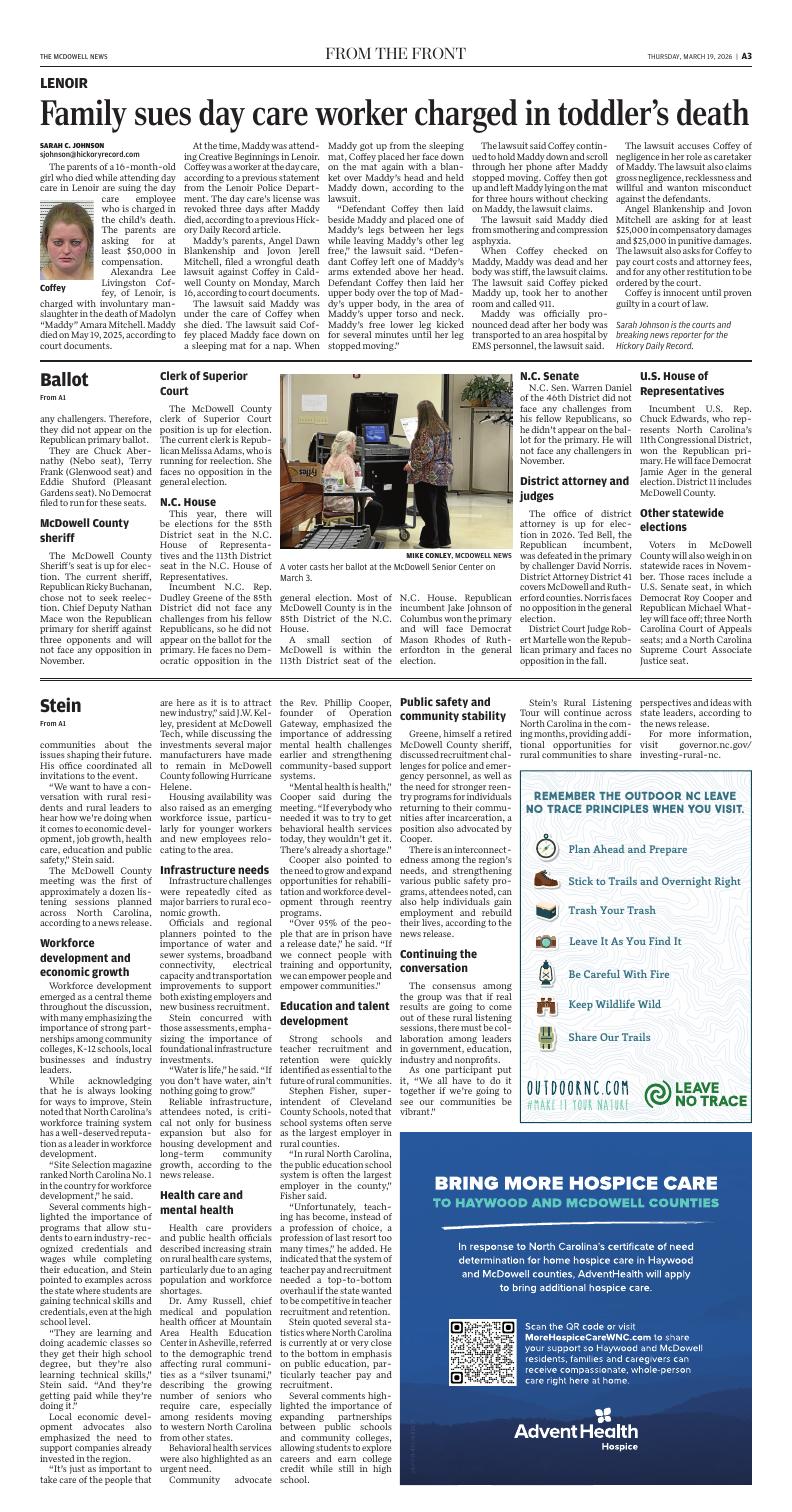


'What happened here changed the world'
Marker honors Woolworth's protests in Statesville; participant remembers experience
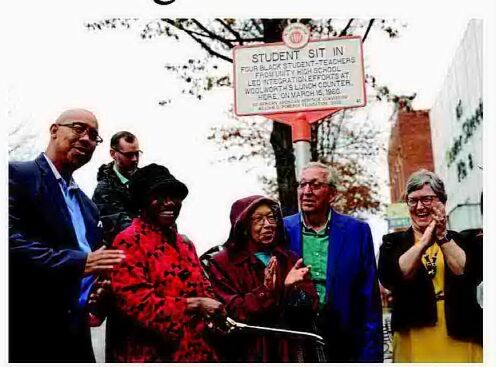
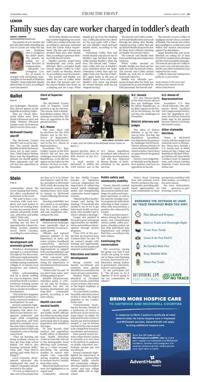
From left, Andre Nabors, Dorothy Woodard, Sandra Houston Hunt, Steve Hill and Cindy Sutton stand in front of the sign designating the former Woolworth's department store site as a stop on the N.C. Civil Rights Trail after cutting a ribbon in front of the sign.
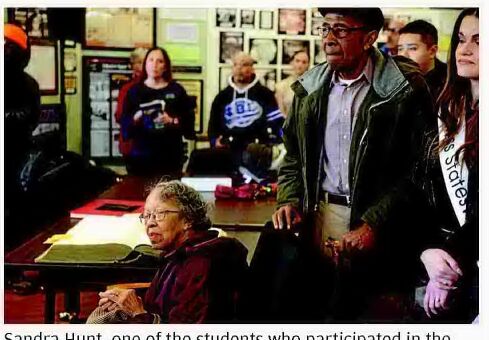
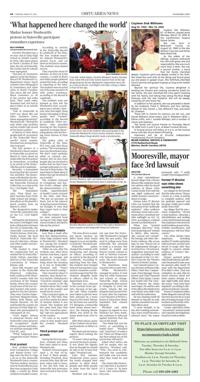
Sandra Hunt, one of the students who participated in the Statesville Woolworth's lunch counter protests, listens as Statesville Mayor Doug Hendrix reads a proclamation.
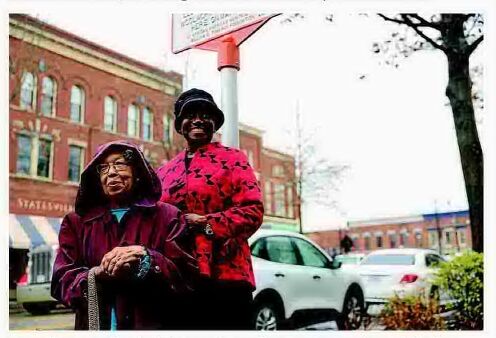
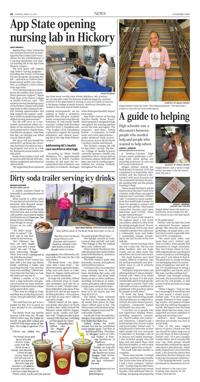
Dorothy Woodard, right, and Sandra Hunt stand outside the former Woolworth's department store in Statesville on Feb. 26.
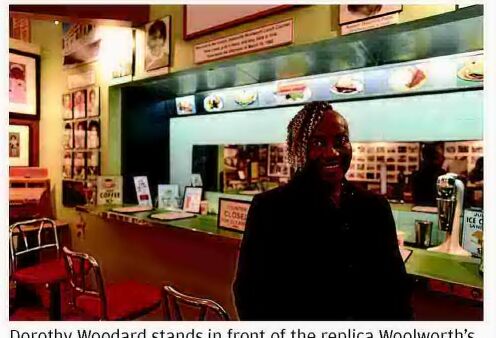
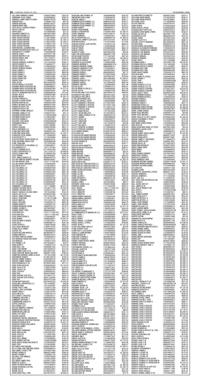
Dorothy Woodard stands in front of the replica Woolworth's lunch counter at the Statesville Historical Collection.
Dorothy Woodard was a 14-year-old at Unity High School in Iredell County in 1960. Like many places in North Carolina at that time, the city of Statesville, the county and its schools were segregated.
That year, sit-in protests against racial discrimination at F.W. Woolworth Co. department stores' lunch counters were taking place in Greensboro and other cities in North Carolina. The stores did not allow Black customers to sit at the counter and order food. They could order, Woodard said, but had to place orders at an outside window.
"Life in Statesville in 1960 was about like any other Southern town, where segregation existed," Woodard said. "We had the only white-only facilities and we couldn't get served at the lunch counter."
In March of 1960, Black people held sit-in protests at the Statesville Woolworth's lunch counter. Woodard was among those who took part.
The first protest at a Woolworth's lunch counter in Statesville occurred on March 15, 1960, about six weeks after the first protest in Greensboro, according to an article in the Statesville Record & Landmark.
Recently, a monument honoring that first protest was unveiled. The monument will identify the former Woolworth's site, now the Statesville Historical Collection, as a stop on the N.C. Civil Rights Trail.
The monument said, "Four Black student-teachers from Unity High School led integration efforts at Woolworth's lunch counter, here, on March 15, 1960."
The designation makes Statesville a potential stop on the U.S. Civil Rights Trail.
Getting the site listed on the state's Civil Rights Trail took collaboration between the city of Statesville, the Statesville Convention & Visitors Bureau, State Sen. Vickie Sawyer, the local NAACP, Statesville Historical Collection, citizens and other public and private groups.
"We needed to show the commission that we wanted this in Statesville," Cindy Sutton, executive director of the Statesville Convention & Visitors Bureau, said.
Steve Hill, founder and curator of the Statesville Historical Collection, built a replica of the Woolworth's counter with the assistance of the Stamey family. Above the counter are pictures of the four student teachers who participated in the first protest. They were Charles Napoleon Hart, Margaret Glenn, Shirley Ruth Moten and Nannie Houston. On the wall beside the counter are pictures of Unity High students who participated in subsequent sit-ins.
"Civil Rights history is American history and Statesville's story deserves its recognition," Andre Nabors, partner and industry relations manager with Visit NC, said.
"What happened here changed the world," Nabors said.
First protest
Four student-teachers from Livingstone College and Barber-Scotia College were the first to stage a sit-in at the Statesville Woolworth lunch counter. The four student-teachers were in Statesville because they were assigned to Unity High, a school for Black students in Iredell County.
According to articles in the Statesville Record & Landmark at the time, the four student-teachers entered Woolworth's around 4 p.m. and sat down at the lunch counter. The students were denied service.
They stayed for about 45 minutes. As they sat at the counter, a crowd of Black and white people gathered around the store, according to reporting at the time. The students were escorted out of the store around 4:45 with police assistance, according to the Record & Landmark.
The students were not harmed as they left the Woolworth store, according to news articles. However, later that night, three homes belonging to Black people were "rocked," according to the Record & Landmark. Other residents, who provided housing for the students, reported receiving threatening phone calls and having rocks thrown at their homes.
The police chief of Statesville at the time, W.T. Ivey, said, after those actions, "We're not going to have any disturbance here. We don't want anybody, white or colored, mistreated. But we also want people who are involved to realize that we don't have enough policemen to station one at their homes. We want them to think about it before they get involved in any trouble."
The students returned to Livingstone and Barber-Scotia colleges after the demonstrations. C.G. Credle, superintendent of Iredell County Schools at the time, said then, "We put no pressure on them, but in the interest of good personal relations, we thought it wise that they report back to their colleges."
After the student-teachers were removed from serving at Unity High, high school students decided to take up the protest.
Follow-up protests
Less than a week after that first demonstration, Unity High students went to Woolworth's. Woodard was among the students who joined the protest.
"After we saw, after the students saw, what those teachers had done, I guess it gave us courage and inspiration to do something about the situation as it was in Statesville," Woodard said. "That's when we started coming."
They stayed for about 15 minutes, were denied service and left. Staff placed a "closed for cleaning" sign on the counter to let the students know they could not sit at the counter and would not be served.
They returned again on March 29. This time, they sat at the counter for about 10 minutes before it was closed. The students left but came back later that day. The "closed for cleaning" sign was again placed on the counter.
"As soon as we would come in they would close the counter," Woodard said.
Third protest and arrests
During the first two protests, students left when they were asked to leave, Woodard said.
Students returned again April 1. At that sit-in, at least 11 Black people, including Woodard, were arrested after they did not leave when told to leave. It was the first time in Statesville that protesters were arrested at one of the sit-ins.
"We were all very scared, you know, because we didn't know what would happen to us or our families or anybody," Woodard said.
Statesville police charged the students with trespassing and abusing an offcer, according to an article in the Record & Landmark. According to reporting from the time, the students were charged with not leaving their seats and for comments considered disrespectful that the students allegedly made to offcers called to the department store.
Woodard was released to the custody of her parents, because of her age, she said. Other students were taken to jail but were later released on a more than $2,000 bond. Money for the bond was raised by T.V. Mangum, a Statesville hotel owner whose business, the Evening Breeze Motel, was listed in the Green Book from 1959 to 1967.
After their release, many of the students faced fines and hundreds of dollars in bonds.
Woodard said she had no regrets about joining the protests.
"It wasn't about getting served at the lunch counter. It was about the dignity that we thought we should be able to do, to have that right," Woodard said.
Later that summer, Woolworth stores across the South changed their policies to allow Black people and white people to order from the lunch counter.
Woodard said she was not sure how the Statesville Woolworth's changed after the new policy. She went to college away from Statesville but returned to work as a teacher. She worked in Iredell and Rowan County schools as well as Newton-Conover City Schools for about 50 years. She never returned to Woolworth's.
The downtown store closed in 1982 or early 1983.
While Woolworth's changed its policy, it took time for other businesses and schools to change. Statesville High School was among the first schools to integrate in 1964 but county schools did not integrate until around 1969, 15 years after the Supreme Court decision of Brown v. Board of Education which mandated that schools integrate.
Woodard said while progress in regards to race relations has been made, she continues to advocate against injustice that she sees in the world.
"You think that was the 1960s, so everything is hunky-dory," Woodard said. "And it isn't. It really is not. There are things every day that remind you of the racism that still exists."
Asked what advice she had for people who see injustice, Woodard said, "Vote. You need to vote. Research the candidates and make sure you know what they stand for and vote."
The Statesville Historical Collection is located at 117 S. Center St. To learn more, visit statesvillehistory.com.