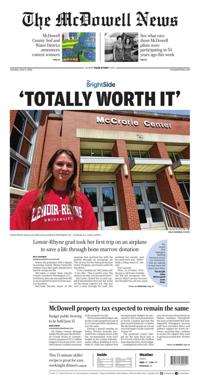

Lenoir-Rhyne grad took her first trip on an airplane to save a life through bone marrow donation

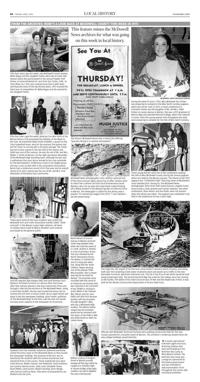
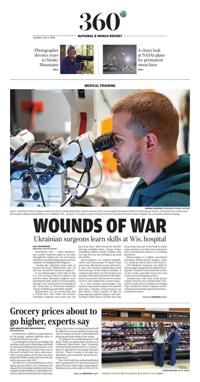
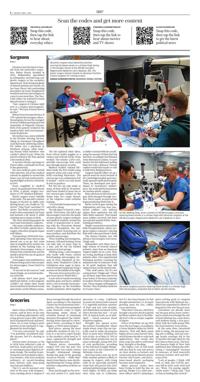
Lenoir-Rhyne senior Grace McCranie traveled to Washington, D.C., to donate to a cancer patient.
Before she graduated with a degree in nursing, Lenoir-Rhyne University student Grace McCranie already had a hand in saving one life.
McCranie, a senior from Lincoln County, traveled to Washington, D.C., in February after she was matched with a cancer patient in need of a bone marrow donation.
McCranie became aware of the program that matched her with the patient through an Instagram ad. The ad was for the National Marrow Donor Program, previously called Be the Match.
“I saw a random ad,” McCranie said. “I was like, ‘This is pretty cool. The chances are slim, but you never know.’”
McCranie clicked the ad and supplied information that put her name on the donor registry list. She was sent a swab through the mail. She swabbed her mouth, sent the swab back and, “didn’t think a thing about it,” she said.
Years passed.
Then, in October 2025, she got a call from a number she did not recognize. She almost didn't answer because she thought the call was spam.
“They were like, ‘You’ve matched with somebody,’” McCranie said. “I had no idea what that meant. I was just like, ‘Okay.’"
McCranie found out she matched with a woman who had myeloid leukemia.
McCranie does not know who the patient was or where the patient lives, only that the person lives somewhere in the United States. She said she may have the opportunity to find out the recipient’s identity in February 2027, if the woman agrees to share her identity.
She flew to Washington, D.C., to make a bone marrow donation. It was her first time on a plane, she said. Her expenses for the flight and stay were covered by the National Marrow Donor Program, she said. Once in Washington, she was taken to a facility where she donated blood that would be given to the leukemia patient.
McCranie said the donation process for her was not like what many people think of when they think of bone marrow donations. She donated by giving blood through a process called a peripheral blood stem cell donation, similar to the way someone would donate platelets or plasma at a blood donation center. It was painless, she said.
McCranie said she had to take shots to boost her blood stem cell count the day before. That made her feel like she had the flu. That was the worst she felt, she said.
“And to think in the long run, that’s all I had dealt with to give somebody stem cells, put them in remission,” McCranie said. “That’s totally worth it in my book.”
She donated and then, "I walked seven miles around D.C. the next day after I donated,” McCranie said.
Based on how easy it was and how beneficial she feels it is, McCranie encourages others to apply for the donor registry. She said the chances of people needing a transplant finding a match are slim. That is why she encourages others, especially people who are college-age, to consider donating.
“The impact is … (someone’s) going to go into remission because of a week of your time that you gave,” McCranie said. “I just, I love that. It’s the experience that’s going to stick with me for the rest of my life.”
Billy Chapman is a reporter with the Hickory Daily Record.