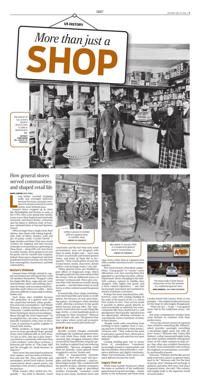

More than just a SHOP
How general stores served communities and shaped retail life
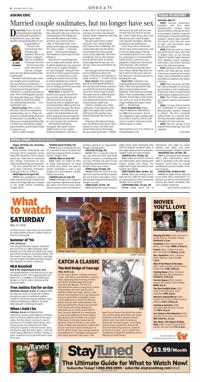
The shop inside Cracker Barrel restaurants carries the aesthetic of a traditional general store.
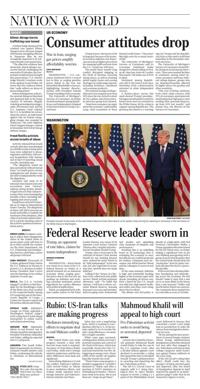
Men gather in January 1939 in a cooperative general store in transylvania, La.
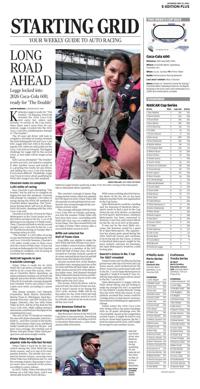
Coffee is ground in October 1939 at a general store in Lamoille, Iowa.
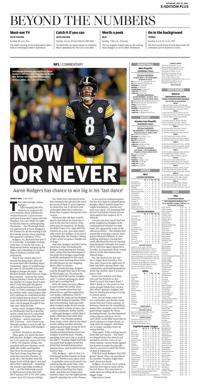
The interior of S.O. Grime's General Store is seen in 1895 in Westminster, Md.
US HISTORY
Long before crowded shopping malls and overnight deliveries became the norm, everyday commerce in America moved at a much slower, more intimate pace.
General stores cropped up in cities like Philadelphia and Boston as early as the 1770s, then soon spread into smaller towns across New England and eventually westward, said Nancy Koehn, a historian and the James E. Robison chair of business administration at Harvard Business School.
Often no larger than a single room, their shelves were lined with baking ingredients, bolts of fabric, tinware, nails and jars of penny candy. Cracker barrels — large wooden containers that once stored crackers for shipping and later became centerpieces of spontaneous gatherings in these shops — along with cast-iron stoves in colder months, drew people in not just for goods, but for warmth and company. Indeed, these spaces shaped not only how people purchased essentials, but also how they came together, shared news, and built communities.
Nation's lifeblood
General stores initially existed to supply rural Americans with goods they could not produce themselves. Shoppers came for staples like flour, sugar and salt; tools and hardware; fabric and clothing; kerosene for lamps; and occasional small luxuries like candy, tobacco or coffee — items otherwise difficult or impossible to obtain, Koehn said.
Such items were available because "the proprietor of a general store was the connection between urban production and rural consumption," said Wendy Woloson, a history professor at Rutgers University–Camden and the author of "In Hock: Pawning in America from Independence through the Great Depression." To accomplish this, she notes, storekeepers typically traveled to cities once or twice a year or quarterly to gather supplies to restock their shelves.
While residents in larger towns had access to more specialized shops, general stores were indispensable in rural areas. "As late as 1870, only one in four Americans lived in a community with more than 2,500 residents," notes Marc Levinson, a historian and author of "The Great A&P and the Struggle for Small Business in America."
These stores also functioned as informal town squares, and were hubs of information and civic life. They sold books and newspapers, posted local notices, hosted conversations about current events, and sometimes even served as polling places for elections.
While women often visited less frequently — due both to distance, travel constraints and the fact that early retail environments were not designed with them in mind, Koehn said — most men at least occasionally patronized general stores, and many of them did so frequently. "They would gather around the cracker barrel, smoke, share news, debate politics, and exchange stories," she said.
"Many general stores also doubled as post offices or stagecoach stops, which brought people into the store and provided the owners with an additional source of revenue," Levinson said. This is also a reason other early businesses usually sprang up nearby — and why Main Streets in small towns so often centered around the general store.
Economically, these shops sometimes even functioned like early banks or credit unions. For instance, in cash-poor farming regions, storekeepers often extended credit, allowing customers to buy goods before harvest and pay later. The "proprietor would often also accept things like eggs, butter, or even handmade goods in exchange for their inventory," Woloson said. In short, she said, "the general store was a place where social and economic networks were created and reinforced."
End of an era
Broader societal changes eventually challenged the traditional general store, but even when those shops were most essential, they struggled. Inventory often sat unsold for long stretches, tying up capital, leading to expired food and reducing profitability. "Because shopping could often be sporadic, many general stores struggled to survive," Koehn said.
Then, as transportation networks expanded — first with canals and turnpikes, and later with railroads — rural isolation began to fade. This, combined with the growth of cities, allowed consumers access to a wider range of specialized retailers. Eventually, "customers could shop at shoe stores, hardware stores and cigar stores rather than at a general store with a smaller selection of each," Levinson explains.
New retail formats intensified competition. "Cheap goods" or "variety" stores offered low-cost, fast-moving items that appealed to a growing consumer culture. Department stores, emerging in the mid19th century, catered to middle-class shoppers with higher-end goods and a more curated experience — one that increasingly welcomed and marketed to women as primary consumers.
Perhaps the most transformative shift, however, came with catalog retailing in the wake of the launch of the U.S. Parcel Post system in 1913. That service made it possible to deliver goods directly to rural households at relatively low costs.Companies like Sears, Roebuck & Co. and Montgomery Ward quickly capitalized on the opportunity, allowing customers to conveniently browse hundreds of items at their leisure.
"People could order everything from clothing to farm supplies from a catalog and have it delivered to their homes," Levinson said. "That reduced the need to patronize a general store, where prices were often higher and selection was more limited."
Catalog retailing gave way to newer forms of convenience. Consumers increasingly turned to supermarkets and big-box retailers, then eventually e-commerce platforms and digital storefronts, where vast inventories, lower prices and quick delivery became the norm.
Legacy lives on
While some modern businesses adopt the name or aesthetic of the traditional general store to tap into nostalgia — Koehn points to the restaurant and retail chain Cracker Barrel Old Country Store as one example — the original model and reasons for the shops to exist largely disappeared.
"There are few — if any — true general stores left in the traditional sense," she said.
But some contemporary retailers have some features in common with their predecessors.
"I'd say the current version of a general store would be something like Walmart, which provides seemingly everything a household might need, but with far more choice," Woloson said. Chains like Walmart, Dollar General and Family Dollar also share another similarity with general stores of old: while common in large cities, they often also establish themselves in small, rural communities and continue the emphasis on convenience, accessibility and breadth of goods.
However, "Walmart and the like are not quite retail town squares as general stores used to be," Woloson said. For the kind of gossip, news-sharing and exchange of opinions and ideas that once took place in general stores, she said, "the country now largely looks to the expansive world of social media."