

DESTINATION DINING
Exploring Singapore through its markets, food halls and Michelin-starred restaurants
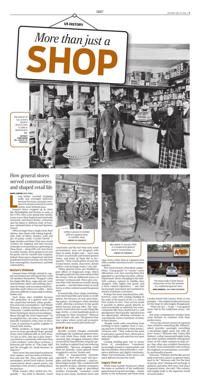
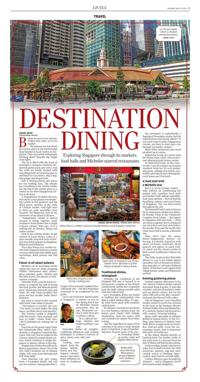
Bangus Belly Satay with Kicap Manis glaze is served at Malcolm Lee's Candlenut restaurant.
Lee
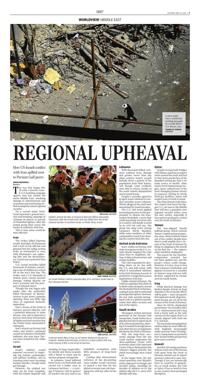
Vidhya Nair prepares a dish during a cooking class.
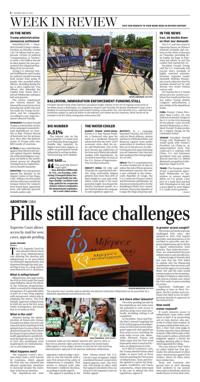
Many stalls at Singapore's Lau Pa Sat hawker center specialize in grilled stingray wrapped in banana leaves.
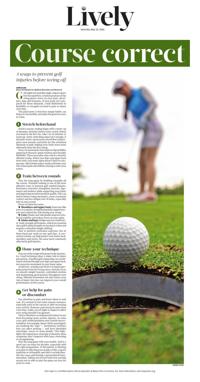
Mama Diam is a hidden restaurant located behind a small Singapore storefront.
Lau Pa Sat hawker center is situated among skyscrapers.
TRAVEL
Before we put on our aprons, Vidhya Nair takes us to the market. We squeeze our way down the narrow aisles at the North Bridge Road Market & Food Centre in Singapore. They are packed with people bustling about beneath the bright neon lights.
The air is filled with the scent of lemongrass, mangoes, turmeric, fermented prawn paste and curry. And the stalls are neatly stacked with everything from red Asian bananas to shriveled sea cucumbers, frog's legs, blue ginger and dragon fruit.
Nair is buying prawns and spices for our cooking class. She already has everything in her nearby studio, but the trip to the market gives us a chance to see what Singaporean cuisine is all about.
A Singaporean of Indian descent, Nair shows us the almost overwhelming variety of fish products and the dried prawn varieties at the stalls of Chinese traders. And right next to them are pork specialties from Sarawak, the Malaysian state in the northwest of the island of Borneo.
"Singaporean cuisine is special because it brings together many Southeast Asian dishes into a single culinary culture," Nair says. "It is a melting pot of Chinese, Malay and Indian cuisine."
Back in her cooking studio, we get started on Laksa Nonya. Laksa is a spicy noodle soup dish from Southeast Asia that is popular in Singapore, Malaysia and Indonesia.
The Laksa Nonya rice-noodle version from Singapore features a creamy coconut milk broth with mildly spicy seasonings, dried prawns and fish cakes.
Flavor is all about balance
Members of an Australian family taking the class set about chopping chillies, Vietnamese mint, lemongrass, galangal, garlic, shallots and the laksa leaves, also known as Vietnamese coriander.
Sebastian Stahl, a tourist from Germany, is assigned the task of frying the fresh prawns and Belacan prawn paste. Steam rises from pots, pans and woks. His wife Gisela prepares fish paste and rice noodles under Nair's guidance.
But when it comes to the coconut milk broth, Nair makes it herself.
"The balance is crucial," she says. "Too much coconut makes the soup heavy; too little robs it of its identity."
The German couple is delighted with the result. "Very aromatic and easy to make," Gisela Stahl says. "We'll definitely be making this at home."
Everyone in the group enjoys their first homemade laksa, which, incidentally, is Singapore's national dish. Laksa, Nair says, has its origins in the Chinese-Malay Peranakan fusion culture, which continues to shape Singapore's culinary culture to this day.
Singaporean cuisine also reflects its diverse population: about 75% of the city-state's residents are of Chinese origin, 15% come from Malaysia and 10% from India.
Chef Malcolm Lee also comes from a Peranakan family and still uses his mother's and grandmother's recipes. His restaurant Candlenut has a Michelin star — the first Peranakan restaurant to be recognized by the guide.
Lee is one of the best-known chefs in Singapore, a country so rich in fine dining that it has 42 Michelin-starred restaurants. But, he says, Peranakan cuisine is more than just a culinary culture.
"It is cultural heritage, identity and family tradition," Lee says.
Peranakan dishes are complex, combining influences and cooking techniques to achieve a balance of spicy, sweet, sour, salty and umami.
Cooking techniques from the former British, Dutch and Portuguese colonial powers also had a major influence on food in Southeast Asia.
Traditional dishes, reimagined
Fittingly, the Candlenut in the Dempsey Hill area is housed in an old barracks complex of the British colonial army. Rattan fans suspended from the high ceilings provide relief from the tropical heat.
Lee's Peranakan dishes are rooted in tradition but reinterpreted. One dish is called Sambal Telor. It's gently fried fresh squid with aromatic sambal paste.
He simmers crab balls for four hours in a rich bamboo chicken stock. He braises pork cheeks with shiitake mushrooms, dark soy sauce, chili and coriander for almost three times as long.
One key ingredient in many of his creations is his house-made rempah paste. Using black, tropical buah keluak nuts, he gives many of his classic Peranakan dishes an earthy, nutty and slightly bitter flavor.
His restaurant is undoubtedly a flagship of Peranakan cuisine, but the unpretentious chef openly admits, "If you want to get to know Singaporean cuisine, you have to feast your way through our hawker centers."
Many other restaurants also serve excellent local cuisine.
Behind the facade of a corner shop lies Mama Diam, a first-class restaurant offering playful fusion cuisine.
At Bollywood Farm, in the countryside, Lynn Ee conjures up seasonal creations from her 10-acre garden. She grows cabbage and various vegetables, plus laksa leaves, lemongrass, curry leaves and Thai basil.
A food stall with a Michelin star
But it is in the hawker centers — halls without air conditioning but packed with countless food stalls and market stalls selling vegetables, fruit, meat and fish — that we find the throbbing culinary and social heart of Singapore. You can find several throughout the city.
The Maxwell Food Centre is famous for its Hainanese chicken rice dishes. At Hawker Chan in the Chinatown Complex Food Centre — the largest in Singapore with 260 stalls — there are always long lines for its chicken in soy sauce that costs just a few dollars. No wonder: It became the world's first street food stall to receive a Michelin star.
Here, don't miss the classic Malay-Singaporean dessert, Ice Kacang. It is freshly shaved ice with sweet red beans, sweetcorn, diced peanuts and pieces of palm fruit. Or check out the streets nearby to find several traditional Chinese tea houses.
The Tekka Centre in the Little India district is a go-to for Indian-Malay specialties such as biryani rice dishes, dosa pancakes or roti prata flatbread dishes. At the East Coast Lagoon Food Village hawker center, you'll find fresh seafood.
Evening gathering places
Another popular alternative is the city-famous Chinese family seafood restaurant Keng Eng Kee. It feels like a market, and you sit in plastic chairs and use plastic cutlery. But try the spicy chili crab or the spicy caramelized pork ribs flavored with coffee.
One of Singapore's most beautiful hawker centers is Lau Pa Sat, situated in the heart of the business district between Raffles Place and Marina Bay. It's a historic market hall housed in a 19th-century Victorian building.
Many stalls specialize in stingray grilled in banana leaves. In the evening, satay skewers of chicken, beef, lamb, fish or scampi sizzle on countless charcoal grills. Even the surrounding streets start to transform into open-air barbecues.
In the Malay-Muslim district of Geylang Serai, the hawker center of the same name is a treasure trove for fans of Malay and Indonesian cuisine.
In the evenings, people come here to enjoy Nasi Lemak (coconut rice with anchovies, peanuts, egg and spicy sambal sauce) or Rendang (slowcooked, spicy beef in coconut milk).
Culture, like love, goes through the stomach — and in Singapore, you'll find it particularly delightful.