
Monster-wave master
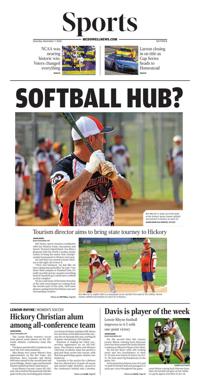
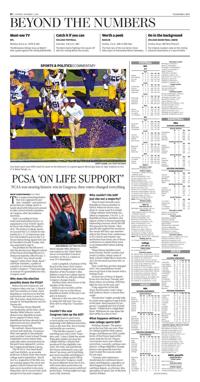
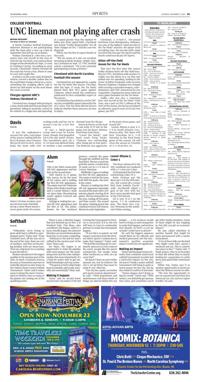
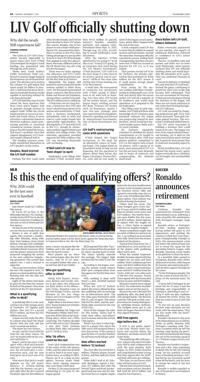
Thrills of Oregon coast keep extreme surfer coming back for more

Ollie Richardson is a father, husband, teacher and extreme big wave surfer.
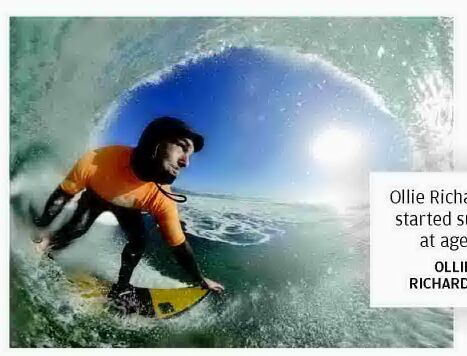
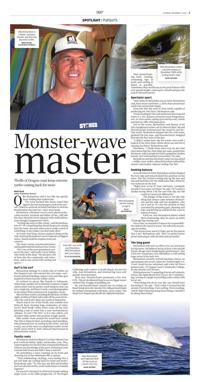
Ollie Richardson started surfing at age 9.
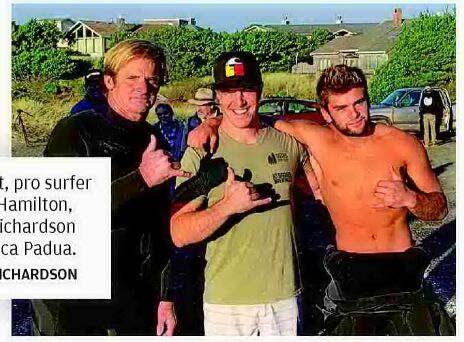
From left, pro surfer Laird Hamilton, Ollie Richardson and Luca Padua.

Ollie Richardson surfs Nelscott reef off the coast of Lincoln City, ore.
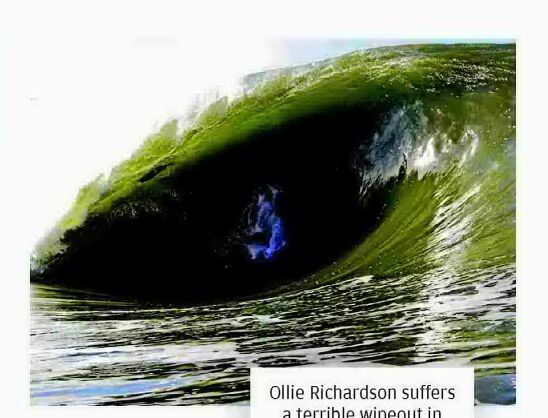
Ollie Richardson suffers a terrible wipeout in November 2009 while surfing Scott's Reef.
SPOTLIGHT | PURSUITS
Ollie Richardson said it was like two grizzly bears holding him underwater. The wave pushed him down, raked him against the reef and gouged a hole in his wetsuit. When he surfaced, he barely had time to catch his breath before the next two-story wave broke.
Richardson, a Newport soccer coach, physical education teacher, husband and father of two, still tells the story about his worst wipeout with visible jitters, even though it happened in 2009.
"Surfing big waves is like a drug," said Richardson, now 47. "It's something that always keeps you coming back for more. Because when you're really scared of something, it also makes you feel really alive."
At Ossies Surf Shop, dozens of photos hang on the wall, showing Richardson's worst wipeouts or biggest waves. Shelves hold his trophies from surf contests.
The shop's owner, Dan Hasselschwert, said people think Richardson owns Ossies.
"He's one of the most prominent surfers in the area," said surfer Casey Felton, who works at the shop. "He also puts a lot of time into the community and volunteers, and is very active with surfing and sports. "
Surf is his turf
Richardson belongs to a niche clan of surfers on the Oregon Coast, who own jet skis, tow ropes, surfboards with feet bindings, impact vests and other gear required to brave massive winter swells.
In contrast to places like Hawaii or Indonesia, where huge, quality surf is relatively common, Oregon surfers must wait for perfect swell windows that can last a single day, and there's rarely a surf photographer to document their endeavors for magazine covers.
Most of these surfers, including Richardson, set their sights on Nelscott Reef, half a mile off the coast of Lincoln City, and Scott's Reef, just south of Depoe Bay.
Waves march out of the Pacific and crumble over Nelscott Reef, forming huge avalanches of water. Scott's Reef breaks when water sucks off the reef, pitching a slab of water into a near-instantaneous collapse. To surf "The Yeti," as it is also called, a jet ski must whip surfers into position at high speeds.
Elite surfers from around the world have surfed The Yeti or Nelscott Reef, including Laird Hamilton, who pioneered tow-in surfing in the 1990s, and Kai Lenny, one of the most accomplished surfers in the world. From 2004 to 2019, Nelscott Reef hosted an international contest.
Family roots
Richardson started surfing in Coos Bay when he was just 9 with his father, Spike, and brother, Larz. They surfed together for the first time at Bastendorff Beach without any knowledge of the sport. Richardson rode a homemade board and didn't wear a wetsuit.
He remembers a wave crashing on his head and shooting out of the whitewater like a cannon.
"That exhilarating, exciting, scary feeling that I got just kept me coming back for more and more," Richardson said. "To this day, my dad and brother and I are all avid surfers, and it really keeps us bonded together."
He moved to Newport in 2004 and started seeking larger waves as his skills progressed. At The Rogue Gathering surf contest at South Beach, he met his wife, Asia Richardson, and eventual big wave surf partner Hasselschwert.
That year, Hasselschwert purchased a Sea-Doo GTX. The jet ski allowed them to access bigger waves without the struggle of paddling out.
He and Hasselschwert started tow-in surfing on beach break waves in Lincoln City, riding a board made by surfing's preeminent craftsman, Gerry Lopez. The board was shaped specifically for Spike Richardson.
They started training hard, running, swimming laps in pools and surfing as much as possible.
Sometimes they would run on the pool bottom with a 45-pound weight, come up for a breath and pass the rock to the next person.
Spectator sport
Their Nelscott Reef debut was in 2004, Richardson said, but it wasn't until Nov. 2, 2010, that a monstrous swell truly tested their limits.
Forecasts that day read 35-foot swells capable of producing 60-foot faces, Richardson said.
Trucks hauling jet skis and surfboards drove up and down U.S. 101. Rumors echoed in town of legendary, out-of-state surfers suiting up to surf the reef; crowds perched on cliffs with binoculars.
Out in the ocean, Richardson said dozens of jet skis chauffeured surfers out to Nelscott Reef. He and Hasselschwert motored past the crowd to surf farther south. Richardson jumped into the cold water, grabbed the tow rope, and Hasselschwert whipped him into his first wave of the day.
"I didn't realize how big the waves were until I looked at the wave three stories above me and saw it chasing me down," Richardson said.
Elsewhere, "I think there were over six skis that went down that day, that either got sunk, pushed into the beach, rolled, people lost their equipment, broken boards, just total mayhem everywhere," he said.
Richardson and Hasselschwert came out unscathed — unlike a year earlier, when Richardson suffered his almost catastrophic wipeout surfing The Yeti.
Seeking balance
At Scott's Reef in 2009, Richardson said he dropped the tow rope and miscalculated his position on the wave. The Yeti started sucking him up the face and then pitched him over the whitewater falls, where he was battered on the reef.
"Right now, in my 47-year-old brain, I probably wouldn't have gone out there," he said. "If I could've landed wrong when I hit the reef that day, my life could've turned out differently."
The danger of big waves is not the only thing that almost came between Richardson and his wife and two daughters, who are 8 and 16. It's also the amount of time consumed by preparing gear, planning surf trips and driving up and down the coast in search of waves.
Early on, Asia Richardson almost ended their relationship after he spent an entire Thanksgiving chasing surf. Since then, he learned to balance his responsibilities and love for massive waves. His wife now encourages his hobby.
"She knows how much it helps me be the person that I am," Richardson said. "But I've gotten better about balancing it with the kids and my family."
The long game
Richardson still surfs as often as he can and trains for big waves. He believes he has at least a decade left before old age starts hindering his performance. One of his tow-in partners, Eric Akiskalian, is still surfing huge waves in his mid-60s.
Richardson recently started teaching courses on operating jet skis in surf, where he's trained eight U.S. Coast Guard rescue swimmers and a few Air Force pararescuers. At Oregon Coast Community College, he also teaches surf lessons.
If Richardson isn't competing in local surf contests, such as the Agate Beach Surf Classic, he's volunteering, serving as a judge or providing water safety with his jet ski.
"Everything you do in your life, you should have fun doing it," he said. "That's what I've based my life around. I love teaching. I love surfing. I love coaching. And if I didn't have fun doing those things, I wouldn't be doing them today."