
NC trout stocking delayed after heat, fish losses
Commission says an estimated 70% of trout grown at McDowell hatchery lost
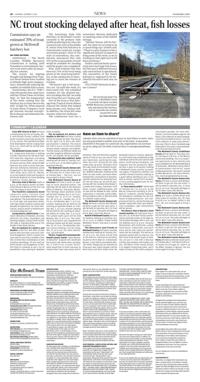
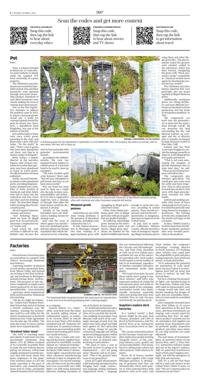
The Armstrong State Fish Hatchery in McDowell County is currently the North Carolina Wildlife Resources Commission's only operational fish hatchery, and an unusually hot summer caused fish to die.
ASHEVILLE — The North Carolina Wildlife Resources Commission is waiting until November to stock delayed-harvest trout waters after an unusually hot summer.
The reason: An ongoing drought and damage from Tropical Storm Helene have resulted in lethally high water temperatures, dramatically reducing the number of available fish to stock.
David Deaton, the N.C. WRC's state fish production supervisor, told the Citizen Times on Friday, Sept. 25, that the temperature of the water coming into the hatchery has at times been in the mid-to high 70s. When exposed to water above 70 degrees, trout get stressed, become susceptible to disease and ultimately die, Deaton said.
The Armstrong State Fish Hatchery in McDowell County currently is the primary state facility producing trout since the closure in late 2025 of the Bobby N. Setzer State Fish Hatchery in Transylvania County for a major renovation project. Prior to the start of renovations, the commission announced that only 35% of the usual number of trout would be available for stocking until the project was completed.
Now, staff estimate that they have lost 70% of the trout being grown at the Armstrong hatchery, so the commission is choosing not to stock the streams in October.
"We haven't got a full inventory yet. Up until this week, it's been warm still. Our estimated numbers for the delayed harvest stockings this fall, we really don't have that yet," Deaton said.
Part of the issue is that damage from Tropical Storm Helene reduced the shade that helped keep streams cool, Deaton said. In addition, the storm left some streams wider but shallower.
The commission now has a restoration division dedicated to repairing some of the habitat damage.
"Mother Nature will fix herself, but what we're trying to do is speed things up," Deaton said. "There is a plan in place to hire a significant amount of experts in doing some of this work, so we're working on that right now to fill those positions."
Deaton said hatcheries previously have had large fish losses, but this year is different because only one hatchery is operational. The renovation of the Setzer hatchery is supposed to be finished by the end of next year, he said.
USA TODAY Network via Reuters Connect