This content is unavailable. Please contact customer service for more information.
Already a subscriber? Login or Activate your account.
You've reached the end of the standard E-Edition.
This content is unavailable. Please contact customer service for more information.
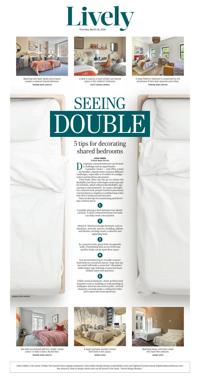
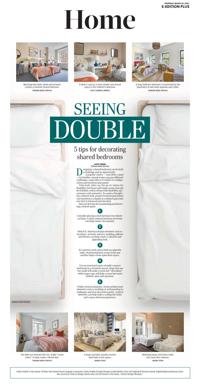
SEEING DOUBLE
5 tips for decorating shared bedrooms
CATHY HOBBS Tribune News Service
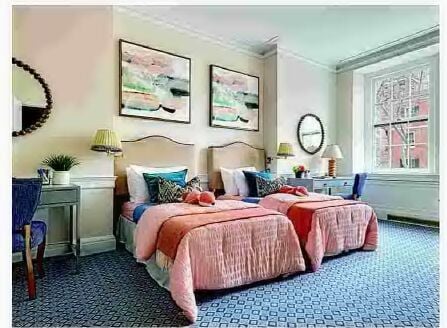
Matching twin beds, desks and artwork creates a cohesive shared
bedroom.
TRIBUNE NEWS SERVICE
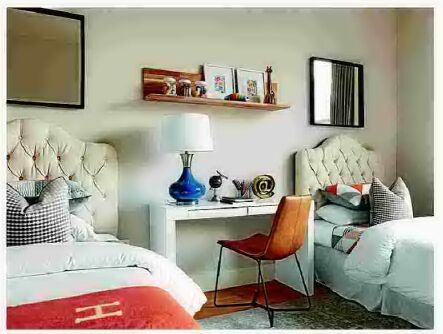
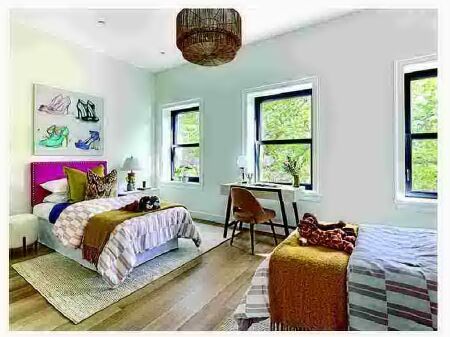
A desk is used as a room divider and shared space in this
children's bedroom.
SCOTT GABRIEL MORRIS
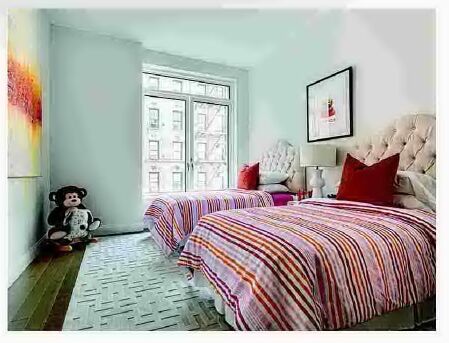
A long children's bedroom is maximized by the placement of
twin beds opposite each other.
TRIBUNE NEWS SERVICE
Two beds are dressed with fun, bright "candy colors"
to help create a festive feel.
TRIBUNE NEWS SERVICE
A large rug helps visually connect both beds in this space.
ADOBE STOCK
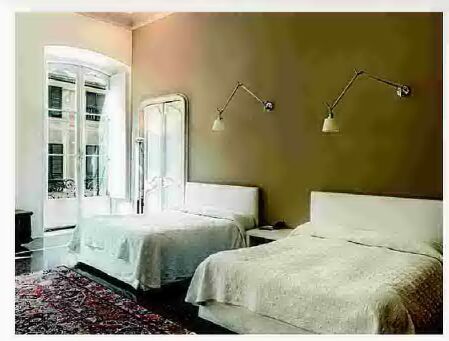
Matching lamps and linens make this room feel cohesive.
ADOBE STOCK
Designing a shared bedroom can be both a challenge and an opportunity.
A popular choice — and often a need — for families, shared rooms can pose different challenges, especially as it relates to configuration and furniture placement.
Twin beds often are the go-to choice for flexibility, but those with larger rooms may opt for full beds, which still provide flexibility, spaciousness and symmetry. To create a thoughtful, cohesive look, proper furniture placement can transform a complex or confined space into one that is balanced and elevated.
Here are five tips for maximizing and elevating a shared space:
1 Consider placing a desk between two identical beds. A desk centered between two beds can help create a focal point.
2 Match it. Identical design elements such as furniture, artwork, mirrors, bedding, pillows and throws can help create a cohesive and appealing look.
3 In a narrow room, place beds on opposite walls. Positioning beds across from one another helps create open floor space.
4 Use an oversized rug to visually connect both beds in a furniture layout. Rugs that are too small will make a room feel "shrunken," while larger rugs will help a room feel more unified, open and spacious.
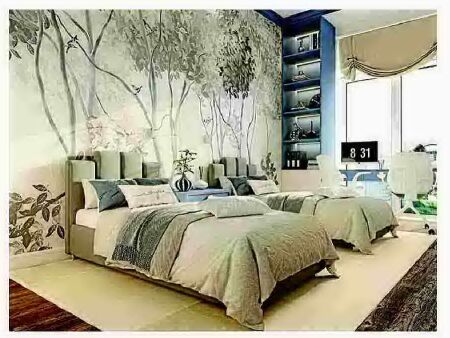
5 Utilize vertical elements. From architectural elements such as molding or wall paneling to wallpaper and even decorative paint, vertical elements can help make a ceiling feel taller and a space feel more generous.
Cathy Hobbs is the owner of New York-based home staging companies Cathy Hobbs Design Recipes (cathyhobbs.com) and Highland Passive House (highlandpassivehouse.com). Her practical, how-to design advice also can be found in her book, "Home Design Recipes."
Click and hold your mouse button on the page to select the area you wish to save or print.
You can click and drag the clipping box to move it or click and drag in the bottom right corner to resize it.
When you're happy with your selection, click the checkmark icon next to the clipping area to continue.