
IMMIGRATION ENFORCEMENT Last campus activist released
They were targeted over protests against Israel's war in Gaza

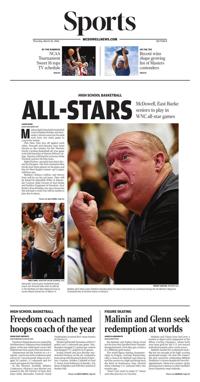
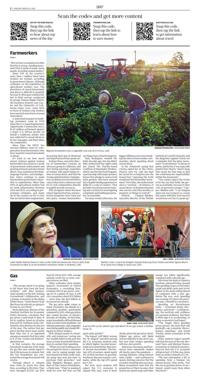
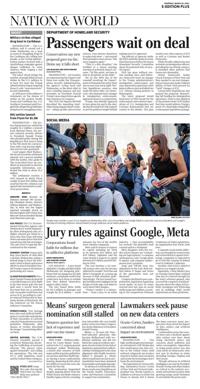
Leqaa Kordia, left, moves to embrace friends, family and supporters March 16 after she was released from the Prairieland Detention Center in Alvarado, Texas.
IMMIGRATION ENFORCEMENT
Just over a year ago, the Trump administration began an immigration enforcement campaign that swept up multiple people who took part in pro-Palestinian activism on U.S. college campuses.
The last of those people, Leqaa Kordia, was released March 16 after the government stopped fighting a judge's orders that she be freed on bond.
Kordia, 33, a Palestinian woman and daughter of a U.S. citizen, was in detention since her arrest March 13, 2025, in New Jersey during an immigration check-in. Federal officials cited Kordia's role in what they deemed "pro-Hamas protests." Though not well known as an activist, she was arrested at a 2024 demonstration outside Columbia University in New York. The charges were later dismissed.
Federal officials accuse her of overstaying her student visa after leaving an educational program; she said she believed she was allowed to stay under a different immigration mechanism she pursued.
Other students and scholars were deported or left the U.S. after learning their visas were revoked. Here's where things stand with some others.
Mahmoud Khalil
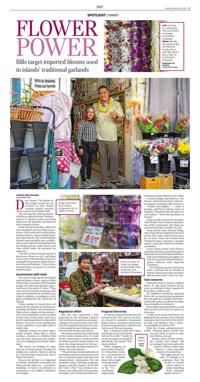
Mahmoud Khalil was the first person whose arrest became publicly known during the crackdown on noncitizens who publicly criticized Israel and its actions in Gaza. A Syrian-born legal U.S. resident, pro-Palestinian activist and former graduate student whose wife is a U.S. citizen, Khalil was a prominent figure in protests at Columbia in 2024.
He spent 104 days in detention before his release in June on a judge's orders.
The government continues seeking to deport him and won a significant court ruling in January.
The Trump administration contends Khalil — who has not been charged with a crime — forfeited his standing in the U.S. by participating in antisemitic and pro-Hamas demonstrations.
Khalil says his support of Palestinian human rights isn't antisemitism, nor does it amount to support of Hamas, the Palestinian militant group that controls Gaza.
Badar Khan Suri
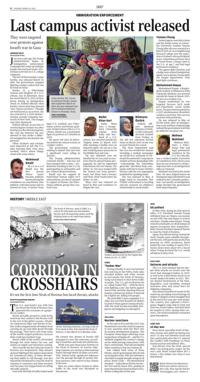
Badar Khan Suri, a Georgetown University scholar from India and husband of a U.S. citizen, was arrested outside his Virginia home in March 2025 after teaching a weekly class on minority rights. He was on a visa and studying peace processes in the Middle East and Asia.
He was detained over his familial ties to Gaza and accusations that he spread Hamas propaganda; he said he supported Palestinians but not Hamas. His father-in-law once worked with the Hamas-run Gaza government, but Khan Suri's lawyers said their client barely knew his father-in-law.
Khan Suri was released on bond in May and continues to litigate his case.
Rümeysa Öztürk
Federal officers detained Rümeysa Öztürk, a Tufts University doctoral student from Turkey, as she left her suburban Boston home in March 2025 on her way to meet friends for a meal.
The State Department said her visa was revoked for reasons including a student newspaper op-ed she'd co-authored. It criticized the university's response to student activists demanding Tufts "acknowledge the Palestinian genocide" and divest from companies with ties to Israel. Öztürk's lawyers said she was improperly punished for speaking freely.
She was released in May. A judge ruled in December that Öztürk could return to teaching and her research on children's relationship to social media.
Yunseo Chung
Federal agents searched a dorm and the family home of Columbia University student Yunseo Chung after she was arrested at a March 2025 sit-in at neighboring Barnard College over the expulsion of students who participated in pro-Palestinian activism. Born in South Korea, Chung came to the U.S. at age 7 and had legal permanent residency.
The agents didn't find her, and a judge soon ordered immigration agents not to detain Chung while she fought deportation. That legal fight continues.
Mohammed Hoque
Mohammed Hoque, a Bangladeshi student at Minnesota State University, Mankato, was arrested outside his home in March 2025. He was on a student visa.
Hoque maintained he was targeted because he'd made pro-Palestinian social media posts. The government pointed to a 2023 misdemeanor disorderly conduct conviction. The case was resolved with probation.
He was released in May on $7,500 bond, after an immigration court and then a federal judge ordered the government to let him go while his case plays out.
Mohsen Mahdawi
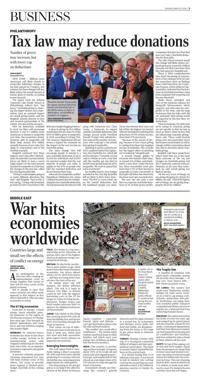
Mohsen Mahdawi, a Palestinian who had legal permanent residency in the U.S. for a decade, was a student leader of protests at Columbia in 2024. About a year later, he was arrested at a citizenship interview at an immigration office in Vermont.
Mahdawi was freed a few weeks later. He since helped launch an immigrant legal aid initiative and walked in his Columbia graduation. Last month, an immigration judge blocked the government from deporting him.