
Sweet celebration
This light and airy dessert is perfect for your Fourth of July gathering
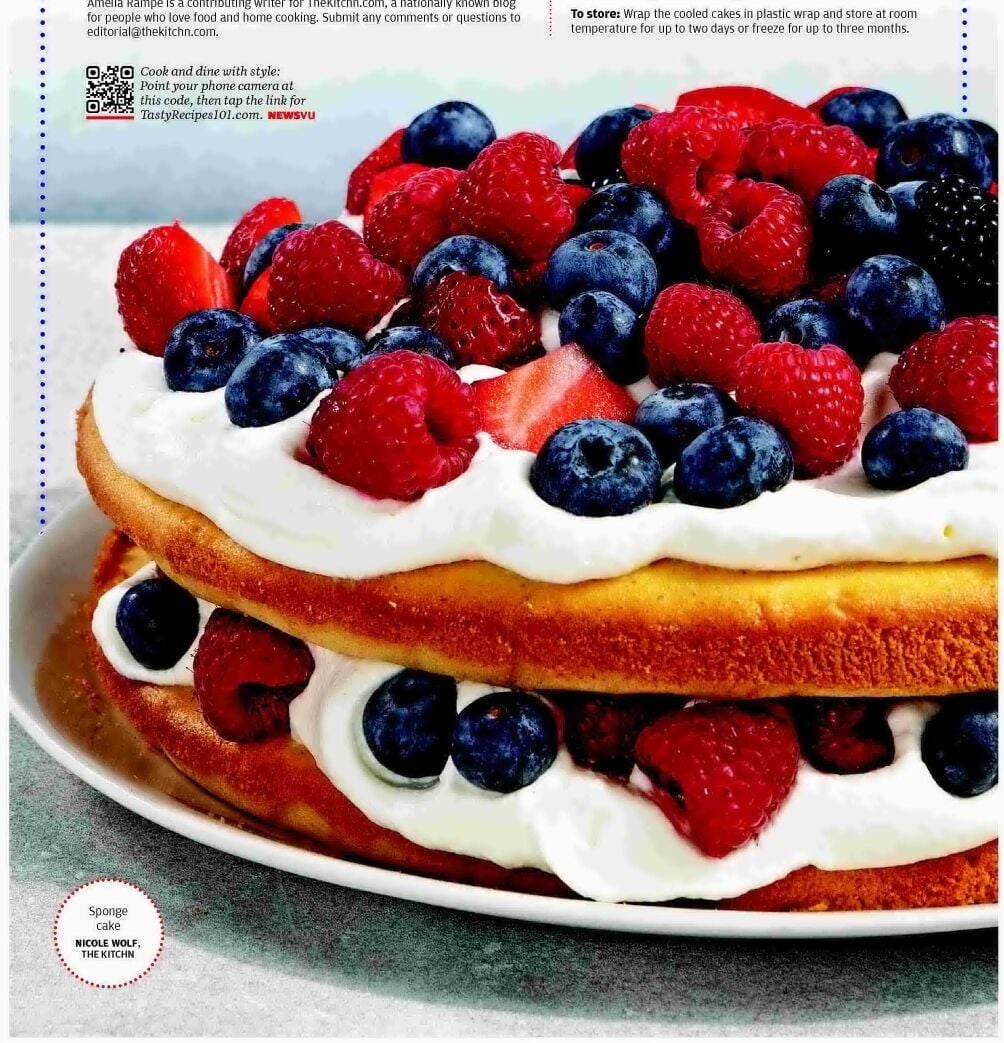
Sponge cake
A sponge cake (also called a foam cake) is a light and tender cake that gets its texture from whipped eggs. Cakes like angel food, genoise, chiffon and Victoria sponge all lie under the umbrella of "sponge."
This recipe is closest in ingredients and technique to a chiffon sponge. The only difference is that in this recipe, instead of whipping the egg whites and yolks separately and then combining, I whip the eggs all together. I found that the structural integrity of the cake was not affected by mixing the yolks and whites.
Once baked and cooled, decorate with a mixture of berries and your favorite whipped cream for a festive Fourth of July celebration.
Sponge vs. yellow cakes
Sponge cake: A sponge cake starts with a higher egg content than, say, a classic yellow birthday cake. To achieve its light and fluffy crumb, eggs are whipped until they're pale and voluminous, then the dry ingredients are very gently folded in. There's usually little to no fat in sponge cakes, though there are exceptions, including the chiffon (which this recipe mirrors) and the Victoria sponge.
Yellow cake: A classic yellow cake typically has a higher fat content than a sponge cake, giving it a denser crumb. As a rule of thumb, if a recipe starts with whipping eggs, it's likely a sponge-style cake. If it asks you to cream butter and sugar, it will be closer to your classic yellow cake.
Sponge cake
Yield: Makes two (9-inch) round cakes
For the cake
■ 6 large eggs
■ ½ cup granulated sugar
■ 1 tablespoon vanilla extract
■ ½ cup vegetable oil
■ 1 ½ cups cake flour
■ 1 ½ teaspoon baking powder
■ ½ teaspoon kosher salt
To decorate
■ A mix of berries
■ Whipped cream
Directions
Crack six large eggs into the bowl of a stand mixer (or large bowl if mixing by hand). Let sit until room temperature.
Arrange a rack in the middle of the oven and heat the oven to 350 F. Line the bottom of two (9-inch) round cake pans with parchment paper rounds. Do not grease the pans.
Beat the eggs with the whisk attachment on low speed until blended, about 1 minute. With the mixer still on low speed, slowly pour in ½ cup granulated sugar and beat until mostly incorporated. Slowly increase the speed to medium-high and beat until the mixture is tripled in size, pale, fluffy and forms soft, glossy peaks that resemble soft serve, 6 to 7 minutes.
With the mixer still on medium-high speed, slowly add vegetable oil in a thin stream and mix until combined, about 45 seconds. Add vanilla extract and beat until combined. The mixture will have loosened a bit. Stop the mixer.
Place cake flour, baking powder and salt in a small bowl, and whisk to combine. Sift half the flour mixture through a fine-mesh strainer into the egg mixture. Using a large rubber spatula, gently fold in the flour mixture until no dry streaks remain.
Repeat sifting and folding in the remaining flour, making sure to scrape the bottom of the bowl, until no dry pockets of flour remain; it may take a few minutes to fully incorporate everything together.
Divide the batter between the cake pans and gently smooth the tops with an offset spatula. Bake until the cakes are golden-brown, 23 to 25 minutes. Run an offset spatula or butter knife around each cake to loosen. Let the cakes cool partially in the pan, 15 to 20 minutes. Flip the cakes out of the pan onto a wire rack and let cool completely.
Decorate the cake with berries and whipped cream.
Tasty tips
Fold the ingredients gently: When incorporating the dry ingredients into the whipped eggs, gently fold the contents at the bottom of the bowl over the top until no dry streaks remain. There will likely be hidden dry pockets — even when you think you have combined everything — so you may need to gently tilt the bowl to seek out these hidden pockets. Be as gentle as possible as to not deflate the egg mixture.
Don't grease the pan: A key step is to use an ungreased pan for the cake to cling to when baking.
To store: Wrap the cooled cakes in plastic wrap and store at room temperature for up to two days or freeze for up to three months.
Amelia Rampe is a contributing writer for TheKitchn.com, a nationally known blog for people who love food and home cooking. Submit any comments or questions to editorial@thekitchn.com.