

Getting a move on
Southern states top destinations, data show
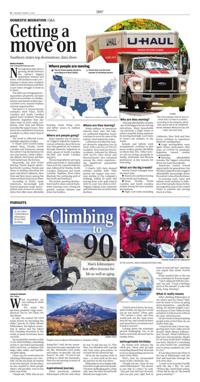
The most popular time of year to move with a U-Haul is summer, according to the company, which sees nearly half of all residential moves between Memorial Day and Labor Day each year.
DOMESTIC MIGRATION | Q&A
New migration data show a growing divide between the nation's biggest population winners and losers, with Southern states continuing to attract new residents while several Northeast and West Coast states struggle to hold on to them.
The shifts are reshaping housing markets, job growth, tax bases and local economies as families, retirees and remote workers pursue lower costs, warmer weather and new opportunities.
The latest U.S. Census Bureau estimates show Texas, North Carolina and South Carolina gained more residents through domestic migration than any other states in 2024, while California, New York and Illinois recorded the largest losses. New Jersey also continued to lose more residents to other states than it gained.
The trend is reflected across multiple migration studies.
U-Haul's 2025 Growth Index ranked Texas, Florida, North Carolina and Tennessee among the nation's top destinations for one-way movers, while California, Illinois, New Jersey and New York landed near the bottom.
Meanwhile, the 2025 PODS Moving Trends Report identified North Carolina, Florida and Texas as leading relocation hot spots and listed California, New York and New Jersey among the states residents leave most often.
According to PODS, many Americans increasingly look beyond expensive major metropolitan areas in favor of communities that offer more affordable housing, lower living costs and better access to outdoor amenities.
Where are people going?
Texas remains one of America's biggest migration magnets. Census estimates show the Lone Star State gained 85,267 residents through domestic migration in 2024, ahead of North Carolina (82,288) and South Carolina (68,043).
The moving industry saw many of the same trends. U-Haul ranked Texas as its No. 1 growth state last year, followed by Florida, North Carolina, Tennessee and South Carolina. Together, those states illustrate the continuing pull of the South and Southeast.
The fastest-growing destinations tend to share several traits: lower housing costs, strong job growth, warmer climates and lower tax burdens.
Where are they leaving?
While millions of Americans relocate every year, the largest outbound migration losses continue to occur in some of the nation's most expensive states.
California recorded the largest domestic migration loss in 2024, with a net loss of 239,575 residents. New York lost 120,917 residents, followed by Illinois with 56,235. New Jersey and Massachusetts also remained among the states experiencing significant population outflows.
U-Haul's 2025 data showed another notable shift: Ohio posted the largest year-overyear decline in the company's rankings, falling 29 spots and moving from a net-gain state in 2024 to a net-loss state in 2025. Virginia, Indiana, Iowa, Delaware and Nebraska also recorded steep declines.
Why are they moving?
Housing affordability remains one of the biggest factors driving relocations. Many households can purchase a larger home or reduce monthly living expenses by moving from high-cost states to lower-cost markets in the South.
Remote and hybrid work arrangements continue to give many workers greater flexibility in where they live. Other movers cite tax savings, proximity to family, retirement and lifestyle preferences as key reasons for relocating.
What are the big trends?
Several trends emerged from the latest data:
■ Americans continue moving to the South and Southeast.
■ Texas, Florida, North Carolina and South Carolina remain among the most popular destinations.
■ High-cost states including California, New York and New Jersey continue to experience domestic outmigration.
■ Large metropolitan areas again attract newcomers after years of COVID-19 pandemic migration toward smaller communities.
■ Housing affordability remains the biggest relocation driver for many households.
Americans moved toward opportunity for generations, but the latest migration data suggest affordability increasingly drives the nation's relocation decisions.
As housing costs, taxes and remote work continue to influence where people choose to live, the migration map of the United States is redrawn one moving truck at a time.