

NC HAS CONCERNS
State adds animal rules in effort to limit exposure to parasitic fly

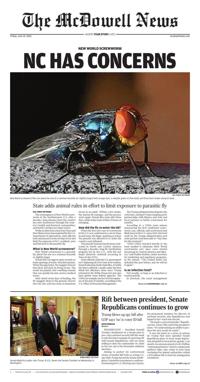
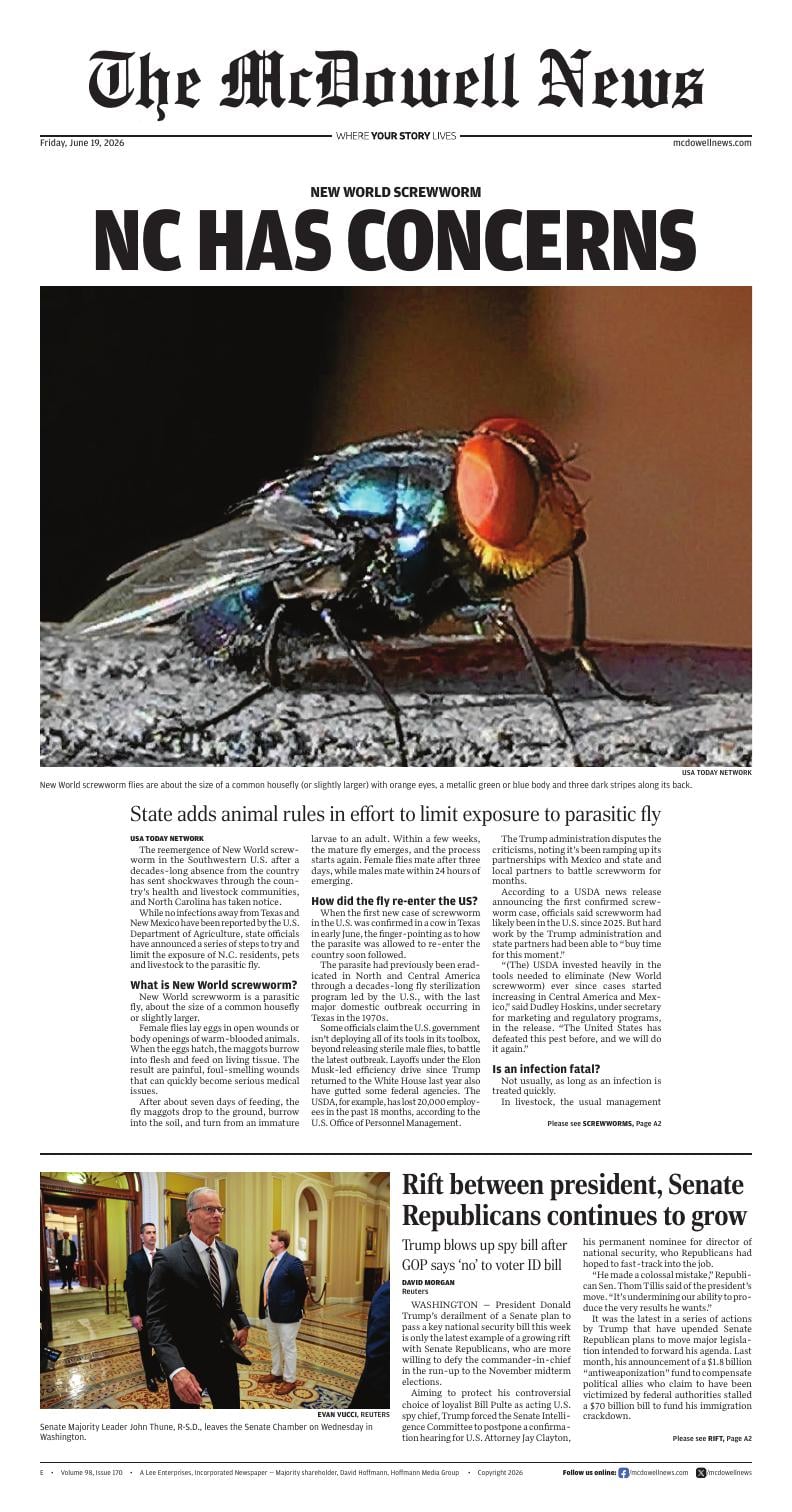
New World screwworm flies are about the size of a common housefly (or slightly larger) with orange eyes, a metallic green or blue body and three dark stripes along its back.
NEW WORLD SCREWWORM
The reemergence of New World screwworm in the Southwestern U.S. after a decades-long absence from the country has sent shockwaves through the country's health and livestock communities, and North Carolina has taken notice.
While no infections away from Texas and New Mexico have been reported by the U.S. Department of Agriculture, state officials have announced a series of steps to try and limit the exposure of N.C. residents, pets and livestock to the parasitic fly.
What is New World screwworm?
New World screwworm is a parasitic fly, about the size of a common housefly or slightly larger.
Female flies lay eggs in open wounds or body openings of warm-blooded animals. When the eggs hatch, the maggots burrow into flesh and feed on living tissue. The result are painful, foul-smelling wounds that can quickly become serious medical issues.
After about seven days of feeding, the fly maggots drop to the ground, burrow into the soil, and turn from an immature larvae to an adult. Within a few weeks, the mature fly emerges, and the process starts again. Female flies mate after three days, while males mate within 24 hours of emerging.
How did the fly re-enter the US?
When the first new case of screwworm in the U.S. was confirmed in a cow in Texas in early June, the finger-pointing as to how the parasite was allowed to re-enter the country soon followed.
The parasite had previously been eradicated in North and Central America through a decades-long fly sterilization program led by the U.S., with the last major domestic outbreak occurring in Texas in the 1970s.
Some officials claim the U.S. government isn't deploying all of its tools in its toolbox, beyond releasing sterile male flies, to battle the latest outbreak. Layoffs under the Elon Musk-led efficiency drive since Trump returned to the White House last year also have gutted some federal agencies. The USDA, for example, has lost 20,000 employees in the past 18 months, according to the U.S. Office of Personnel Management.
The Trump administration disputes the criticisms, noting it's been ramping up its partnerships with Mexico and state and local partners to battle screwworm for months.
According to a USDA news release announcing the first confirmed screwworm case, officials said screwworm had likely been in the U.S. since 2025. But hard work by the Trump administration and state partners had been able to "buy time for this moment."
"(The) USDA invested heavily in the tools needed to eliminate (New World screwworm) ever since cases started increasing in Central America and Mexico," said Dudley Hoskins, under secretary for marketing and regulatory programs, in the release. "The United States has defeated this pest before, and we will do it again."
Is an infection fatal?
Not usually, as long as an infection is treated quickly
In livestock, the usual management practice is to remove infected animals from the herd and quarantine them for several weeks while they receive treatment. Euthanasia of certain animals could be required if the infections are severe or if treatment options aren't working, according to the USDA.
Can humans get infected?
Yes, just as any warmblooded mammal can.
But according to the USDA, New World screwworm is not contagious and does not spread from animals to people or from person to person directly.
The U.S. Centers for Disease Control and Prevention says human cases of screwworm infection are rare in the U.S., and are normally associated with travelers who are returning from areas where the flies are present.
Can previously infected animals enter the food supply?
Yes. Federal regulators will let formerly infected animals enter the food chain if they pass all food safety requirements. Animals are inspected before and after slaughter to determine whether the entire carcass, or just unaffected parts, are passed for human food.
"Severely infested animals will not be allowed into food production," the USDA states.
Will the outbreak spread in the US?
That really is the great unknown, and what officials fear the most since a major outbreak could quickly cost the livestock industry hundreds of millions in financial losses.
Federal and state officials have moved quickly since the first domestic screwworm case was confirmed to limit the movement of animals into and out of infected areas, increase surveillance and tracing activities, and conduct outreach to animal owners.
The weather might also help control any outbreak, with screwworms — which prefer tropical and subtropical climates −— not liking prolonged periods of very hot or very cold.
What steps has NC taken?
To date the USDA has confirmed 12 infected animals — 11 in cattle in Texas and one in a pet dog in New Mexico.
In response, the N.C. Department of Agriculture and Consumer Services has adopted new requirements for warm-blooded animals entering the Tar Heel State from states where there are known infections.
For animals from an infested area, those steps include a required check by a veterinarian and paperwork showing the animal is free of screwworm. An entry permit number also must be acquired at least 48 hours prior to movement.
Animals coming to North Carolina from a surveillance zone, which is set up around an infested area, also must meet the requirements.
State officials say animal owners should watch for these signs in their pets and livestock over a possible screwworm infection:
■ Maggots or white egg masses in wounds or body openings, including the nose, ears, genitalia or the navel of newborn animals.
■ A foul odor or the smell of decay.
■ Signs of pain, such as irritability, not eating, depression or pulling away from the rest of the herd.
If you suspect New World Screwworm maggots in a wound call your local veterinarian or the agricultural department at 919-707-3250. New World screwworm is considered a reportable disease in the U.S.
USA TODAY network via Reuters Connect