
LESSONS OF WAR
What Trump could learn from unpopular conflicts of the past
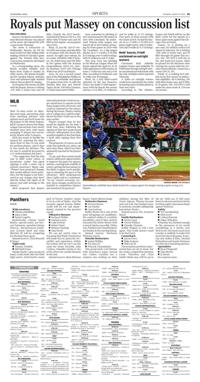
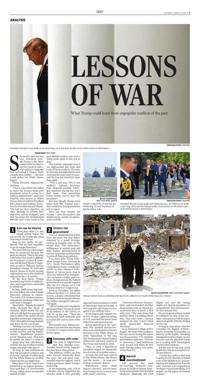
Iranian women look at a building that was hit in a March U.S.-Israeli strike Aug. 22 in Tehran.
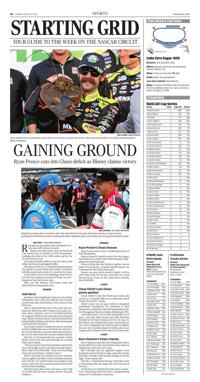
President Donald Trump walks with Nebraska Gov. Jim Pillen as he leads a tour Aug. 24 to see the helipad under construction on the South Lawn of the White House in Washington.
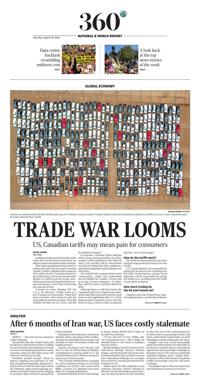
Vessels in the Strait of Hormuz are visible Aug. 25 near the beach of Bandar Abbas, Iran.
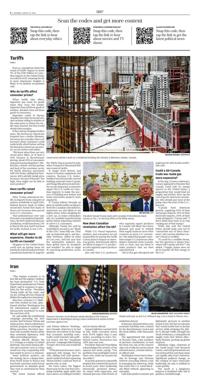
President Donald Trump walks to an event Aug. 24 in the Rose Garden at the White House in Washington.
ANALYSIS
Six months into the Iran war, President Donald Trump is the latest commander in chief to see the vision of a decisive military campaign risk becoming a longer, more complicated conflict — one that could define his White House legacy.
Think Vietnam, Afghanistan and Iraq.
"This is a president who failed to learn the lessons from past presidents when it comes to a military deployment," said Leon Panetta, who served as White House chief of staff for President Bill Clinton and Defense Secretary for President Barack Obama. "He had no clear objective, no clear strategy to achieve that objective, and no endgame, and that has been the fundamental mistake that's been made in the past Middle Eastern wars and is being made again in this war in Iran."
The Iranian campaign hasn't yet approached the time and costs of those conflicts. The wars in Vietnam and Afghanistan each stretched for more than 19 years, and the Iraq war lasted for more than eight.
"This is not Iraq. This is not endless," Defense Secretary Pete Hegseth assured Pentagon reporters during the war's first week. "Our generation knows better, and so does this president."
But Iran already shares some traits with the "forever wars" that candidate Trump promised not to repeat.
Here are four lessons for Trump — ones his modern-day predecessors would recognize, some ruefully.
1 Exit can be elusive
Three days after U.S. and Israeli strikes began the war on Feb. 28, Trump was asked how long it would last.
Four to five weeks, he predicted, "but we have capability to go far longer than that."
The timetable has taken longer than he predicted because the goals are elusive. That is the same calculation that made it difficult for Presidents Lyndon B. Johnson and Richard Nixon to negotiate an end to Vietnam, and for Presidents George W. Bush and Barack Obama to justify leaving Afghanistan even after political support in the U.S. eroded.
In his first term, Trump boosted troop levels in Afghanistan, then negotiated a timetable to withdraw.
In Iran, while many top leaders were killed, the same Islamic theocracy remains in control. The status of its nuclear program, degraded by bombing strikes last year, hasn't changed.
Meanwhile, Tehran disrupted traffic through the Strait of Hormuz, which before the war offered safe and free passage for about a fifth of the world's oil and liquefied natural gas shipments. That roiled global energy markets and drove up the cost of gas.
"Making sure Iran can't make a nuclear weapon is very important to this country and the world," veteran Republican pollster David Winston said. "But now at month six, there's a sense of — given what was said when it started, why has it taken so much longer and what's the plan?"
As long as Iran continues to defy the president's military and economic reprisals, it will be hard for the White House to credibly claim mission accomplished.
More than 8 in 10 Americans predicted in an August Reuters/ Ipsos poll that U.S. involvement in Iran "will go on for an extended period of time."
2 Victory not guaranteed
The U.S. dominated the battle from the start, but that didn't translate to a quick strategic victory in lengthy wars of the recent past. The adversaries' willingness to endure pain and their leaders' determination to survive sometimes enabled them to outwait American patience.
Two years after Nixon withdrew troops from Vietnam in 1973, South Vietnamese allies surrendered to the Communist north. In Iraq, Obama's withdrawal of forces from Iraq in 2011 was followed by insurgencies, sectarian conflict and violence. In Afghanistan, the Taliban government was quickly toppled after the 9/11 attacks, yet it still became America's longest war.
Even as President Joe Biden ordered the final U.S. forces out in 2021, a chaotic withdrawal that marked a stain on his presidency, the Taliban emerged to take control again.
"We've beaten and completely decimated Iran," Trump declared in an address to the nation on Day 33 of the war. "They are decimated, both militarily and economically and in every other way."
Five months later, Tehran continues to use missiles and drones to strike U.S. targets and its allies in the region.
3 Economy still rules
The wars in Afghanistan and Iraq initially commanded broad public support, but that fell as time passed.
The military strikes on Iran were viewed skeptically from the start. The war never commanded majority support, and it fueled questions about Trump's leadership.
At the beginning, only 27% in a Reuters survey supported the attacks, while a 43% plurality opposed them and almost a third of Americans were undecided. A 56% majority said Trump was too quick to use military force.
In the August poll, support was at 31%. Trump's approval rating, at 33%, matched the lowest level of his first and second terms.
Rising opposition to the Vietnam War sparked demonstrations and contributed to Nixon's election to the White House in 1968. Opposition to the Iraq War during Bush's tenure helped Democrats win back control of the House and Senate in 2006.
Then, as now, a Republican president waged an unpopular war at a time of economic unease.
In 2024, the GOP won control of the White House, the House and the Senate — in large part with an economic appeal.
Republicans more often express concerns, and out loud, that Trump's focus is out of sync with voters' concerns.
"Not even a little bit," the president said when asked whether financial pressure on Americans motivated him to reach a deal with Iran. "The only thing that matters when I'm talking about Iran, they can't have a nuclear weapon," he said. "I don't think about Americans' financial situation."
In an Emerson College poll in August, the issue voters ranked as the top concern facing the nation was the economy; 37% cited jobs and inflation and taxes. "Threats to democracy" and healthcare were second and third, at 16% each. Foreign policy was ninth, at less than 2%.
4 Record overshadowed
LBJ enacted the most far-reaching domestic programs in modern history, landmark achievements that included Medicare, Medicaid, the Civil Rights Act and the Voting Rights Act. But his presidency is remembered, first and foremost, by the Vietnam War.
He saw no good options, unable to withdraw for fear of the strategic consequences but facing an American public bitterly divided by the war.
Trump is clear about what he considers his biggest achievements: a soaring stock market, an historic tariffs regime, sweeping immigration enforcement, record tax cuts and the physical stamp he is making with Washington construction projects.
But the war in Iran may stand in the first line of assessments of his presidency.
"I think the reality is that Iran is going to join that list of failed wars in the Middle East," including Iraq and Afghanistan, Panetta said. "And just as it's impacted on the legacy of past presidents, it'll impact on the legacy of Donald Trump."