
STILL IN HIGH SPIRITS
US bourbon distillers keep building despite tariffs, dip in demand
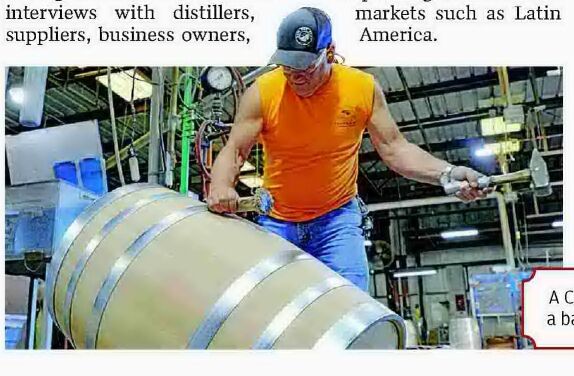
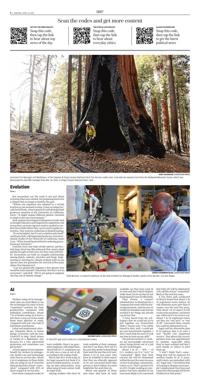
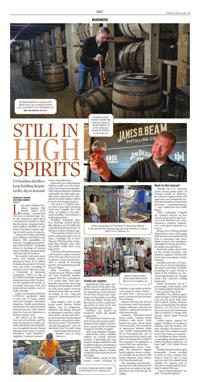
A Canton Cooperage worker builds a barrel March 24 in Lebanon, Ky.
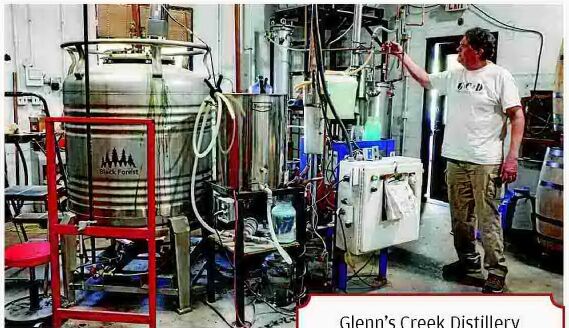
Glenn's Creek Distillery owner David Meier works March 23 in Frankfort, Ky.
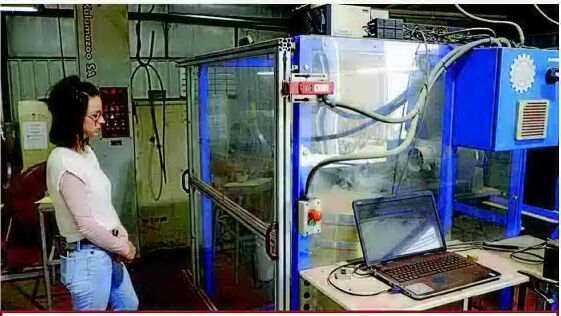
Canton Cooperage Vice President of Operations Melody Pruitt watches the company logo get laser-etched on a barrel March 24 in Lebanon, Ky.

Jim Beam master distiller Freddie Noe holds up a glass of whiskey March 23 at the company's shuttered distillery in Clermont, Ky.

Bardstown Bourbon Company CEO Mark Erwin uses a whiskey thief to pour shots March 24 in Bardstown, Ky.
BUSINESS
Like many whiskey distillers, Heaven Hill Brands rolled back bourbon production this year as demand lags. Yet, as the American spirit faced a tumultuous market in 2025, the Kentucky company built a $200 million distillery in the heart of bourbon country, adding 155,000 barrels of capacity.
Famous for brands including Evan Williams and Elijah Craig, Heaven Hill exemplifies an industry struggling and growing at the same time. Cooperages drown in backlogs of unused barrels; distillers slashed output and some laid off workers.
Yet tourists still pack plant tours, and whiskey makers planned at least $1.45 billion in expansion projects between now and 2030, according to research led by Michael Clark, a University of Kentucky economist. That's on top of $2.1 billion in already completed expansion since 2020. Producers bet demand will return as economic pressures fade and large overseas markets, such as India, develop.
Liquor consumption fell from COVID-19 pandemic highs as the cost of living soared and some younger consumers drink less. Tariffs and inflation pushed up costs and punctured demand overseas. Now, fallout from the Iran war threatens to increase energy costs.
The effects of the downturn are not uniform, and the roots of bourbon's troubles are hotly debated in this Republican stronghold, Reuters found through more than 20 recent interviews with distillers, suppliers, business owners, voters and politicians.
Kentucky Gov. Andy Beshear believes tariffs are a key headwind. The Democrat and potential 2028 presidential candidate said tariffs not only make supplies more expensive but complicate bourbon makers' efforts to reach new foreign markets.
Last year's 2.7 million tourist visits to the state's Bourbon Trail were roughly flat with 2024, according to the Kentucky Distillers' Association, a trade organization.
Distillers downplay politics, blaming cyclical factors like inflation and the difficulty of predicting demand years in advance as their whiskeys age.
"The number of times we've gotten (demand) right over 90 years, I jokingly say, is zero," Heaven Hill Executive Chairman Max Shapira said, adding tariffs "really aren't very impactful."
A Heaven Hill spokeswoman said bourbon output would be lower this year than last as the company "paces production" after a decade of booming growth, but declined to provide an exact figure.
After President Donald Trump set now-defunct tariffs last year, Kentucky whiskey exports fell 15%, according to U.S. Census data. That compounded a previous 26% drop dating to the president's tariffs in 2018, from which overseas demand never fully recovered, according to the Clark-led research, commissioned by the KDA.
Greg Hughes, CEO of Jim Beam owner Suntory Global Spirits, says it's temporary. Inflation and falling demand in developed countries, rather than tariffs, are the main drivers of headwinds that prompted Jim Beam to cut bourbon output this year, he said. "The industry will get through this," and "be absolutely fine," he said, citing expected growth in newer markets such as Latin America.
Trade tax ripples
Republicans hold super-majorities in both of the state's legislative houses, and about half the Republican-held districts do not have Democratic challengers in November, according to election filings. Trump won the state by at least 25 percentage points in each of the last three presidential elections.
Distillers say reports of bourbon's death are greatly exaggerated.
In Bardstown, bourbon supports the local economy. Entrepreneurs there largely say business is good and do not blame Trump for broader struggles.
Still, some suppliers struggle.
Behind the scenes, whiskey makers are scared, Beshear insisted. Cultivating the new markets Hughes alluded to will be difficult against a backdrop of tariff uncertainty, the governor said, adding industry leaders complain to him in private about the tariffs.
David Meier, owner of tiny Glenns Creek Distilling in Frankfort, says tariffs raised his costs about 25 cents a bottle — or about 15% — but so far, he hasn't passed on that increase to consumers.
Heaven Hill says just 10% of its revenues come from exports. Hughes, likewise, said most of Suntory's American whiskey is sold domestically.
Lebanon, Kentucky-based barrel maker Canton Wood Products sold about 7,000 barrels last year, down about 50% from 2022, Vice President of Operations Melody Pruitt said. Tariffs compounded the hit by increasing the cost of oak imported from France and Japan, forcing layoffs of eight of the company's 38 employees, a move Pruitt says gutted her.
Independent Stave Company, the industry's biggest barrel supplier whose customers include top producers like Brown-Forman, fared better, CEO Brad Boswell said.
His company cut back production but still will invest for growth in an industry far bigger than it was a decade ago, he added.
Rum to the rescue?
Though the U.S. Supreme Court struck down many of Trump's tariffs in February, he vowed to replace them and imposed a new worldwide tariff in the meantime. Democratic governors — including Beshear — sued, calling the new tariffs illegal.
Other challenges cropped up. Trump's attacks on Iran raised energy prices and concern that fertilizer for corn, bourbon's primary ingredient, could grow expensive or scarce.
Rising costs of living limited disposable income, while aging baby boomers are replaced with Gen-Z consumers who don't drink as much. The emergence of weight loss drugs and cannabis drinks also had effects.
Kentucky makes about 95% of the world's bourbon. The industry supports 24,000 jobs in the state, according to Clark's research.
Distillery jobs fell 1.7% yearover-year as of last September, the most recent data available, according to Clark. Nearly a third of the distillers he surveyed reported job cuts, though many also reported adding headcount.
Barrel inventories are at a record high, Clark found, with 16.1 million aging in Kentucky — a 57% increase from 2020.
Distillers say whiskey gains value as it ages, so they need not rush out old stock. Still, they had to adjust. Brown-Forman, owner of brands like Woodford Reserve, cut 12% of its workforce last year, and announced talks in March to merge with French spirits giant Pernod Ricard.
Lofted Spirits, among the largest distillers of American whiskey, laid off workers last year, though it declined to say how many. The company makes most of its money as a contractor, distilling for other brands, so dwindling orders forced it to reduce bourbon output by "at least half," CEO Mark Erwin said.
Finding himself with empty fermenters, Erwin decided to pivot to rum, a liquor that doesn't need to age as long and can reach the market more quickly. He expects rum to account for nearly half the company's output this year.
"I don't mind making it," he said. "It's good business."